
Introduction: Understanding the Condition
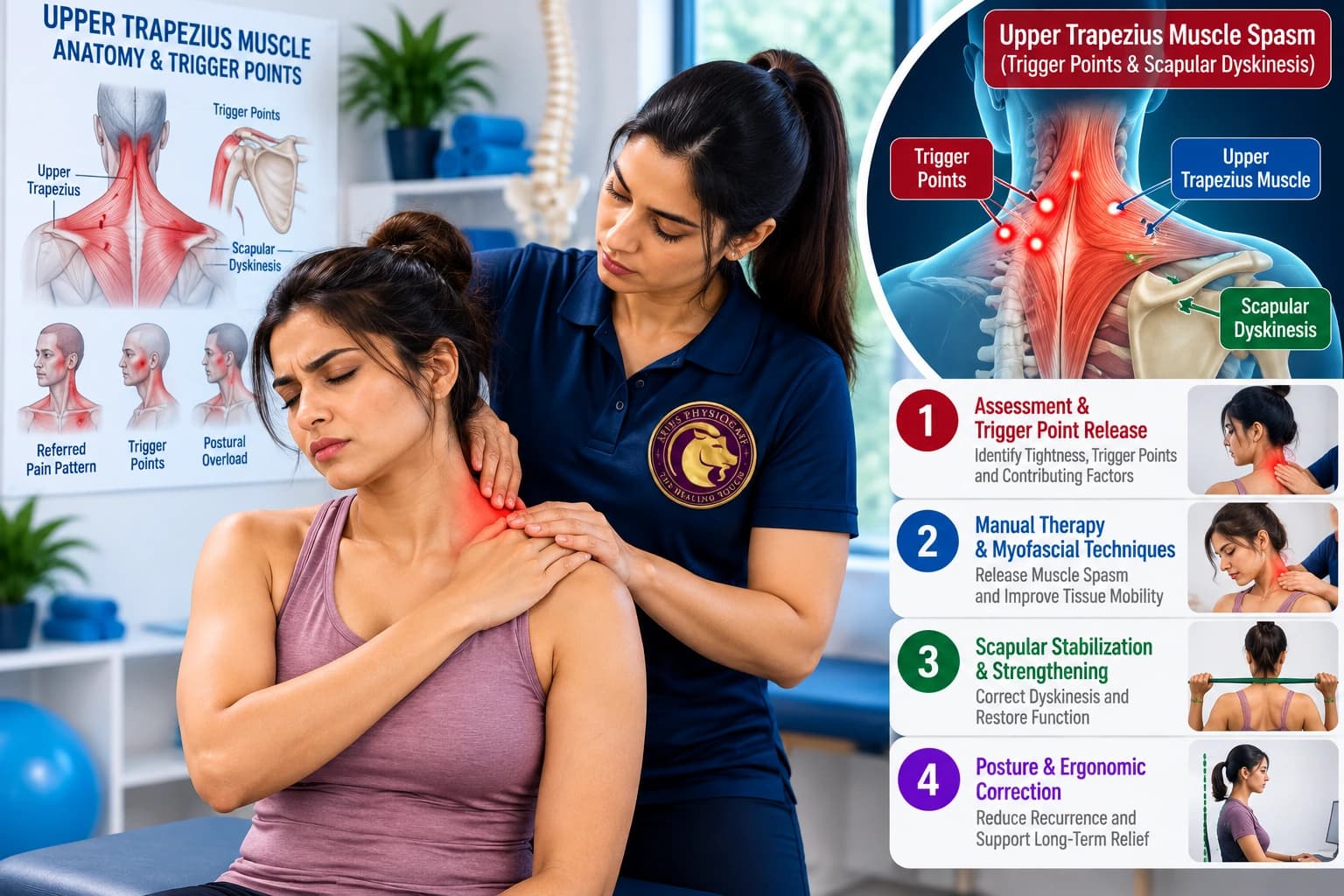
Upper trapezius muscle spasm is one of the most common myofascial complaints encountered in clinical musculoskeletal practice. The upper trapezius is a broad, triangular postural muscle extending from the base of the skull and cervical spine across the clavicle and scapular spine. Due to its dual responsibility in suspending the shoulder girdle and assisting cervical motion, it is exceptionally vulnerable to postural overload, psychological stress, and compensatory over-activation. When overloaded, it develops hyper-irritable taut bands containing active myofascial trigger points that refer pain into the neck, temple, and jaw. Specialized physiotherapy identifies the root biomechanical drivers, restores muscle elasticity, and eliminates chronic tension.
Common Symptoms
Key clinical indicators and functional presentations:
- Severe, knot-like tightness and persistent aching across the top of the shoulder and lateral neck
- Palpable, tender, taut fibrous bands within the muscle belly that elicit a local twitch response
- Characteristic referred pain pattern: Deep aching radiating up the lateral neck toward the temple and eye ('question mark' referral pattern)
- Difficulty rotating the head to the opposite side or laterally flexing away from the affected shoulder
- Sensation of constant shoulder elevation, stiffness, and fatigue that worsens under emotional stress
- Weakness and early exhaustion during overhead reaching or carrying grocery bags
- Secondary tension-type headaches and tenderness along the mastoid process
Causes & Clinical Diagnosis
Etiological drivers and diagnostic assessment:
- Chronic forward head and rounded shoulder posture (Upper Crossed Syndrome)
- Occupational typing with armrests that are too high (shrugging shoulders) or too low (unsupported arms)
- Weakness and inhibition of the middle and lower trapezius, serratus anterior, and deep neck flexors
- Carrying heavy shoulder bags or backpacks unilaterally
- Clinical evaluation involves palpatory trigger point mapping, active cervical lateral flexion measurement, scapular dyskinesis testing, and assessment of scapulohumeral rhythm.
Pathophysiology & Biomechanical Impact
Chronic postural overload creates a localized energy crisis within motor endplates. Continuous acetylcholine release causes sustained sarcomere contraction, compressing local micro-capillaries and creating local tissue hypoxia. This ischemia prevents ATP production required for actin-myosin cross-bridge detachment, locking muscle fibers in permanent contraction. Inflammatory neuropeptides (substance P, bradykinin) accumulate, sensitizing peripheral nociceptors and generating central nervous system hyper-excitability.
Evidence-Based Physiotherapy Protocols
At Aries PhysioCare, our physical therapists implement clinician-administered rehabilitation protocols:
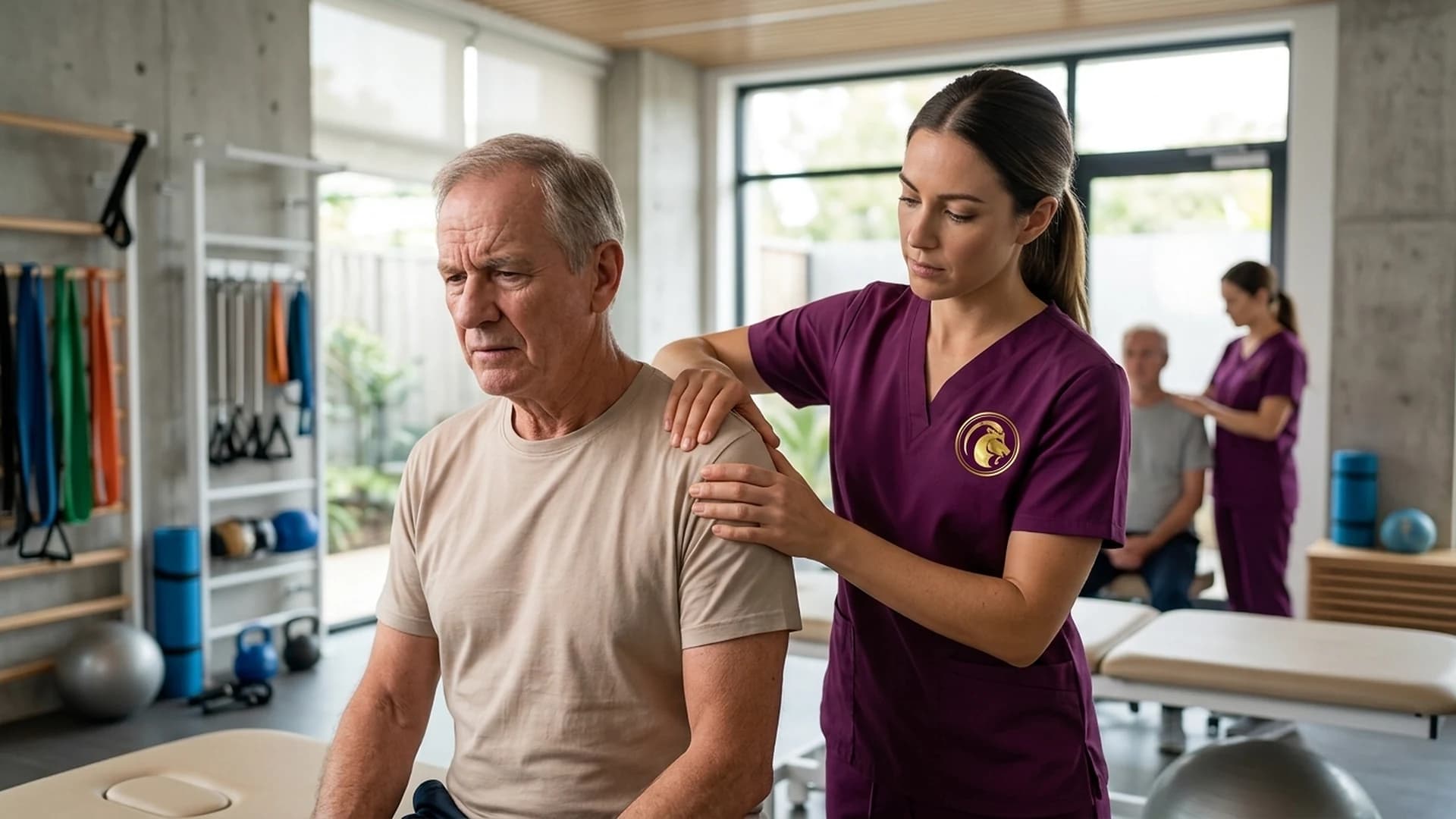
- Myofascial trigger point deactivation: Deep tissue ischemic compression and transverse friction massage delivered by skilled therapists
- High-Intensity Class-IV Laser and Therapeutic Ultrasound to restore microcirculatory perfusion and break sarcomere contractures
- Post-Isometric Relaxation (PIR) and reciprocal inhibition stretching techniques to restore normal resting sarcomere length
- Dry needling and neuromodulation protocols administered by certified physical therapists to eliminate deep motor endplate dysfunction
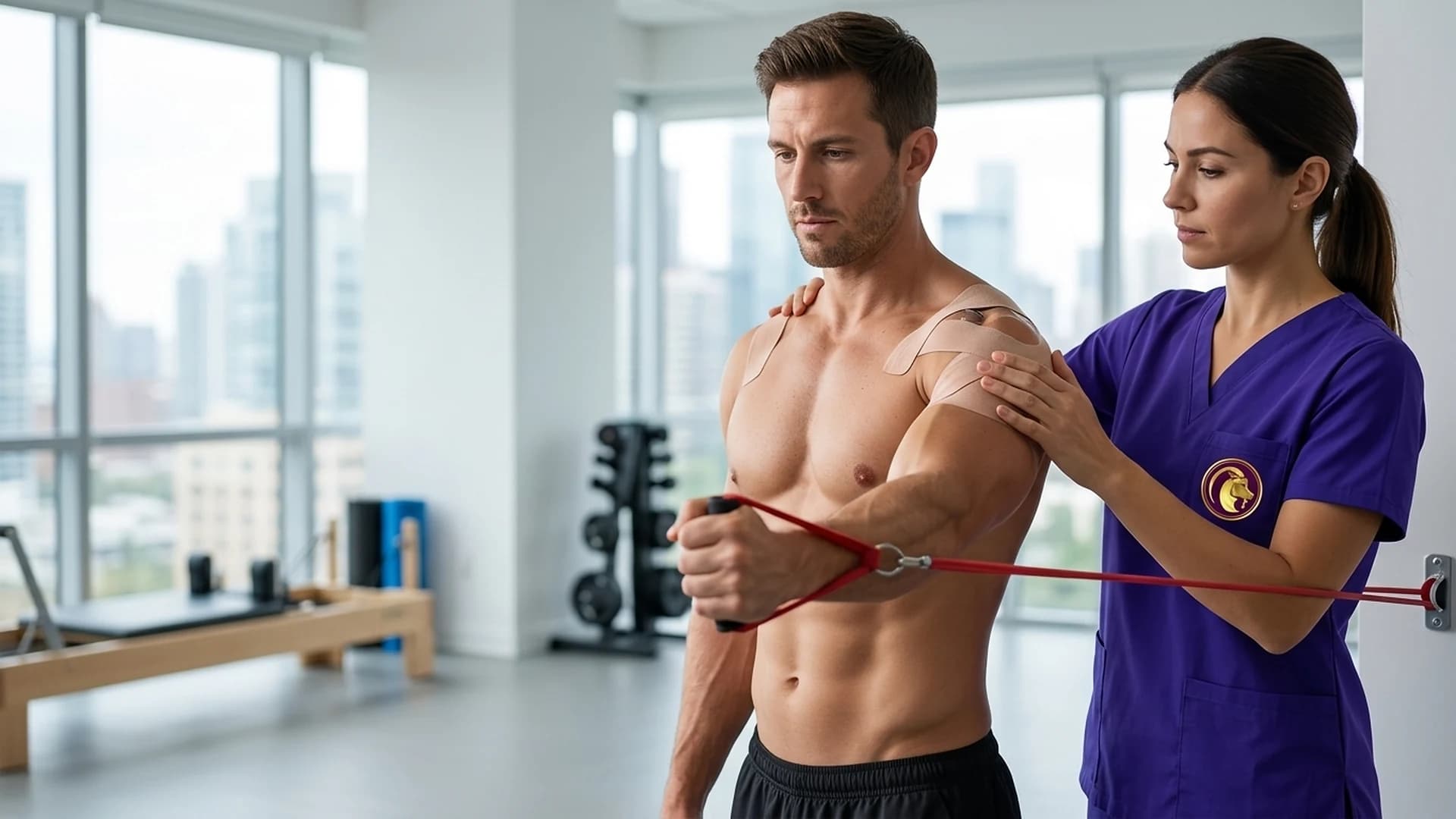
- Scapulothoracic motor control retraining: Facilitating lower trapezius and serratus anterior recruitment to offload the upper trapezius
- Postural biofeedback training to re-educate resting shoulder girdle depression and scapular retraction
Home Care & Ergonomic Strategies
Supporting recovery through evidence-based ergonomic habits and self-care:
- Ensure computer desk armrests support forearms at comfortable 90-degree angles without forcing the shoulders into an elevated shrug
- Apply moist heat wraps across the shoulder and neck for 15 to 20 minutes daily to promote microvascular blood flow
- Avoid carrying heavy shoulder bags or purses unilaterally; distribute loads evenly or utilize a balanced wheeled bag
- Incorporate hourly shoulder rolls and conscious shoulder-drop resets during prolonged computer work
- Sleep with an ergonomic cervical pillow that cradles the neck without pushing the shoulder into an awkward shrugged position
- Refrain from aggressive self-massage with hard lacrosse balls directly over the bone, which can bruise underlying neurovascular structures
When to Contact Us
Eliminate painful shoulder knots and chronic neck tension permanently. Contact Aries PhysioCare today for specialized in-home myofascial release and scapular rehabilitation.