Introduction: Understanding the Condition
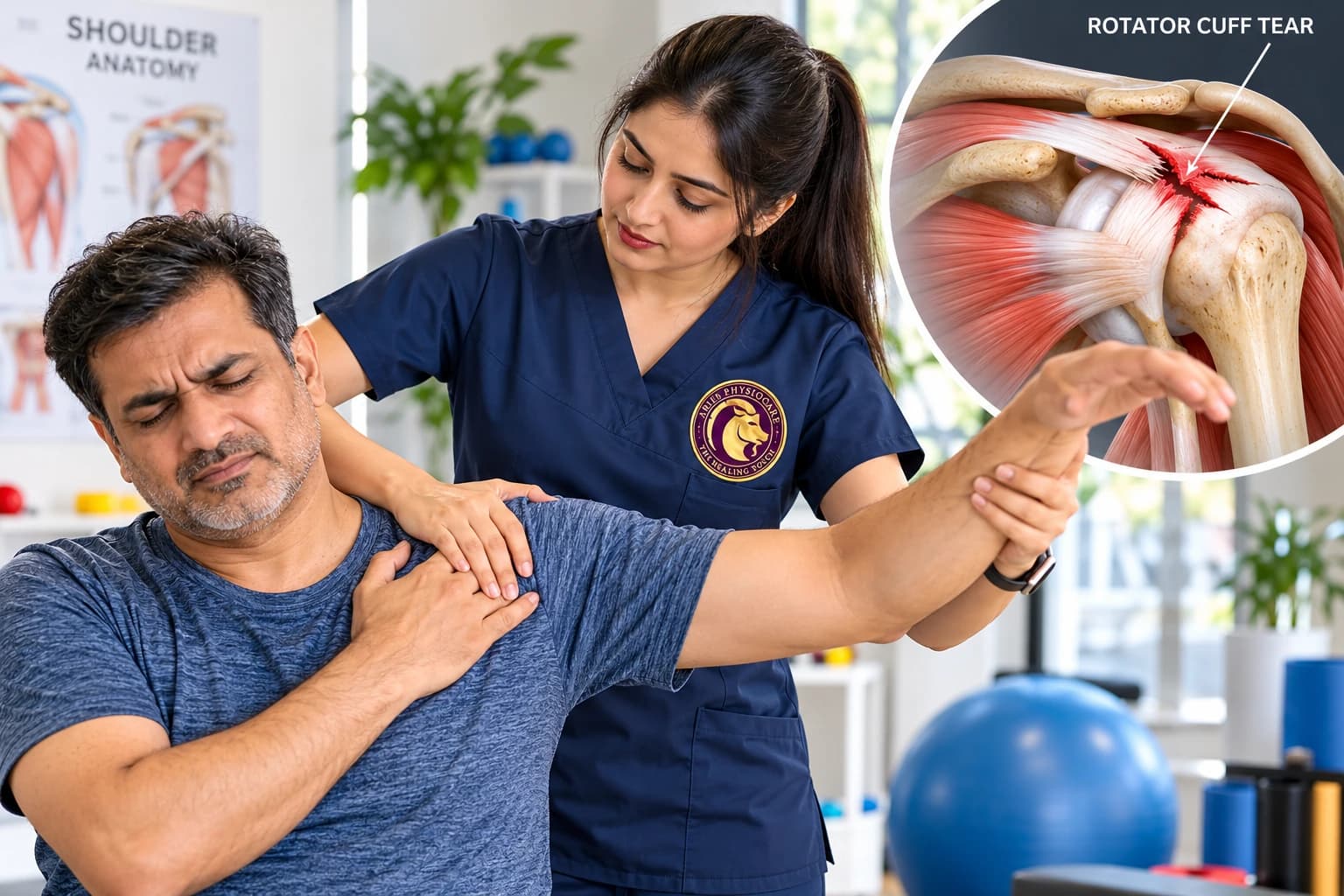
The rotator cuff is a dynamic anatomical convergence of four intrinsic muscles—supraspinatus, infraspinatus, teres minor, and subscapularis—whose primary biomechanical imperative is centralizing the convex humeral head within the shallow concave glenoid fossa. A rotator cuff injury encompasses a spectrum of pathology ranging from acute micro-traumatic fibrillar disruption to chronic tendon degeneration. Because the glenoid cavity covers less than one-third of the humeral head surface, stability relies overwhelmingly on active muscular force couples. Clinical physical therapy serves as the frontline evidence-based standard, restoring dynamic joint stability, arresting tear progression, and eliminating the need for invasive surgical reconstruction in the vast majority of cases.
Common Symptoms
Key clinical indicators and functional presentations:
- Dull, toothache-like pain deep within the lateral shoulder that radiates into the upper deltoid muscle belly
- Painful arc of motion during active arm elevation between 60 and 120 degrees of abduction
- Sudden weakness and inability to maintain arm position when attempting to lower the arm smoothly from overhead (positive drop arm sign)
- Prominent night pain when attempting to sleep on the affected shoulder
- Inability to lift moderately heavy household objects, such as a gallon of milk, with an outstretched arm
- Crepitus, popping, or clicking sensations during rotational shoulder movements
Causes & Clinical Diagnosis
Etiological drivers and diagnostic assessment:
- Repetitive overhead occupational tasks or athletic throwing mechanics causing repetitive micro-trauma
- Age-related tendon hypovascularity and intrinsic degeneration of the critical avascular zone
- Acute traumatic events such as falling onto an outstretched hand or sudden heavy lifting traction
- Diagnostic confirmation involves clinical orthopedic provocation (Jobe's supraspinatus test, Patte's external rotation test, belly-press test) correlated with high-resolution diagnostic ultrasound or MRI imaging to determine tear thickness and muscle atrophy.
Pathophysiology & Biomechanical Impact
Rotator cuff failure is multifactorial, driven by both intrinsic biological degradation and extrinsic mechanical impingement. Under chronic tensile load, tenocytes undergo apoptotic changes, extracellular proteoglycan distribution alters, and disorganized type III collagen replaces organized type I fibrils. When a tear initiates, the dynamic force couple between the deltoid and the inferior rotator cuff becomes disrupted. Unopposed deltoid contraction drives the humeral head superiorly against the anterior-inferior acromion, exacerbating mechanical abrasion and perpetuating tendon ischemia.
Evidence-Based Physiotherapy Protocols
At Aries PhysioCare, our physical therapists implement clinician-administered rehabilitation protocols:
- Force couple realignment: Targeted neuromuscular re-education of the intact subscapularis and infraspinatus to compensate for supraspinatus deficiency and depress the humeral head
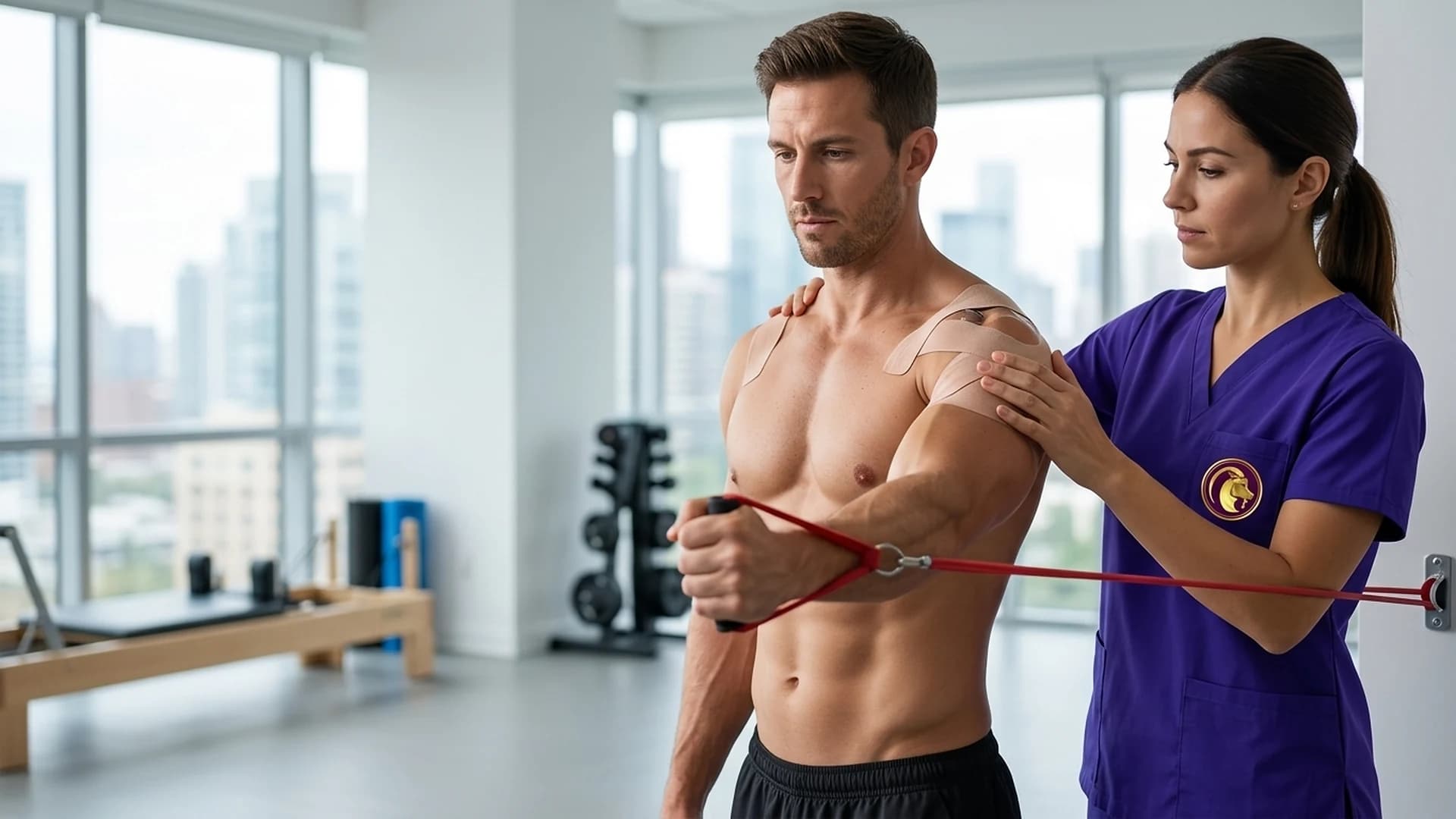
- Closed kinetic chain stabilization using rhythmic stabilization drills under direct physical therapist manual resistance to enhance glenohumeral co-contraction
- Therapeutic Ultrasound and Class-IV Laser Therapy applied over the rotator cuff footprint to stimulate fibroblastic collagen synthesis and enhance microvascular flow
- Maitland glenohumeral joint mobilizations: Posterior and inferior glides to relieve secondary posterior capsular tightness and expand the subacromial space
- Scapulothoracic neuromuscular retraining focusing on middle/lower trapezius and serratus anterior recruitment to restore upward scapular rotation during arm elevation
- Biofeedback-guided motor control retraining to eradicate compensatory upper trapezius overactivity during arm elevation
Home Care & Ergonomic Strategies
Supporting recovery through evidence-based ergonomic habits and self-care:
- Refrain from lifting heavy objects away from the body; keep items close to the center of gravity to minimize the external shoulder torque lever arm
- Avoid sleeping directly on the affected shoulder; sleep on the opposite side with a supporting pillow tucked under the injured arm
- Maintain ergonomic armrest support during desk work so shoulders remain completely relaxed without sagging or shrugging
- Apply cryotherapy for 15 minutes following extended daily activity to minimize secondary reactive tendon inflammation
- Do not perform sudden overhead reaching, jerky pulling motions, or heavy pushing against resistance
- Avoid aggressive self-directed dumbbell lifting or unsupervised cross-body stretches that compress the rotator cuff footprint
When to Contact Us
Experiencing persistent shoulder weakness and overhead pain? Contact Aries PhysioCare to arrange a specialized rotator cuff evaluation with our expert musculoskeletal physiotherapists.