Introduction: Understanding the Condition
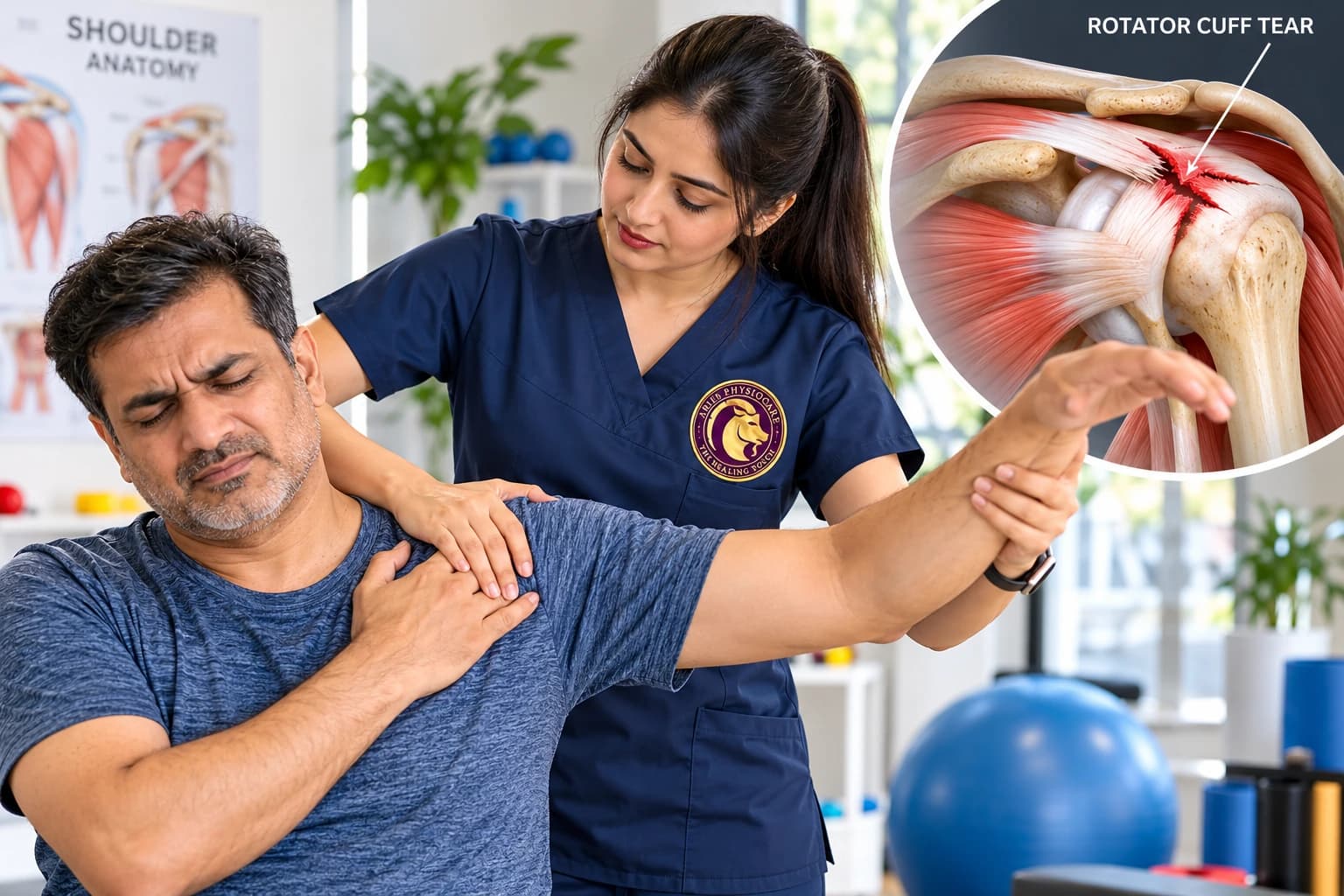
A rotator cuff tear represents a structural disruption of the musculotendinous unit, classified clinically into partial-thickness (articular-sided, bursal-sided, or intra-tendinous) and full-thickness tears. Longitudinal clinical trials demonstrate that up to 75% of patients with symptomatic full-thickness rotator cuff tears achieve satisfactory pain relief and functional restoration through structured, evidence-based physical therapy without requiring surgical repair. The primary therapeutic objective is non-operative functional compensation—training the surrounding intact periscapular and rotator cuff musculature to maintain glenohumeral joint centering, prevent fatty muscle infiltration, and eliminate painful subacromial mechanical friction.
Common Symptoms
Key clinical indicators and functional presentations:
- Noticeable, profound weakness during active shoulder abduction and external rotation
- Dull, persistent ache deep within the lateral shoulder that radiates into the upper arm
- Positive 'drop arm' sign: involuntary dropping of the arm when lowering from 90 degrees of abduction
- Frequent nocturnal pain awakenings, especially when rolling onto the affected side
- Audible or palpable snapping, grinding, and popping sensations during elevation
- Substantial loss of overhead functional reach and inability to place items onto elevated shelves
Causes & Clinical Diagnosis
Etiological drivers and diagnostic assessment:
- Chronic mechanical attrition against a hooked (type III) acromial morphology
- Age-dependent progressive hypovascularity of the tendon footprint near the greater tuberosity
- High-energy acute trauma such as an awkward fall, motor vehicle collision, or rapid traction force
- Clinical diagnosis utilizes targeted orthopedic tests (Drop Arm test, Infraspinatus muscle test, Full Can test) correlated with MRI or high-resolution ultrasound confirming tear dimension, tendon retraction grade (Patte classification), and Goutallier fatty infiltration stage.
Pathophysiology & Biomechanical Impact
Once a rotator cuff tendon tears, the structural continuity of the rotator cable is breached. The mechanical balance between the anterior cuff (subscapularis) and posterior cuff (infraspinatus/teres minor) is compromised. Without adequate inferior counter-torque, the powerful deltoid pulls the humeral head vertically into the coracoacromial arch during active abduction. This pathologic superior translation compresses the subacromial bursa and remaining intact tendon edges, triggering neurogenic inflammation, tissue ischemia, and progressive functional compromise.
Evidence-Based Physiotherapy Protocols
At Aries PhysioCare, our physical therapists implement clinician-administered rehabilitation protocols:
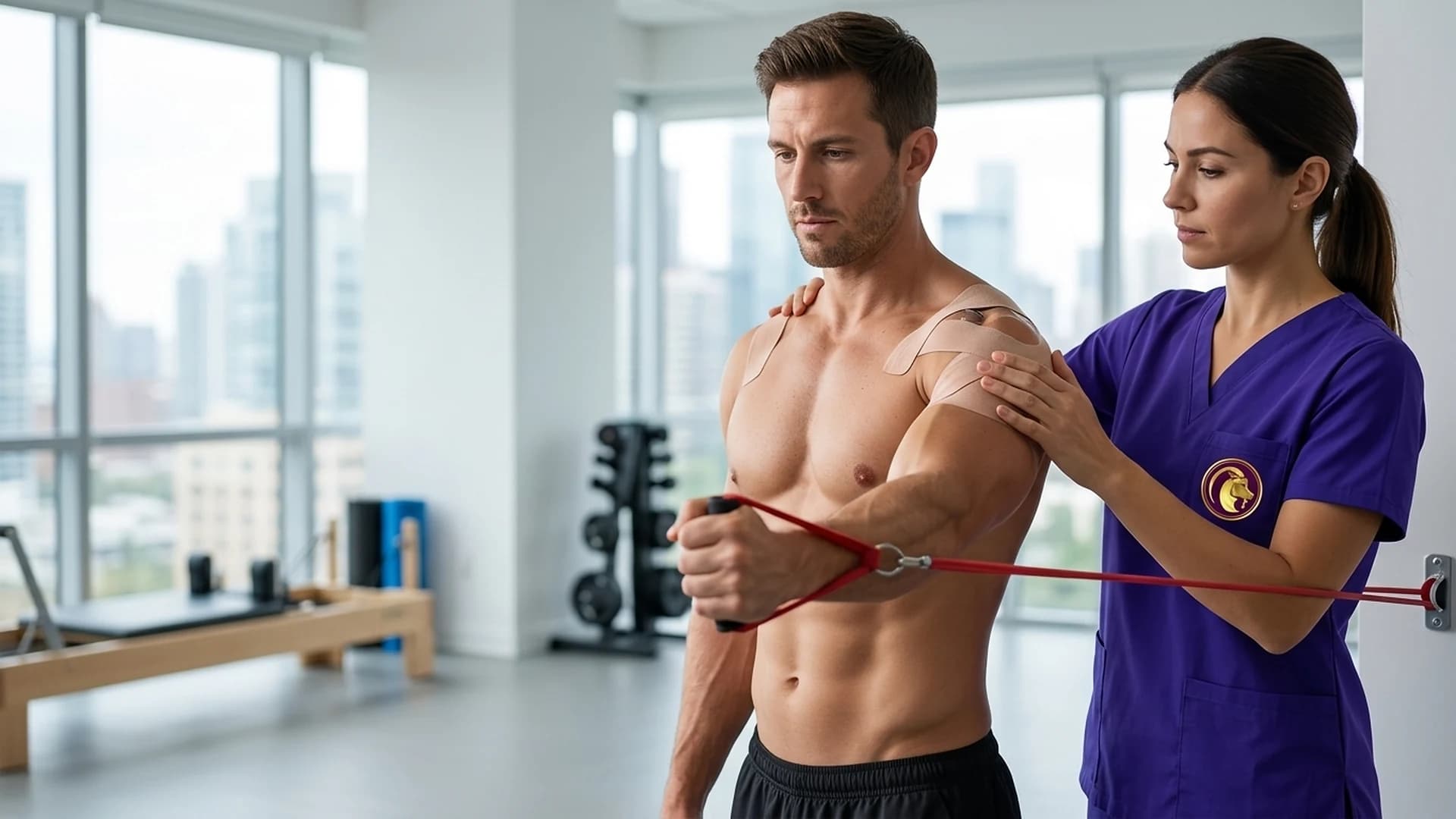
- Kinetic chain force couple compensation: Intensive neuromuscular re-education targeting the intact anterior and posterior rotator cuff to restore the transverse plane force couple
- Deltoid-rotator cuff coordination retraining using manual rhythmic stabilization techniques in supine and side-lying positions to minimize shear stress
- Passive and active-assisted scapular mobilizations to maximize upward scapular tilt and widen the subacromial outlet
- Targeted Radiofrequency (Tecar) Therapy and Class-IV Laser Therapy applied to peri-lesional tissues to reduce pain signaling and accelerate local cellular metabolism
- Low-frequency neuromuscular electrical stimulation (NMES) applied to the infraspinatus and periscapular stabilizers to combat arthrogenic muscle inhibition
- Proprioceptive neuromuscular facilitation (PNF) diagonal patterns administered under direct physical therapist guidance to restore coordinated arm movement
Home Care & Ergonomic Strategies
Supporting recovery through evidence-based ergonomic habits and self-care:
- Adopt the 'functional box' rule: Perform all manual tasks within the visual field and below shoulder height to avoid superior humeral migration
- Sleep on your back or unaffected side with a dedicated pillow supporting the injured forearm in slight forward flexion
- Avoid carrying heavy groceries, suitcases, or pets with the involved upper extremity
- Incorporate ergonomic adjustments such as bringing computer monitors, keyboards, and mice closer to the body to eliminate reaching
- Apply cold therapy for 15 minutes after extended daily activities to suppress secondary subacromial bursal effusion
- Do not attempt aggressive self-administered pull-ups, push-ups, or heavy overhead weights without clinical clearance
When to Contact Us
Before considering surgical repair for a rotator cuff tear, explore evidence-based conservative rehabilitation. Contact Aries PhysioCare today for a thorough clinical examination.