

Introduction: Understanding the Condition
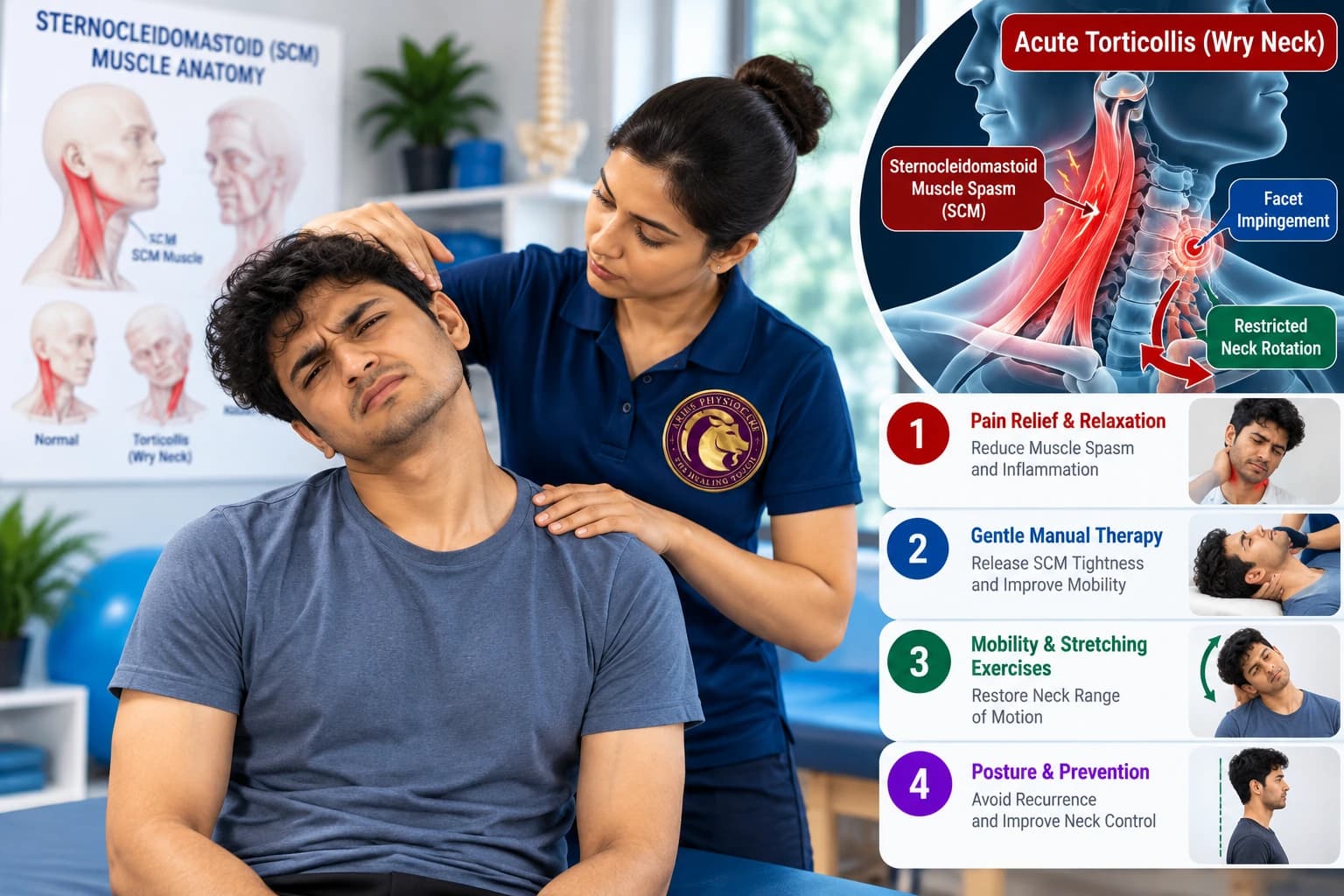
Acute torticollis, colloquially termed 'wry neck' or 'stiff neck,' is a painful condition characterized by an involuntary, asymmetric head posture where the neck is twisted to one side and tilted in the opposite direction. Patients typically awaken with severe, sharp neck pain and an inability to rotate the head back toward the midline. Acute torticollis is primarily categorized into two distinct clinical presentations: acute facet wry neck (mechanical meniscoid entrapment within an upper cervical facet joint) and muscular wry neck (acute spastic contraction of the sternocleidomastoid or trapezius muscle). Gentle, specialized physiotherapy provides rapid pain relief and restores full postural symmetry within 48 to 72 hours.
Common Symptoms
Key clinical indicators and functional presentations:
- Sudden onset of severe, sharp neck pain, commonly discovered immediately upon waking in the morning
- Characteristic head posture: Neck rotated to one side and laterally flexed in the opposite direction
- Complete inability to turn the head toward the neutral midline without excruciating, sharp catching pain
- Severe spasm and focal tenderness along the sternocleidomastoid, levator scapulae, or scalene muscles
- Localized edema or heat over the affected upper cervical zygapophyseal joint
- Secondary tension headaches radiating along the ipsilateral temporal and mastoid regions
- Marked anxiety and difficulty performing routine movements such as walking, driving, or dressing
Causes & Clinical Diagnosis
Etiological drivers and diagnostic assessment:
- Sleeping in an awkward cervical position, often aggravated by sudden drafts or unsupportive pillows
- Sudden, uncoordinated twisting head movements or quick rotational jerks
- Mechanical entrapment of a sensitive synovial fold (meniscoid) within a cervical facet joint capsule (C2–C3 or C3–C4)
- Underlying viral infection or upper respiratory inflammation causing reactive cervical lymphadenitis (Grisel's syndrome in children)
- Clinical examination evaluates the rotational deformity vector, active vs. passive movement discrepancy, and palpatory tenderness over facet joints versus muscle bellies.
Pathophysiology & Biomechanical Impact
In facet joint torticollis, a vascularized fibro-adipose synovial fold (meniscoid) becomes pinched between the articulating facet surfaces during a sudden movement. The trapped meniscoid triggers an acute nociceptive reflex, prompting the adjacent deep rotators and sternocleidomastoid muscles to lock down in intense protective spasm. In muscular torticollis, acute focal ischemia within the muscle belly initiates prolonged involuntary motor unit firing, holding the head in a fixed contracture.
Evidence-Based Physiotherapy Protocols
At Aries PhysioCare, our physical therapists implement clinician-administered rehabilitation protocols:
- Gentle manual cervical distraction: Unweighting the cervical motion segments to facilitate release of trapped meniscoid tissue
- Mulligan Mobilizations with Movement (SNAGs): Gentle, pain-free therapist-assisted glides performed in the direction of restricted rotation
- Contract-Relax and Post-Isometric Relaxation (PIR) techniques: Utilizing gentle isometric neurological reflexes to inhibit spastic muscles
- High-Intensity Class-IV Laser and localized thermotherapy to break the acute pain-spasm-ischemia cycle
- Myofascial trigger point release applied to the sternocleidomastoid, scalenes, and levator scapulae
- Graded active movement re-education under one-on-one clinician supervision once joint unlocking is achieved
Home Care & Ergonomic Strategies
Supporting recovery through evidence-based ergonomic habits and self-care:
- Apply continuous gentle moist heat (a warm compress or heating pad) for 20 minutes every 2 hours to relax spastic muscle fibers
- Avoid forcing the head past the pain threshold; allow the neck to rest in its natural antalgic position during the first 24 hours
- Sleep on your back or non-painful side using a supportive contoured cervical pillow that fills the neck hollow completely
- Avoid sudden drafts, cold air conditioning blowing directly on the neck, or rapid rotational head movements
- Do not permit untrained individuals to vigorously crack or manipulate your neck during an acute torticollis episode
- Take scheduled warm showers, allowing the water stream to gently loosen the shoulder girdle
When to Contact Us
Unlock your neck safely and eliminate acute torticollis pain. Contact Aries PhysioCare for prompt in-home emergency physiotherapy and gentle joint unlocking protocols.