

Introduction: Understanding the Condition
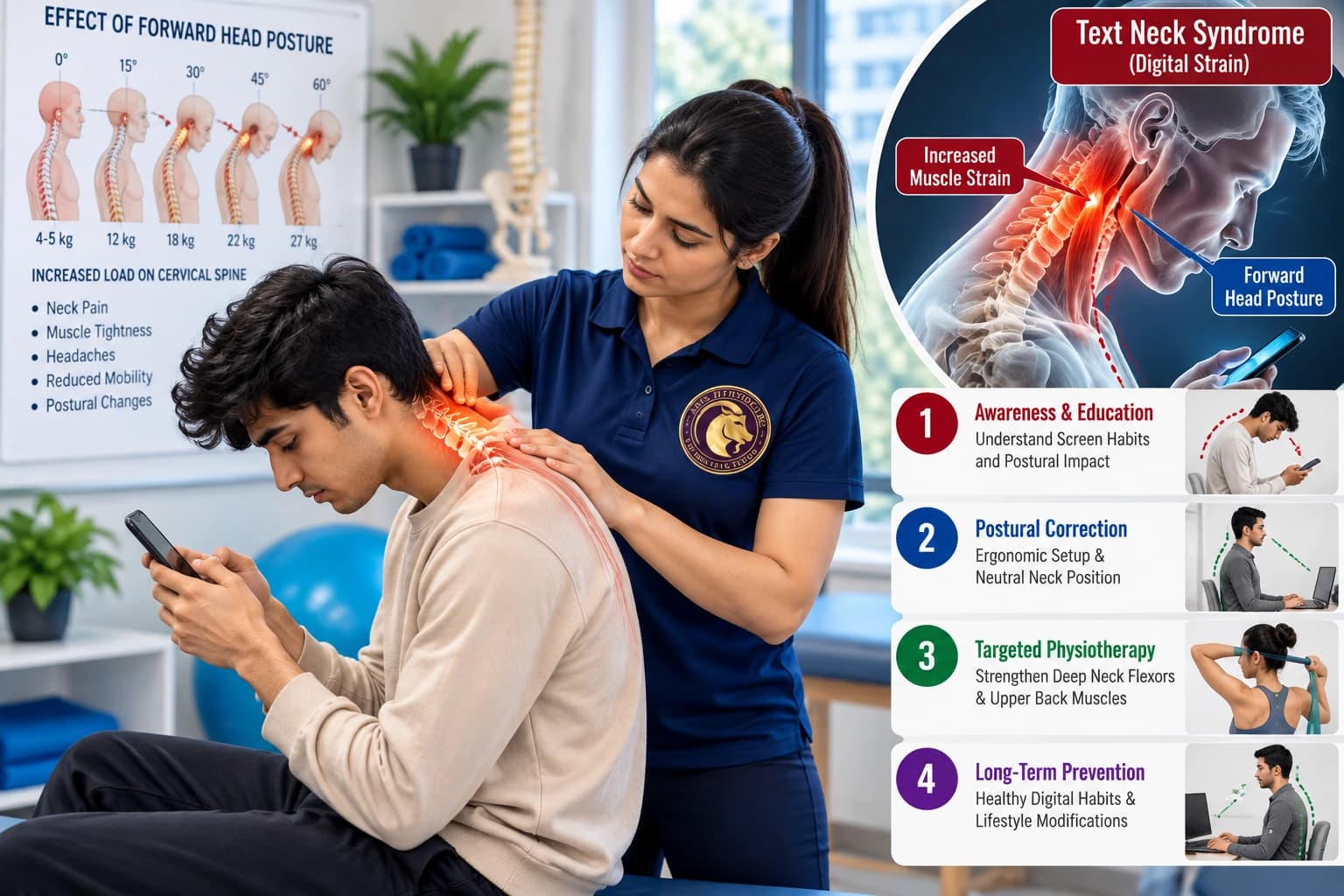
Text Neck Syndrome is a contemporary repetitive stress injury and postural distortion resulting from prolonged, sustained forward flexion of the cervical spine while viewing smartphones, tablets, laptops, or handheld gaming devices. In a neutral upright posture, the adult human head exerts approximately 4.5 to 5.5 kg of gravitational force on the neck. However, as the head flexes forward, gravitational moment arms multiply this mechanical load exponentially—reaching up to 27 kg at a 60-degree tilt. Over time, this massive unphysiological load strains cervical ligaments, stretches posterior muscles into chronic fatigue, and accelerates disc wear. Specialized physical therapy restores natural sagittal alignment and rebuilds postural stamina.
Common Symptoms
Key clinical indicators and functional presentations:
- Aching, dull, or burning pain across the base of the neck, upper back, and shoulders during device use
- Chronic postural fatigue and a sensation that the head is 'too heavy' to hold upright
- Suboccipital tightness and tension headaches developing after prolonged screen sessions
- Visible forward head carriage (craniovertebral angle less than 50 degrees) with rounded shoulders
- Jaw discomfort and early temporomandibular joint (TMJ) strain due to altered muscular tension
- Numbness, tingling, or intermittent paresthesia down the arms and hands during extended smartphone typing
- Chest tightness and shallow apical breathing patterns resulting from thoracic cage slouching
Causes & Clinical Diagnosis
Etiological drivers and diagnostic assessment:
- Continuous, uninterrupted hours of handheld mobile device usage in deep downward neck flexion
- Working on laptops or tablets placed flat on low desks without external monitors or elevation stands
- Sedentary recreational screen habits combined with a lack of daily physical conditioning
- Progressive weakness and lengthening of the deep cervical flexors, rhomboids, and lower trapezius
- Clinical diagnosis involves digital craniovertebral angle measurement, photogrammetric posture analysis, cervical range of motion testing, and functional muscle endurance screening.
Pathophysiology & Biomechanical Impact
The physics of forward head carriage follows the law of levers: for every 2.5 centimeters the head drifts anterior to the gravity line, the posterior cervical musculature must generate an additional 4.5 kg of counter-balancing force. In sustained flexion, the nuchal ligament and posterior annular disc fibers undergo mechanical creep deformation, losing elastic tension. Simultaneously, the anterior cervical structures (pectoralis major, sternocleidomastoid, scalenes) become adaptively shortened, locking the cervical spine into chronic sagittal malalignment.
Evidence-Based Physiotherapy Protocols
At Aries PhysioCare, our physical therapists implement clinician-administered rehabilitation protocols:
- Photogrammetric postural re-education: Teaching conscious realignment of the external auditory meatus over the acromion
- Deep cervical flexor motor retraining utilizing pressure biofeedback to restore longus colli endurance
- Manual therapy: Myofascial release of shortened pectoralis minor, suboccipitals, and levator scapulae
- Thoracic spine extension mobilization (foam roller and manual therapist glides) to overcome kyphotic stiffness
- Scapulothoracic retraction and depression facilitation under one-on-one clinician supervision
- Ergonomic workflow re-engineering and digital behavioral habit coaching
Home Care & Ergonomic Strategies
Supporting recovery through evidence-based ergonomic habits and self-care:
- Raise smartphones and handheld devices to eye level using your arms and forearms rather than bending your head downward
- Place laptops on an elevated stand and utilize a separate external keyboard and mouse
- Follow the 20-20-20 rule: Every 20 minutes, look away at an object 20 feet away for at least 20 seconds while resetting posture
- Incorporate hourly shoulder shrug-and-retraction resets during prolonged digital desk sessions
- Avoid reading or watching movies on handheld devices while lying flat in bed
- Ensure workstation chairs provide adequate lumbar support to maintain the pelvic foundation for cervical alignment
When to Contact Us
Break free from digital neck strain and restore your natural posture. Contact Aries PhysioCare today for a personalized text neck assessment and corrective physiotherapy plan.