Introduction: Understanding the Condition
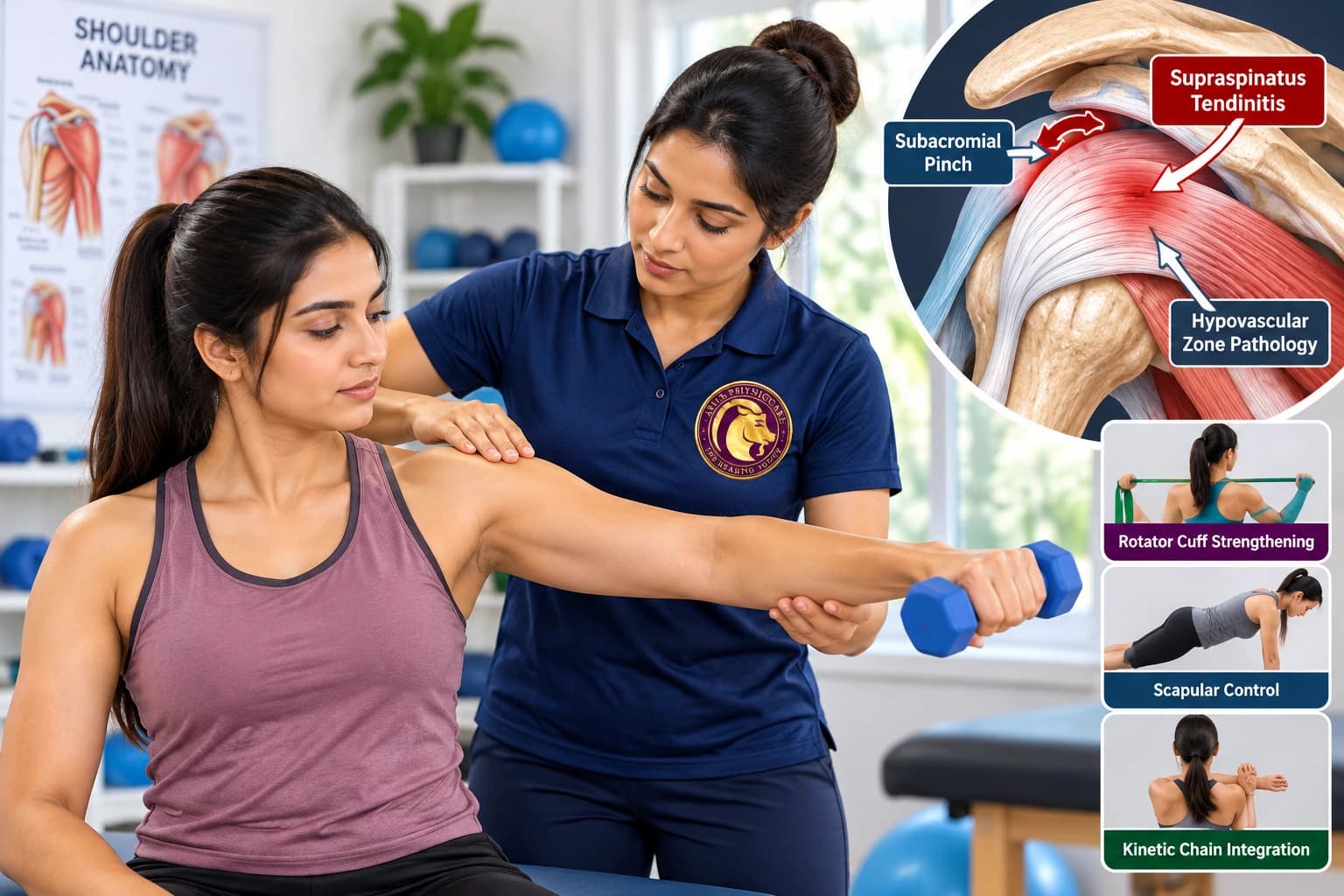
The supraspinatus muscle and its corresponding tendon constitute the most frequently injured structure in the human shoulder girdle. Originating in the supraspinous fossa and inserting onto the superior facet of the greater tuberosity, it initiates the first 15 degrees of abduction and acts as the crucial dynamic compressor of the humeral head against the glenoid. Supraspinatus tendinitis occurs predominantly within 'Codman's critical vascular zone'—a localized watershed region approximately one centimeter proximal to the insertion that possesses inherently tenuous vascular supply. Physical therapy addresses both the intrinsic vascular limitations and extrinsic mechanical impingement, providing a scientifically grounded conservative pathway toward complete functional restoration.
Common Symptoms
Key clinical indicators and functional presentations:
- Sharp, well-localized pain directly beneath the lateral acromion, radiating down the mid-deltoid muscle belly
- Painful arc of motion when actively elevating the arm between 60 and 120 degrees of abduction
- Point tenderness upon palpation of the supraspinatus insertion when the arm is extended and internally rotated behind the back (Modified Crass position)
- Significant nocturnal pain when lying on the affected shoulder
- Weakness and pain during resisted shoulder scaption (empty can test position)
- Difficulty performing daily tasks such as reaching into high cabinets, putting on a jacket, or washing hair
Causes & Clinical Diagnosis
Etiological drivers and diagnostic assessment:
- Repetitive overhead occupational activities, weightlifting, or racquet sports inducing tensile overload
- Extrinsic subacromial compression against a prominent anterior acromial spur or thickened coracoacromial ligament
- Intrinsic microvascular insufficiency exacerbated by metabolic factors, aging, and smoking
- Diagnosis is made through clinical orthopedic examination (Jobe's empty can test, Full can test, Neer's test) corroborated by diagnostic musculoskeletal ultrasound demonstrating focal tendon hypoechogenicity, loss of fibrillar architecture, and reactive bursal thickening.
Pathophysiology & Biomechanical Impact
The supraspinatus tendon is unique because it must withstand both massive longitudinal tensile loads and compressive forces against the overlying acromion. In Codman's critical zone, continuous mechanical compression transiently interrupts microvascular perfusion. During sustained overhead activities, repeated ischemia-reperfusion cycles generate reactive oxygen species, triggering tenocyte apoptosis. The normal parallel type I collagen fibers become fragmented, replaced by disorganized, hyperhydrated type III collagen and glycosaminoglycans. This loss of tensile integrity increases tendon strain, predisposing the patient to partial- or full-thickness tendon tearing if unmanaged.
Evidence-Based Physiotherapy Protocols
At Aries PhysioCare, our physical therapists implement clinician-administered rehabilitation protocols:
- Mechanotherapy loading: Clinician-administered submaximal isometric contractions at specific angles to induce immediate tendon pain relief and stimulate tenocyte cellular repair
- Class-IV High-Intensity Laser Therapy (HILT) directed onto the greater tuberosity to enhance microvascular capillary formation and accelerate cellular collagen remodeling
- Maitland manual therapy: Grade II and III inferior and posterior joint mobilizations to restore physiological caudal humeral gliding and widen the subacromial outlet
- Pectoralis minor and levator scapulae myofascial release to eliminate scapular anterior tilting and restore functional posterior tilt during elevation
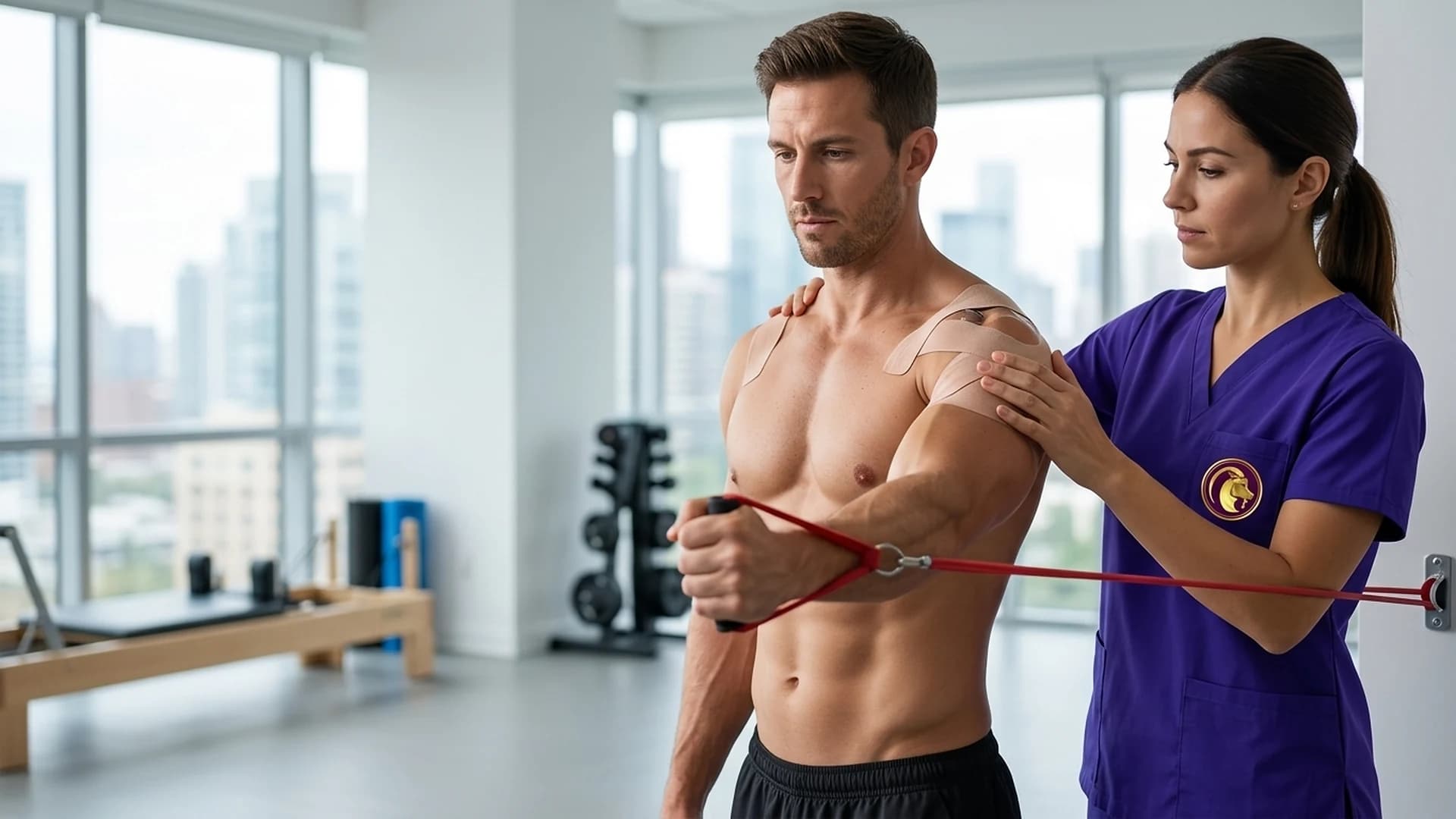
- Progressive scapular neuromuscular retraining focusing on lower trapezius and serratus anterior force-couple coordination
- Kinetic chain closed-chain proprioceptive stabilization to re-establish dynamic humeral head centration
Home Care & Ergonomic Strategies
Supporting recovery through evidence-based ergonomic habits and self-care:
- Modify occupational and athletic activities: Avoid repetitive reaching above shoulder level while symptoms remain reactive
- Ensure computer workstations keep the keyboard and mouse directly in front of the body with forearms supported to eliminate static shoulder elevation
- Apply cryotherapy for 15 minutes following demanding daily tasks to suppress localized reactive inflammation
- Sleep on your back or unaffected side with a dedicated pillow supporting the forearm in slight forward flexion
- Avoid carrying heavy shoulder bags, briefcases, or grocery bags with an extended arm
- Refrain from aggressive self-stretching or high-speed arm circles, which cause acute compression across the inflamed tendon footprint
When to Contact Us
Do not ignore persistent lateral shoulder pain. Contact Aries PhysioCare today for a comprehensive supraspinatus clinical assessment and targeted physical therapy.