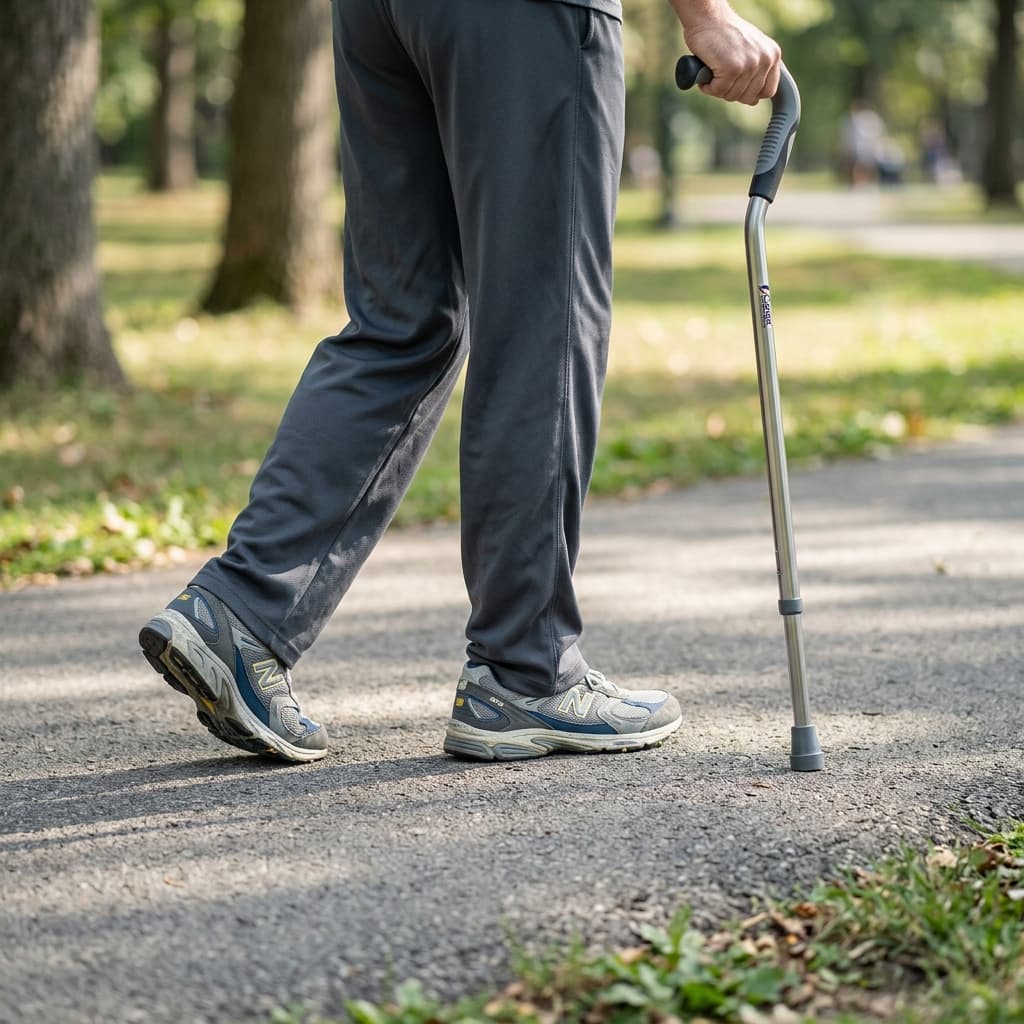
Introduction: Understanding Spinal Stenosis
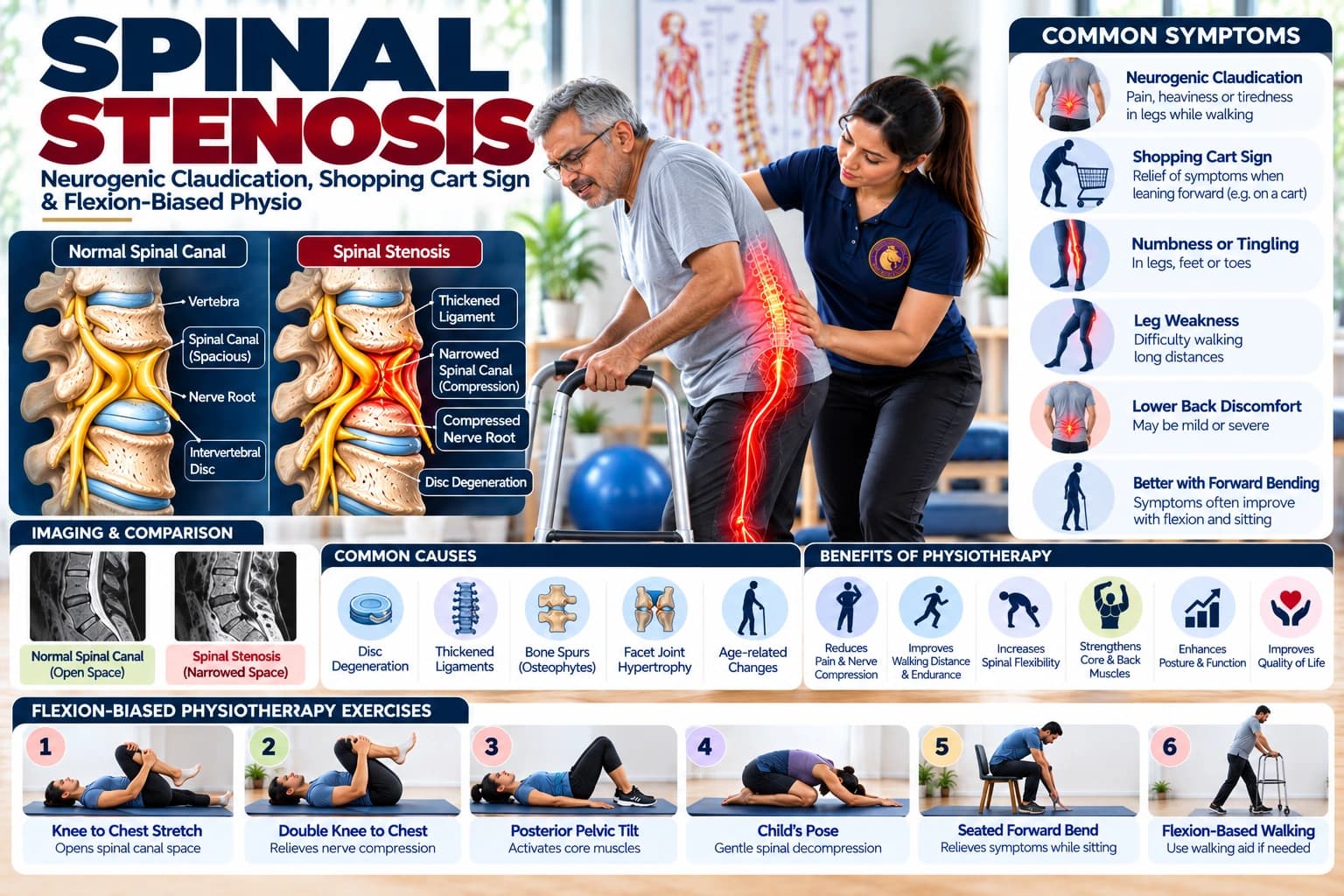
Lumbar spinal stenosis is an anatomical narrowing of the central spinal canal or lateral neuroforamina, most commonly encountered in adults over 60. As the space diminishes, the spinal cord and descending cauda equina nerve roots become mechanically crowded and experience vascular compromise during extension. Its hallmark clinical feature is neurogenic claudication—cramping and heaviness in both legs during walking that is relieved by bending forward or sitting down.
Common Symptoms of Spinal Stenosis
Characteristic claudication presentation:
- Bilateral leg aching, heaviness, numbness, or cramping triggered after walking 5–10 minutes
- Rapid symptom relief upon sitting down or leaning forward ("shopping cart sign")
- Pain aggravated by standing tall or walking down an incline
- Progressive reduction in pain-free walking endurance
- Wide-based, unsteady gait adopted to maintain balance
- Lower back stiffness and loss of lumbar extension flexibility
- Cramping sensation in calves mimicking vascular claudication
Causes & Clinical Diagnosis
Anatomical contributors:
- Age-related degenerative hypertrophy of the ligamentum flavum
- Bilateral facet joint osteophytes and synovial cyst formation
- Spondylolisthesis with forward slippage narrowing the canal aperture
- Diagnosis includes differentiating neurogenic from vascular claudication (bicycle test of van Gelderen) combined with lumbar MRI showing central canal cross-sectional area < 100 mm².
Pathophysiology & Biomechanical Impact
During spinal extension (standing tall, walking), the ligamentum flavum buckles inward and canal diameter narrows by up to 20%. This causes venous congestion, elevated intrathecal pressure, and transient ischemia to the cauda equina roots, manifesting as fatigue and weakness in the legs.
Evidence-Based Physiotherapy Protocols
- Flexion-biased rehabilitation protocols (William's flexion exercises) to expand canal diameter
- Stationary cycling (flexed lumbar posture) for cardiovascular fitness without neurogenic irritation
- Clinical hip flexor myofascial release and guided lumbopelvic realignment to decrease resting lumbar lordosis
- Core stabilization focusing on abdominal bracing to prevent involuntary lumbar hyperextension
Home Care & Ergonomic Strategies
- Lean slightly forward when walking or pushing a trolley to maximize canal volume
- Use an inclined walking treadmill or stationary recumbent bike for daily exercise
- Perform double knee-to-chest stretches in bed every morning and evening
- Break prolonged standing intervals by placing one foot on a low step stool
When to Contact Us
Regain your walking independence and vitality. Contact Aries PhysioCare for specialized in-home geriatric spine physiotherapy and customized stenosis management.