
Introduction: Understanding the Condition
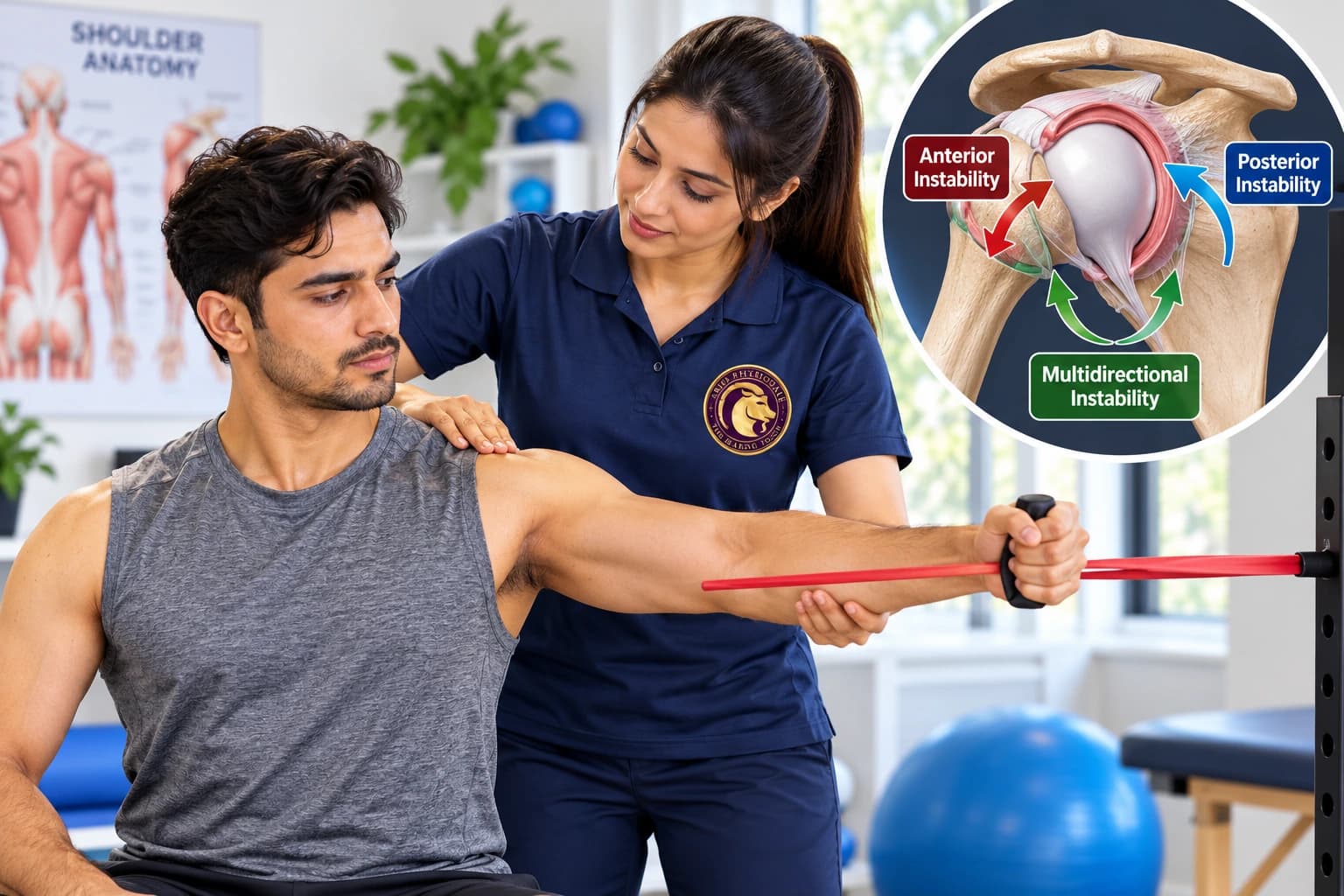
Glenohumeral shoulder instability encompasses a clinical spectrum where the humeral head cannot remain securely centered within the glenoid fossa during physiological motion. Classified into anterior, posterior, and multidirectional instability (MDI), it can arise from traumatic capsulolabral disruption or non-traumatic generalized ligamentous hypermobility (often associated with Ehlers-Danlos or Benign Joint Hypermobility Syndrome). Because static restraints (labrum, capsule, and glenohumeral ligaments) are compromised or inherently lax, the shoulder must rely almost entirely on active dynamic stabilizers—namely the rotator cuff, long head of the biceps, and periscapular force couples. Evidence-based physical therapy is the cornerstone of conservative management, focusing on neuromuscular control and closed-chain proprioceptive retraining.
Common Symptoms
Key clinical indicators and functional presentations:
- Persistent feeling of the shoulder 'slipping,' 'giving out,' or 'catching' during functional arm movements
- Apprehension and sharp anxiety when placing the arm in an abducted and externally rotated position (e.g., throwing stance)
- Audible or palpable clunking, clicking, or subluxation sensations during reaching or lifting
- Diffuse periarticular aching and rapid muscular fatigue around the shoulder girdle following minor activity
- Secondary numbness or transient paresthesias radiating down the arm (dead arm syndrome)
- Observable sulcus sign (a visible groove beneath the acromion) during dependent arm traction in multidirectional instability
Causes & Clinical Diagnosis
Etiological drivers and diagnostic assessment:
- Traumatic capsulolabral injury (Bankart lesion) from a previous acute subluxation or dislocation event
- Congenital generalized ligamentous laxity characterized by high Beighton scores and excessive capsular compliance
- Repetitive micro-traumatic capsular stretching common in competitive swimmers, gymnasts, and throwing athletes
- Clinical diagnosis involves apprehension and relocation tests (Jobe Relocation test), the Load and Shift test for translation grading, the Sulcus sign test for inferior laxity, and MRI arthrography to evaluate labral-capsular integrity.
Pathophysiology & Biomechanical Impact
Normal glenohumeral stability relies on concave-compression mechanics: rotator cuff muscles pull the humeral head deeply into the glenoid cavity, creating an effective joint seal. In traumatic or congenital instability, the inferior glenohumeral ligament complex (IGHLC) and labrum become detached or excessively stretched. Consequently, the neutral zone of translational play expands significantly. During movement, the humeral head translates excessively across the shallow glenoid rim, causing repetitive mechanical shearing, labral degeneration, and reflex inhibition of stabilizing musculature.
Evidence-Based Physiotherapy Protocols
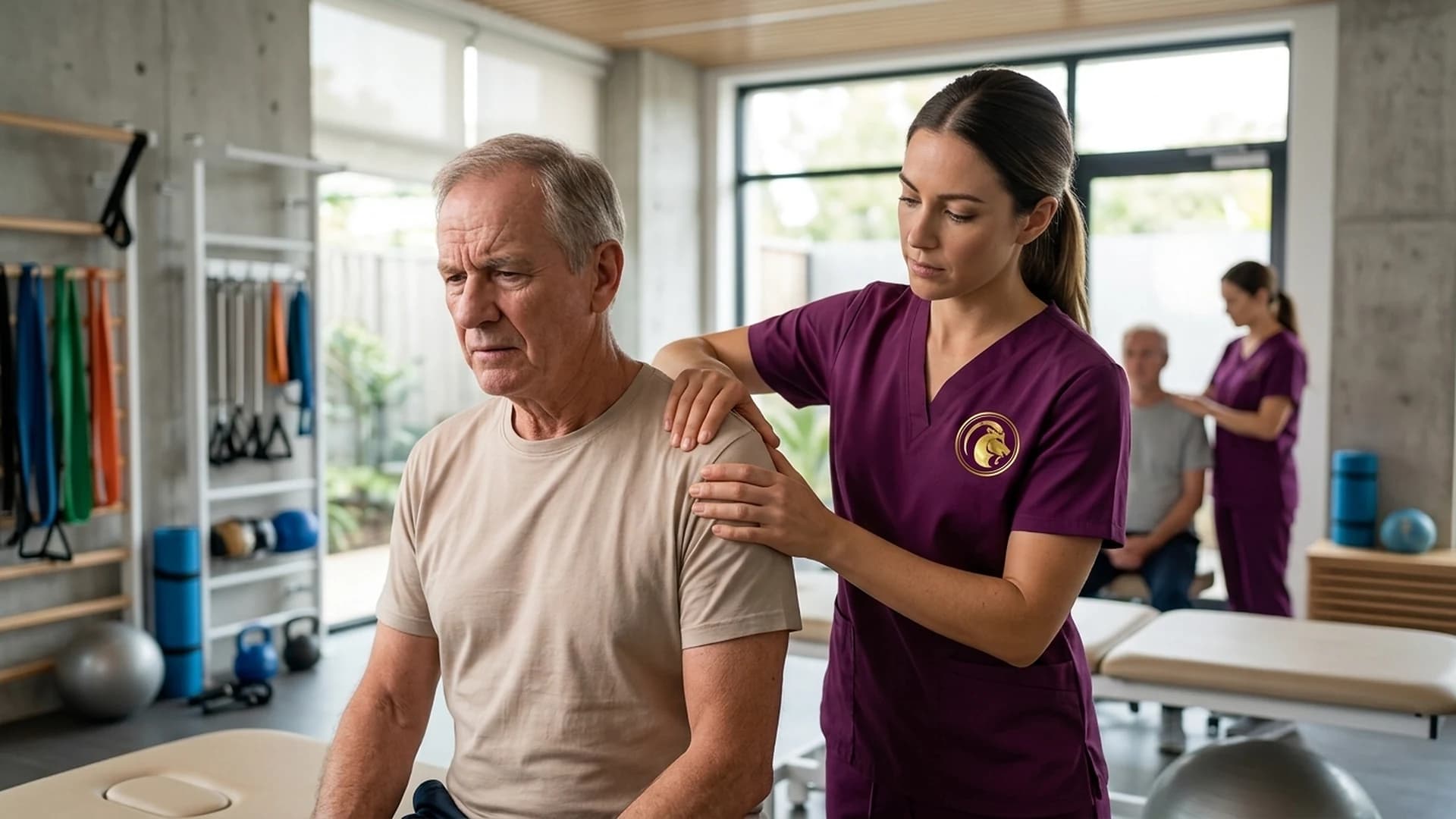
At Aries PhysioCare, our physical therapists implement clinician-administered rehabilitation protocols:
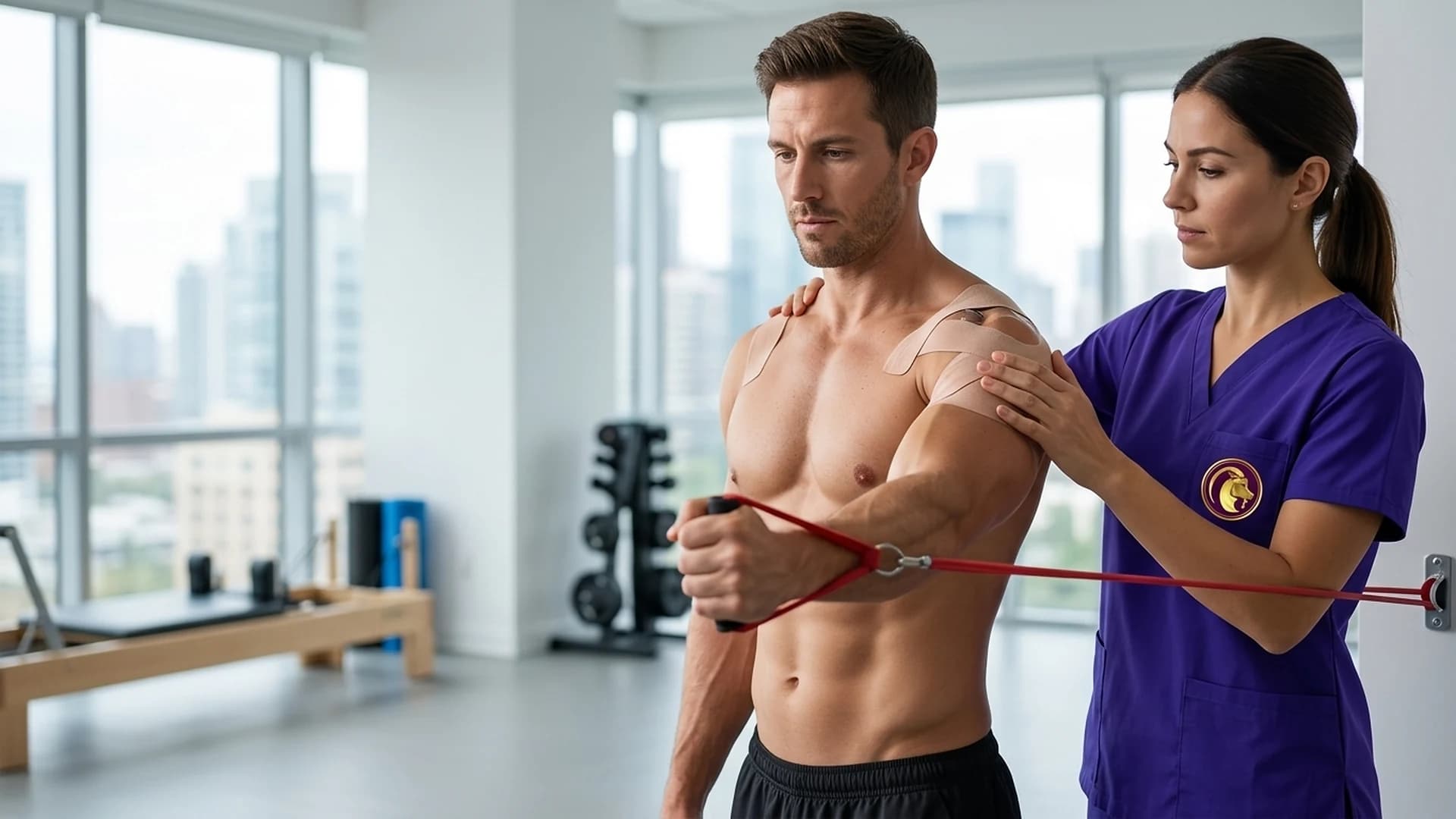
- Closed kinetic chain neuromuscular training: Quadruped and wall-contact stabilization drills with therapist perturbations to recruit mechanoreceptors and stimulate dynamic co-contraction
- Rhythmic stabilization and joint repositioning training using biofeedback to recalibrate glenohumeral proprioceptive acuity
- Force-couple hypertrophy protocols targeting the subscapularis (anterior stabilizer) and infraspinatus/teres minor (posterior stabilizers) under therapist supervision
- Scapulothoracic base-of-support stabilization: Strengthening the serratus anterior and rhomboids to maintain the glenoid fossa oriented directly beneath the moving humeral head
- Class-IV Laser Therapy and IFT for secondary reactive rotator cuff fatigue and periarticular myofascial trigger point relief
- Kinetic chain integration: Synchronizing core, pelvic, and trunk rotation with shoulder stability to eliminate excessive isolated arm loading
Home Care & Ergonomic Strategies
Supporting recovery through evidence-based ergonomic habits and self-care:
- Strictly avoid the 'at-risk' position of simultaneous high shoulder abduction and extreme external rotation (the high-five position)
- Do not carry heavy loads, shopping bags, or luggage with an extended, dangling arm; support items close to the chest
- Avoid placing the arm behind the passenger seat while driving or reaching into the back seat of a vehicle
- Ensure workstation chairs have adjustable armrests that support the forearms, preventing gravitational downward pull on the joint capsule
- Sleep on your back or unaffected side with the affected arm supported on a firm pillow in front of the body
- Refrain from aggressive passive shoulder stretches, hanging from bars, or unsupervised push-ups
When to Contact Us
If feelings of shoulder looseness or instability are restricting your activity, contact Aries PhysioCare today for a thorough dynamic stability and neuromuscular evaluation.