Introduction: Understanding the Condition
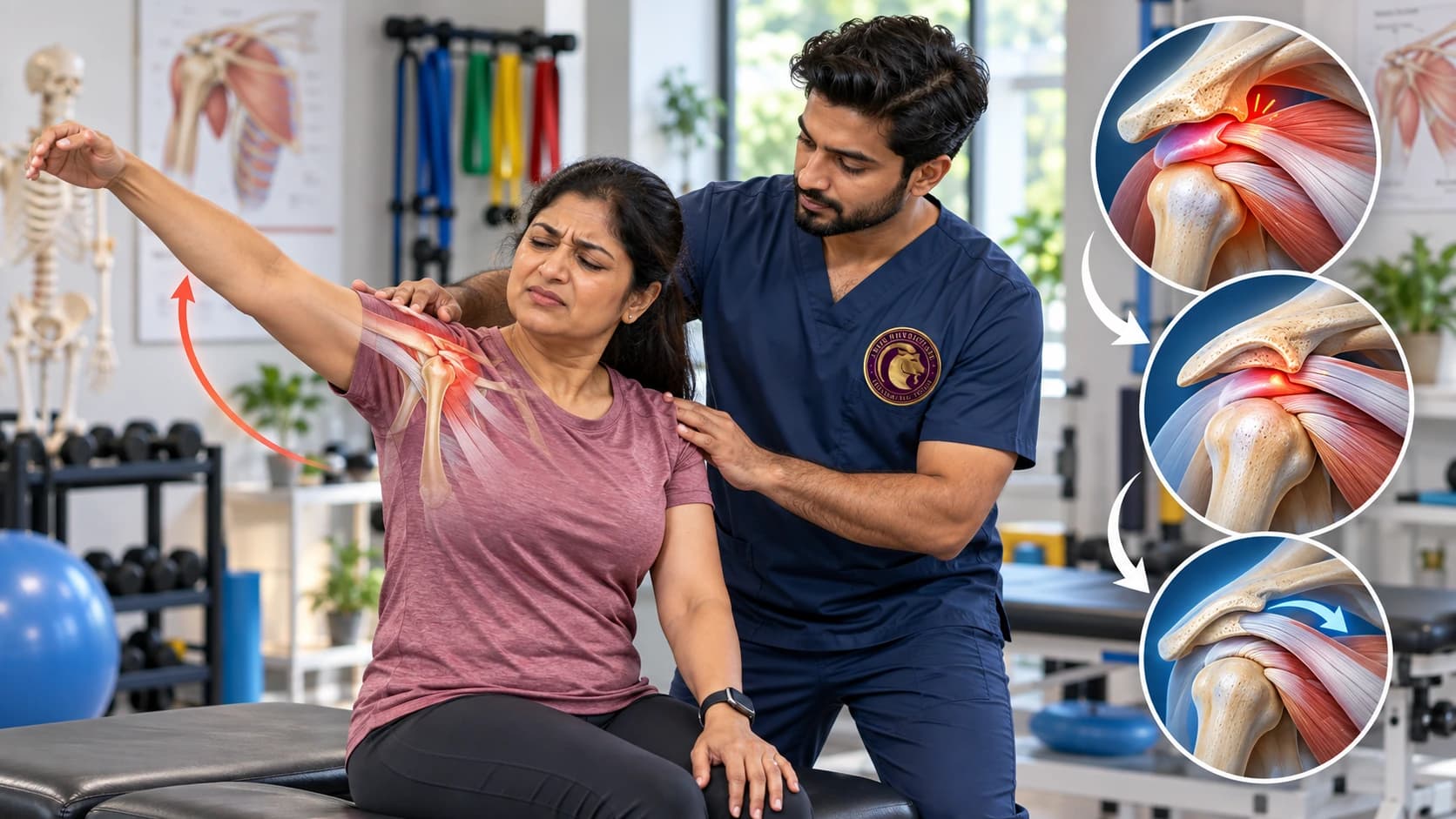
Subacromial impingement syndrome (SIS) is the most common diagnostic entity in clinical shoulder practice, accounting for nearly 60% of all shoulder-related clinical visits. It refers to the mechanical compression and abrasion of the rotator cuff tendons (predominantly supraspinatus), subacromial bursa, and long head of the biceps brachii tendon beneath the coracoacromial arch during active arm elevation. The subacromial space, normally measuring between 9 and 10 millimeters, narrows to less than 6 millimeters during arm elevation in affected individuals. Conservative physical therapy is overwhelmingly successful in decompressing the subacromial vault by restoring normal scapular upward rotation, posterior tilt, and active humeral head depression.
Common Symptoms
Key clinical indicators and functional presentations:
- Characteristic painful arc of motion: Sharp pain during active arm elevation between 60 and 120 degrees of abduction
- Localized tenderness over the anterior and lateral aspect of the acromion
- Pain aggravated by internal rotation movements, such as reaching into a back pocket or hooking a bra strap
- Noticeable catching sensation or crepitus when lowering the arm from an overhead position
- Radiation of aching discomfort into the lateral deltoid insertion without cervical spine symptoms
- Progressive weakness on overhead lifting and reaching due to pain inhibition
Causes & Clinical Diagnosis
Etiological drivers and diagnostic assessment:
- Structural anatomical variations including hooked (type III) acromion or subacromial enthesophyte spurs
- Scapular dyskinesis characterized by loss of serratus anterior and lower trapezius control with excessive anterior tipping
- Tightness of the posterior glenohumeral capsule forcing the humeral head anteriorly and superiorly during flexion
- Clinical diagnosis involves provocative orthopedic testing (Hawkins-Kennedy impingement test, Neer's test, Yocum's test) paired with diagnostic local anesthetic tests and dynamic ultrasound confirming subacromial tissue impingement.
Pathophysiology & Biomechanical Impact
Pathomechanically, impingement is categorized into internal (posterosuperior) and external (subacromial) forms. External impingement occurs when the subacromial space diminishes due to superior humeral translation or lack of scapular upward rotation. In an ideal shoulder, elevation is coupled with 50 to 60 degrees of scapular upward rotation and posterior tilting. In SIS, the serratus anterior fails to rotate the scapula, while the pectoralis minor remains short and tight. Simultaneously, rotator cuff weakness permits the deltoid to pull the humeral head superiorly, mechanically pinching the supraspinatus tendon against the anterior-inferior acromion.
Evidence-Based Physiotherapy Protocols
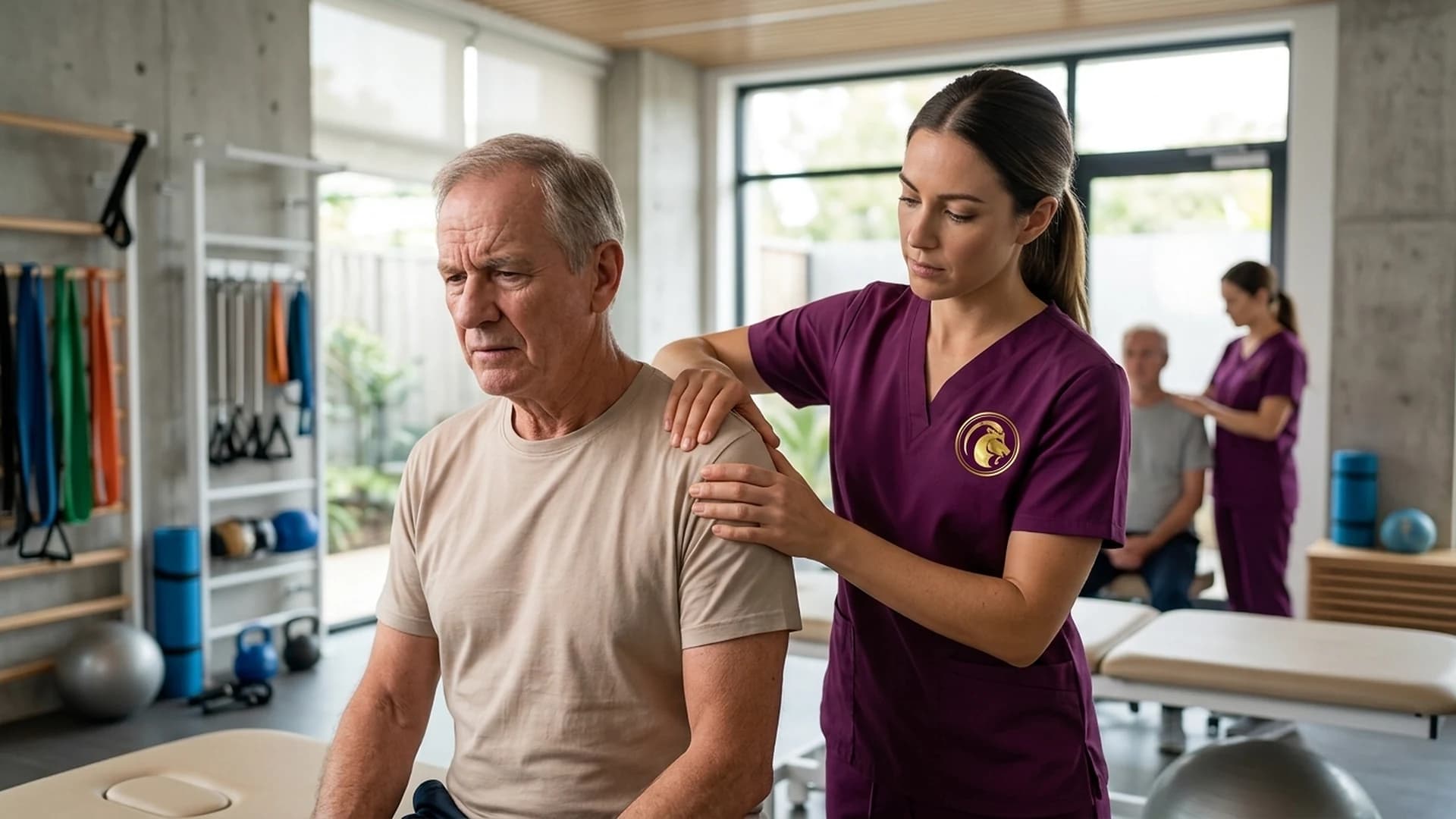
At Aries PhysioCare, our physical therapists implement clinician-administered rehabilitation protocols:
- Maitland manual therapy: Grade III posterior and inferior glenohumeral joint mobilizations to resolve posterior capsular tightness and facilitate normal downward glide of the humeral head
- Scapular force-couple recalibration: Specific neuromuscular activation of the serratus anterior and lower trapezius while inhibiting hyperactive upper trapezius and levator scapulae
- Targeted Radiofrequency (Tecar) Therapy and Class-IV Laser Therapy applied over the subacromial bursa to eliminate bursal edema and alleviate nociceptive signaling
- Pectoralis minor manual release and therapist-assisted anterior chest wall mobilization to restore physiologic posterior scapular tilt
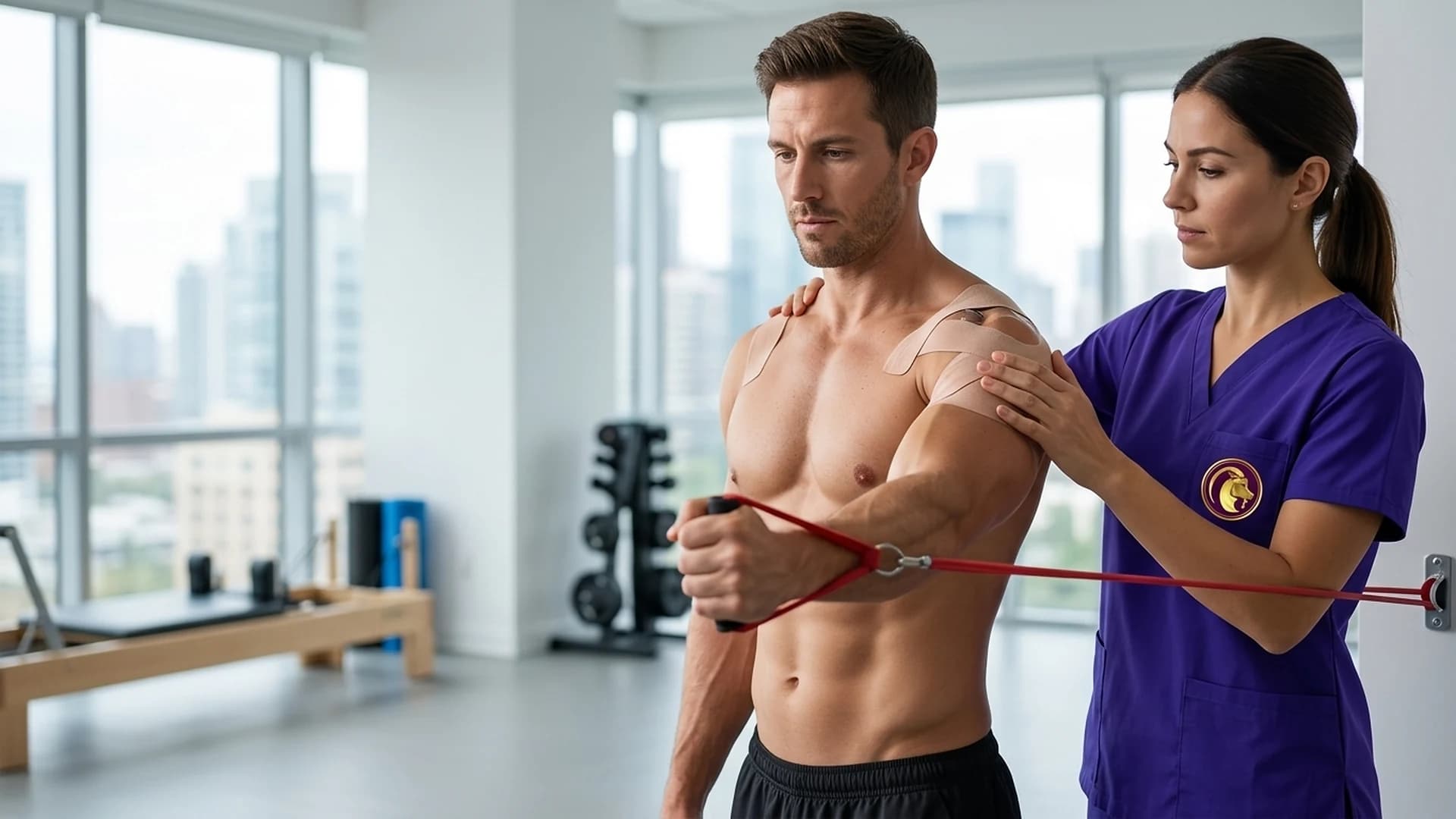
- Rotator cuff co-contraction training: Closed-chain axial compression drills to stimulate dynamic humeral head centering within the glenoid
- Postural biofeedback training to correct thoracic hyperkyphosis, which mechanically limits upward scapular rotation
Home Care & Ergonomic Strategies
Supporting recovery through evidence-based ergonomic habits and self-care:
- Maintain an upright posture during seated tasks; avoid slouched, forward-head postures that restrict thoracic extension and narrow the subacromial space
- Reorganize kitchen, office, and closet storage to keep frequently used items between hip and shoulder height
- Apply cryotherapy packs over the anterolateral shoulder for 15 minutes after activities requiring sustained arm elevation
- Adjust your workstation so the keyboard and mouse are positioned to keep elbows flexed at 90 degrees directly under the shoulders
- Avoid sleeping with the arm elevated overhead or tucked underneath the pillow
- Refrain from aggressive self-directed lateral arm raises or upright barbell rows, which maximize subacromial impingement angles
When to Contact Us
Do not let shoulder impingement progress into a full rotator cuff tear. Contact Aries PhysioCare today for a comprehensive biomechanical evaluation and targeted physical therapy.