Introduction: Understanding the Condition
The subacromial-subdeltoid bursa is the largest and most clinically significant synovial bursa in the human body, serving as a frictionless gliding interface between the overlying coracoacromial arch/deltoid and the underlying rotator cuff tendons. Shoulder bursitis occurs when repetitive mechanical friction, micro-trauma, or adjacent rotator cuff tendinopathy incites acute or chronic inflammation of this richly vascularized, densely innervated synovial sac. Left unmanaged, inflamed bursal walls become thickened, fibrous, and hyperalgesic, producing excruciating resting pain and marked functional impairment. Evidence-based physical therapy utilizes targeted biophysical agents and biomechanical corrections to eliminate bursal distension and restore pain-free motion.
Common Symptoms
Key clinical indicators and functional presentations:
- Exquisite point tenderness on deep palpation along the lateral and anterior margins of the acromion
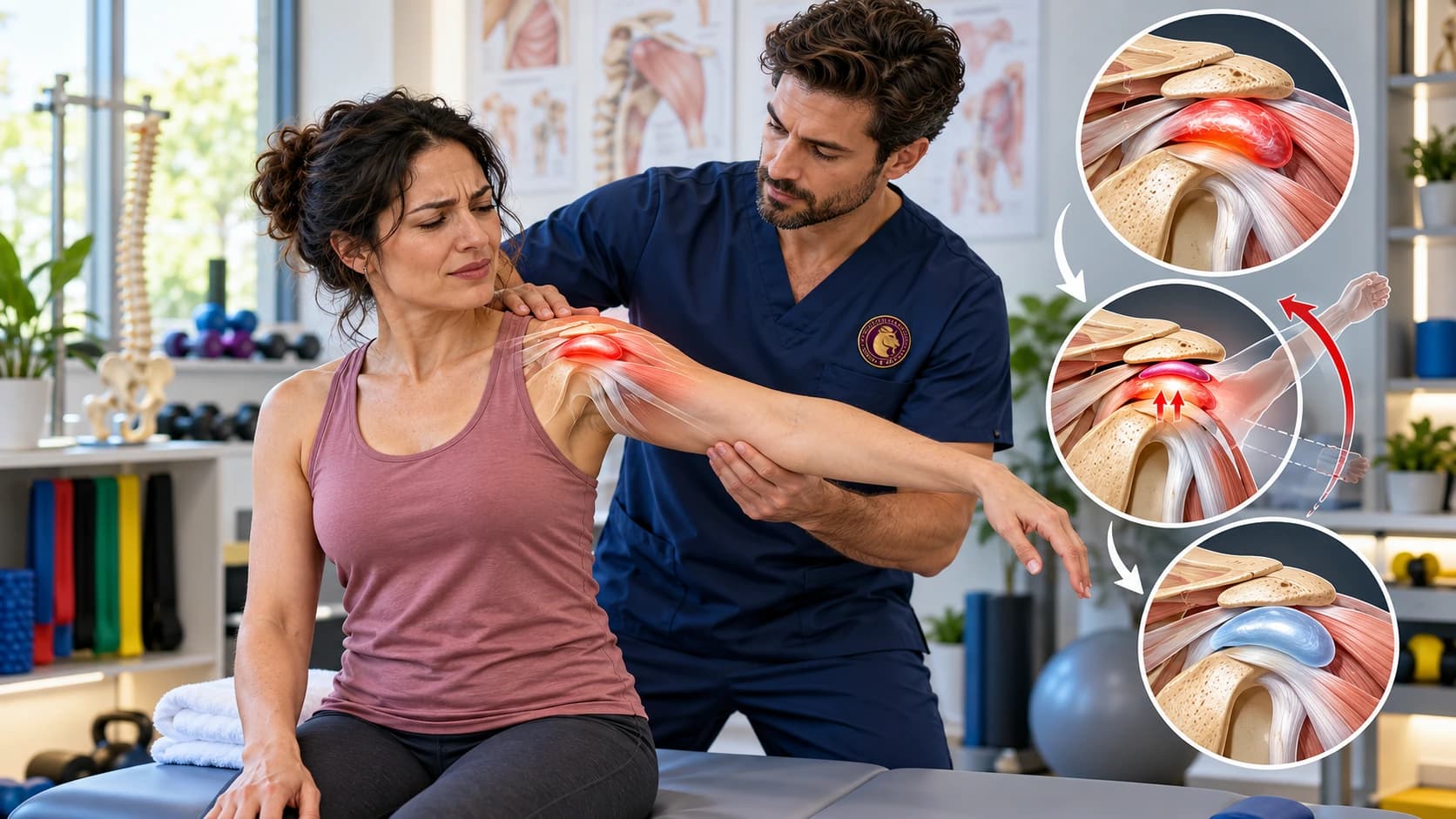
- Severe pain during the midrange of active shoulder abduction (painful arc between 60 and 120 degrees)
- Intense nocturnal pain when lying on the affected shoulder or when turning during sleep
- Radiating ache down the anterolateral upper arm that can extend toward the elbow joint
- Sensation of fullness, localized warmth, or deep burning within the shoulder joint
- Secondary limitation in shoulder abduction and internal rotation due to protective muscle guarding
Causes & Clinical Diagnosis
Etiological drivers and diagnostic assessment:
- Repetitive mechanical friction from prolonged overhead activities such as painting, carpentry, or tennis
- Direct traumatic contusion to the lateral shoulder from falls or athletic collisions
- Adjacent rotator cuff tendinopathy or calcific deposits leaching into the bursal cavity
- Diagnosis is confirmed through clinical palpation, orthopedic tests (positive Neer's test and Hawkins-Kennedy test), and high-resolution musculoskeletal ultrasound demonstrating bursal thickening exceeding 2 millimeters with anechoic fluid effusion.
Pathophysiology & Biomechanical Impact
The subacromial bursa is lined with specialized synoviocytes capable of rapid fluid exudation in response to friction. When subjected to repetitive shear forces or compressive overload, synovial cells release pro-inflammatory cytokines (IL-1beta, TNF-alpha) and substance P. This triggers marked hypervascularity, fluid accumulation, and bursal wall hypertrophy. Because the bursa contains abundant unmyelinated nociceptive free nerve endings, even minor increases in intra-bursal pressure produce disproportionate pain. The enlarged bursa acts as a mechanical space-occupying lesion within the non-compliant subacromial vault, exacerbating impingement during every elevation cycle.
Evidence-Based Physiotherapy Protocols
At Aries PhysioCare, our physical therapists implement clinician-administered rehabilitation protocols:
- Class-IV High-Intensity Laser Therapy (HILT) directed into the subacromial space to reduce synovial membrane inflammation and stimulate lymphatic drainage
- Calibrated Interferential Therapy (IFT) utilizing vector sweeps across the glenohumeral joint for rapid pain gate closure and muscular spasm relief
- Gentle manual therapy: Maitland Grade I and II glenohumeral joint distractions and inferior glides to decompress the inflamed bursa without provoking friction
- Myofascial release targeting hypertonic compensatory muscles (upper trapezius, levator scapulae, and pectoralis minor)
- Scapular upward rotation and posterior tilt neuromuscular retraining to elevate the acromial ceiling and increase subacromial volume
- Gradual closed-chain kinetic stabilization under physical therapist observation to re-establish dynamic humeral centering
Home Care & Ergonomic Strategies
Supporting recovery through evidence-based ergonomic habits and self-care:
- Apply cryotherapy over the lateral acromion for 15 minutes three times daily to suppress acute synovial fluid exudation and numb nerve endings
- Refrain from sleeping directly on the painful shoulder; sleep in a reclined position or on the opposite side with an axillary support pillow
- Avoid carrying heavy groceries, backpacks, or gym bags with the affected upper limb
- Modify daily activities to keep all work tasks below eye level and within arm's reach
- Refrain from repetitive forward reaching or prolonged static computer mouse usage without forearm support
- Avoid self-massaging or aggressively pressing into the painful lateral shoulder, which further traumatizes inflamed bursal walls
When to Contact Us
Persistent shoulder burning and sleep-disrupting pain are classic signs of bursal inflammation. Contact Aries PhysioCare today to schedule a targeted, evidence-based physical therapy consultation.