Introduction: Understanding the Condition
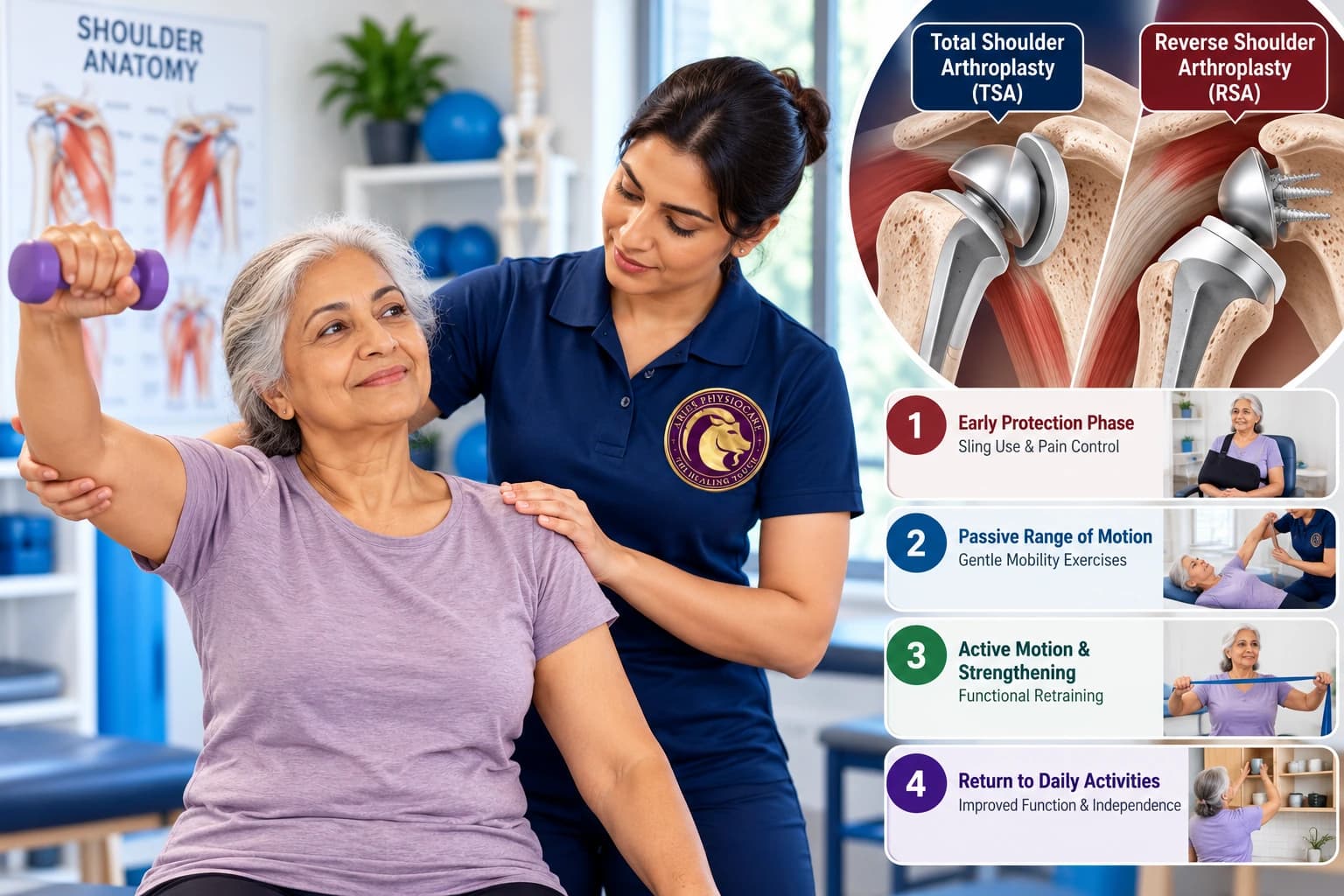
Shoulder arthroplasty is a transformative surgical procedure for severe end-stage glenohumeral osteoarthritis, complex proximal humerus fractures, or irreparable rotator cuff tear arthropathy. The two primary surgical approaches are Anatomic Total Shoulder Arthroplasty (TSA)—which replaces the ball and socket while relying on an intact rotator cuff—and Reverse Total Shoulder Arthroplasty (RTSA)—which swaps the ball and socket geometry, creating a semi-constrained joint powered primarily by the deltoid muscle. Recovery requires an intimate understanding of these divergent biomechanical foundations. Evidence-based physical therapy safely restores functional independence, protects prosthetic implants from loosening or dislocation, and maximizes active arm elevation.
Common Symptoms
Key clinical indicators and functional presentations:
- Post-surgical incisional discomfort, localized swelling, and extensive bruising across the chest and arm
- Requirement for continuous protective sling wear to safeguard prosthetic fixation and subscapularis repair
- Significant initial weakness and inability to lift the operative arm actively
- Temporary loss of functional independence in dressing, bathing, and meal preparation
- Periarticular muscular soreness and fatigue as surrounding muscles adapt to altered joint center-of-rotation mechanics
- Strict movement precautions (e.g., avoiding combined extension, adduction, and internal rotation in RTSA to prevent prosthetic dislocation)
Causes & Clinical Diagnosis
Etiological drivers and diagnostic assessment:
- Severe, bone-on-bone glenohumeral osteoarthritis refractory to conservative care (TSA)
- Rotator cuff tear arthropathy with superior humeral head migration and deltoid decompensation (RTSA)
- Severely comminuted, un-reconstructible proximal humerus fractures in older adults
- Rehabilitation protocols are customized based on prosthesis type (Anatomic vs. Reverse), surgical approach (deltopectoral vs. anterolateral), bone stock quality, and subscapularis repair integrity.
Pathophysiology & Biomechanical Impact
In Anatomic TSA, the subscapularis tendon must be detached and re-anchored during the approach; hence, passive external rotation must be strictly limited early on to protect tendon healing. In Reverse TSA, the center of rotation is medialized and distalized by placing a glenosphere on the glenoid and a socket on the humerus. This biomechanical alteration increases the deltoid muscle's moment arm and mechanical advantage by 30% to 40%, allowing the anterior and middle deltoid to elevate the arm without a functioning rotator cuff. However, the prosthetic constraint creates new dislocation risks that require specific movement precautions.
Evidence-Based Physiotherapy Protocols
At Aries PhysioCare, our physical therapists implement clinician-administered rehabilitation protocols:
- Prosthesis-specific protocol design: Strict differentiation between TSA protocols (protecting the healing subscapularis) and RTSA protocols (focusing on deltoid recruitment and avoiding extension/internal rotation dislocation vectors)
- Therapist-delivered passive range of motion: Safe, progressive restoration of elevation and external rotation within documented intra-operative limits
- Gentle active-assisted mobility drills initiated under clinician guidance as prosthetic stability and tissue healing are established
- Class-IV Laser Therapy and targeted IFT applied to control post-operative edema, accelerate incision healing, and manage periscapular muscular spasm
- Scapulothoracic stability and postural re-education to ensure a stable, supportive foundation for the prosthetic joint
- Deltoid motor recruitment and functional retraining (especially in RTSA) to build endurance for daily reaching and lifting tasks
Home Care & Ergonomic Strategies
Supporting recovery through evidence-based ergonomic habits and self-care:
- Wear your prescribed post-operative sling consistently, particularly during sleep, transfers, and walking in public spaces
- In RTSA: Strictly avoid the 'dislocation position' of extending your arm behind your back, reaching into back pockets, or pushing yourself up from a chair with both hands
- Perform active hand, wrist, and elbow movements regularly throughout the day to stimulate circulation and prevent venous stasis
- Apply cold therapy for 15 to 20 minutes across the shoulder joint to manage post-operative swelling and promote comfort
- Sleep propped up on a recliner or semi-upright in bed with a supportive pillow placed behind the operative elbow to prevent backward humeral extension
- Avoid all heavy lifting, pushing, or pulling tasks until cleared by both your orthopedic surgeon and physical therapist
When to Contact Us
Maximize the longevity and function of your shoulder replacement. Contact Aries PhysioCare today for a specialized total or reverse shoulder replacement rehabilitation program.