
Introduction: Understanding Scoliosis
Scoliosis is a complex three-dimensional deformity of the spine characterized by lateral curvature (coronal plane) combined with vertebral rotation (axial plane) and altered sagittal curves. Most commonly presenting as Adolescent Idiopathic Scoliosis (AIS) or adult degenerative de novo scoliosis, it affects posture, chest symmetry, and biomechanics. Modern specialized physiotherapy—particularly the evidence-based Schroth Method—provides curve-specific 3D exercises that stabilize curves, reduce pain, and frequently prevent surgical fusion.
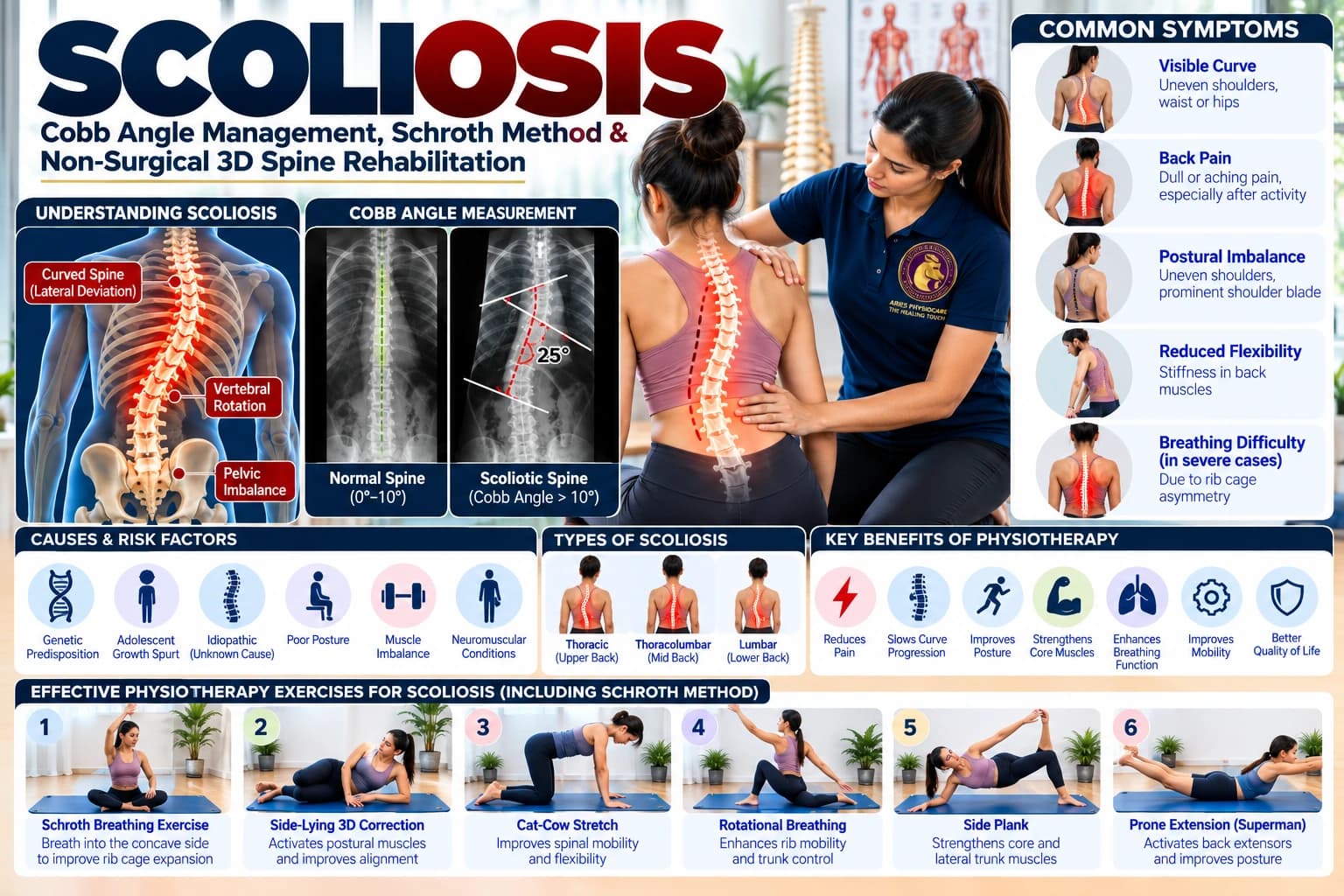
Common Symptoms of Scoliosis
Postural asymmetries and mechanical fatigue:
- Visible uneven shoulder height or one shoulder blade (scapula) protruding more prominently
- Asymmetrical waistline folds or one hip appearing higher and more prominent than the other
- Rib hump deformity visible when bending forward (positive Adam’s Forward Bend Test)
- Chronic, unilateral muscular aching in the concave side of the spinal curvature
- Premature physical fatigue during standing, walking, or sports participation
- Reduced lung capacity in severe thoracic curves due to rib cage rotation
- Sensation of an unbalanced or twisting spine during daily activities
Causes & Clinical Diagnosis
Etiological categories:
- Adolescent Idiopathic Scoliosis (AIS): Multi-factorial genetic predisposition (80% of cases)
- Adult Degenerative Scoliosis: Asymmetrical disc collapse and facet arthritis
- Neuromuscular scoliosis: Secondary to cerebral palsy or muscular dystrophy
- Diagnosis uses the Adam's forward bend test with a scoliometer, followed by full-spine standing X-rays to measure the exact Cobb angle.
Pathophysiology & Biomechanical Impact
According to the Hueter-Volkmann law, bone growth is retarded by increased compression and accelerated by reduced loading. In a scoliotic curve, the concave side experiences continuous excessive compression, creating wedged vertebrae that reinforce the 3D twist unless corrected with active 3D elongation.
Evidence-Based Physiotherapy Protocols
- Schroth Method 3D exercises: Custom asymmetric elongation, de-rotation, and angular stabilization
- Rotational Angular Breathing (RAB) to expand collapsed convexities of the rib cage
- Pelvic correction maneuvers to re-establish a balanced foundation beneath the curve
- Dynamic core stability training to maintain newly trained 3D alignment under gravity
Home Care & Ergonomic Strategies
- Perform daily Schroth prescribed exercises faithfully, utilizing wall bars or mirrors for visual feedback
- Avoid asymmetrical sports that heavily load one side of the body without balancing drills
- Maintain an active lifestyle; swimming and core strengthening support spinal endurance
- Ensure regular radiological and scoliometer follow-ups during peak growth spurts
When to Contact Us
Manage scoliosis proactively with specialized 3D physiotherapy. Contact Aries PhysioCare for certified Schroth-based home rehabilitation and comprehensive scoliotic curve care.