
Introduction: Understanding Scheuermann’s Kyphosis
Scheuermann’s Kyphosis is a developmental structural disorder of the spine that typically manifests during the adolescent growth spurt (ages 12 to 17). Unlike flexible postural slouching that corrects when the person stands up straight, Scheuermann’s involves true structural wedging of the vertebrae. Catching the condition early while the skeleton is still growing allows conservative physiotherapy and bracing to halt curve progression and prevent permanent rigid deformity.
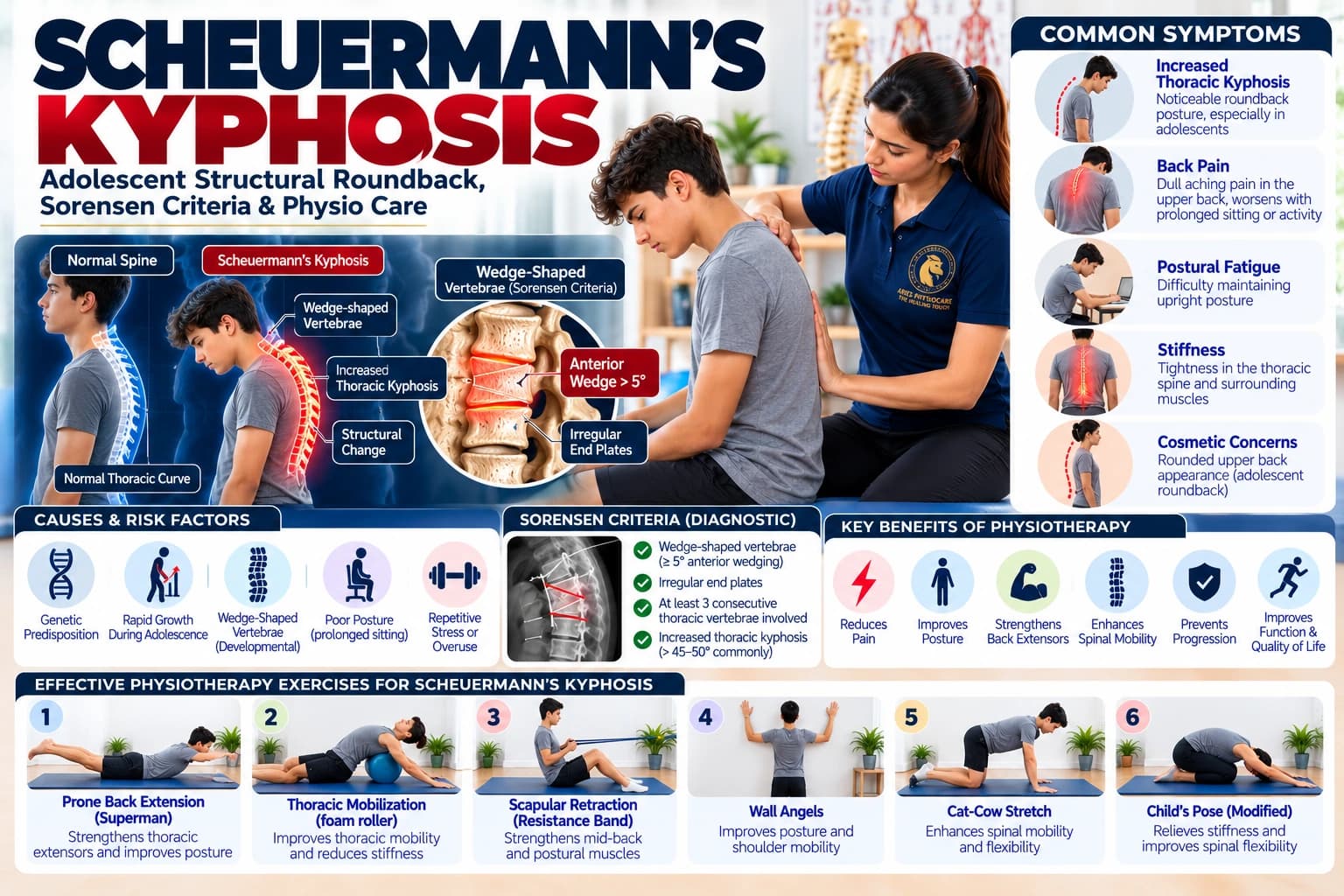
Common Symptoms of Scheuermann’s Disease
Structural roundback indicators:
- Rigid, rounded upper back deformity that does not flatten when attempting to stand straight
- Aching mid-to-lower thoracic pain after sitting in school classrooms or sports activity
- Severe tightness in the hamstrings, hip flexors, and pectoralis muscles
- Compensatory hyperlordosis (swayback) in the lumbar spine to keep the gaze horizontal
- Prominent appearance of the spinous processes in the apex of the curve
- Muscle fatigue in paraspinals when carrying heavy backpacks
- Restricted spinal extension and rotation during physical education classes
Causes & Clinical Diagnosis
Sorensen radiological diagnostic criteria:
- Anterior wedging of ≥5 degrees across at least 3 contiguous thoracic vertebrae
- Irregular vertebral endplates and intravertebral disc herniations (Schmorl's nodes)
- Thoracic kyphosis angle exceeding 45 degrees on lateral standing X-rays
- The exact cause involves genetic predisposition and abnormal endplate vascularization during peak bone growth.
Pathophysiology & Biomechanical Impact
The anterior column of the vertebral bodies experiences delayed growth compared to the normal posterior column, producing trapezoidal, wedged vertebrae. This creates an irreversible structural apex that shifts the mechanical center of gravity anteriorly.
Evidence-Based Physiotherapy Protocols
- Schroth Method and 3D spinal elongation techniques to unload the anterior vertebral bodies
- Aggressive hamstring and pectoral myofascial lengthening to optimize sagittal pelvic balance
- Thoracic extensor strengthening in prone and quadruped positions
- Coordination with orthopedic spine specialists for corrective bracing (Milwaukee or Boston brace) when indicated
Home Care & Ergonomic Strategies
- Avoid forward-slumped gaming or texting postures that accelerate anterior vertebral loading
- Limit school backpack weight to under 10% of total body weight, using both shoulder straps
- Perform daily prone superman exercises and wall press-ups to build extensor stamina
- Sleep on a firm mattress with a low cervical pillow
When to Contact Us
Early adolescent intervention is vital before skeletal maturity closes growth plates. Contact Aries PhysioCare for specialized adolescent spine physiotherapy and structural kyphosis care.