
Introduction: Understanding the Condition
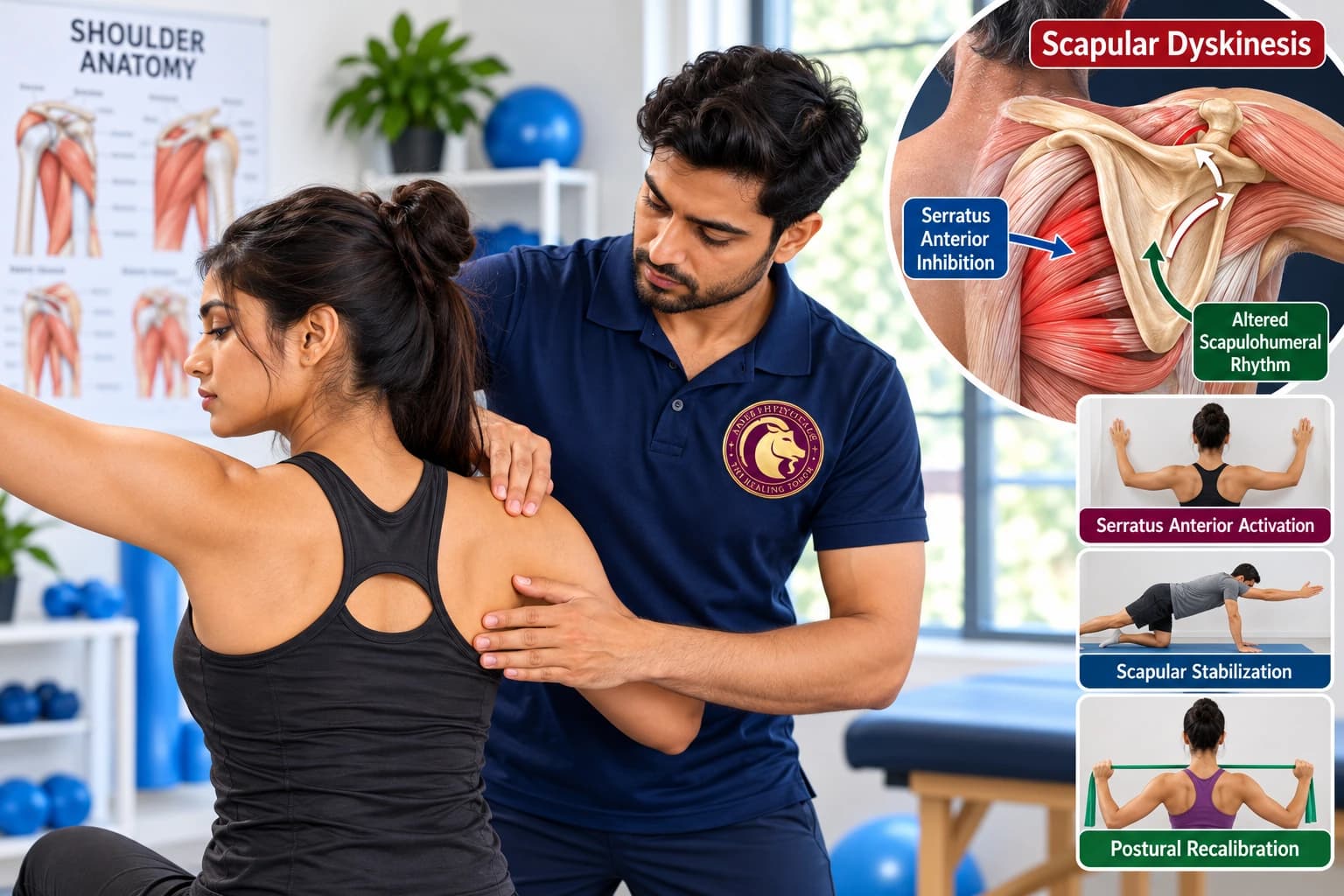
The scapula serves as the mobile anatomical anchor for the entire upper extremity, linking the axial skeleton to the humerus and providing a stable platform for the rotator cuff. Normal arm elevation requires a flawless 2:1 scapulohumeral rhythm: for every two degrees of glenohumeral elevation, the scapula must rotate upwardly by one degree. Scapular dyskinesis represents an observable alteration in normal resting scapular position and dynamic scapular motion during arm elevation and lowering. Classified under the Kibler system into Types I, II, and III, dyskinesis is rarely an isolated disorder; rather, it is a primary biomechanical driver of subacromial impingement, rotator cuff tears, and labral pathology. Physical therapy restores muscular force couples to realign the scapular platform.
Common Symptoms
Key clinical indicators and functional presentations:
- Visible prominence or 'winging' of the medial scapular border or inferior scapular angle during arm elevation and lowering
- Aching discomfort concentrated in the upper trapezius, levator scapulae, and medial interscapular region
- Sensation of shoulder fatigue, heaviness, or instability during sustained computer work or overhead tasks
- Loss of maximal shoulder elevation power and athletic throwing velocity
- Compensatory neck tightness and secondary tension headaches radiating from the suboccipital region
- Positive Scapular Assistance Test (SAT) and Scapular Retraction Test (SRT) resulting in immediate reduction of shoulder pain during elevation
Causes & Clinical Diagnosis
Etiological drivers and diagnostic assessment:
- Inhibition and weakness of the primary scapular stabilizers (serratus anterior and lower trapezius)
- Hyperactivity, shortening, and adaptive contracture of the upper trapezius, levator scapulae, and pectoralis minor
- Structural thoracic hyperkyphosis, cervical radiculopathy, or long thoracic nerve neuropraxia
- Clinical diagnosis involves visual dynamic dyskinesis assessment (Kibler classification), measurement of resting lateral scapular slide, and specialized corrective maneuver testing (Scapular Assistance Test, Scapular Retraction Test).
Pathophysiology & Biomechanical Impact
Dynamic scapular positioning is governed by complex muscular force couples: the upper and lower trapezius working synchronously with the serratus anterior to produce upward rotation and posterior tilt. In dyskinesis, prolonged slouched sitting and repetitive strain cause reflex reciprocal inhibition of the serratus anterior and lower trapezius. Concurrently, the pectoralis minor tightens, mechanically pulling the scapula into anterior tilt and internal rotation. This anatomical misalignment tilts the acromion downward and forward, directly compressing the subacromial space during arm elevation and predisposing the rotator cuff to mechanical impingement.
Evidence-Based Physiotherapy Protocols
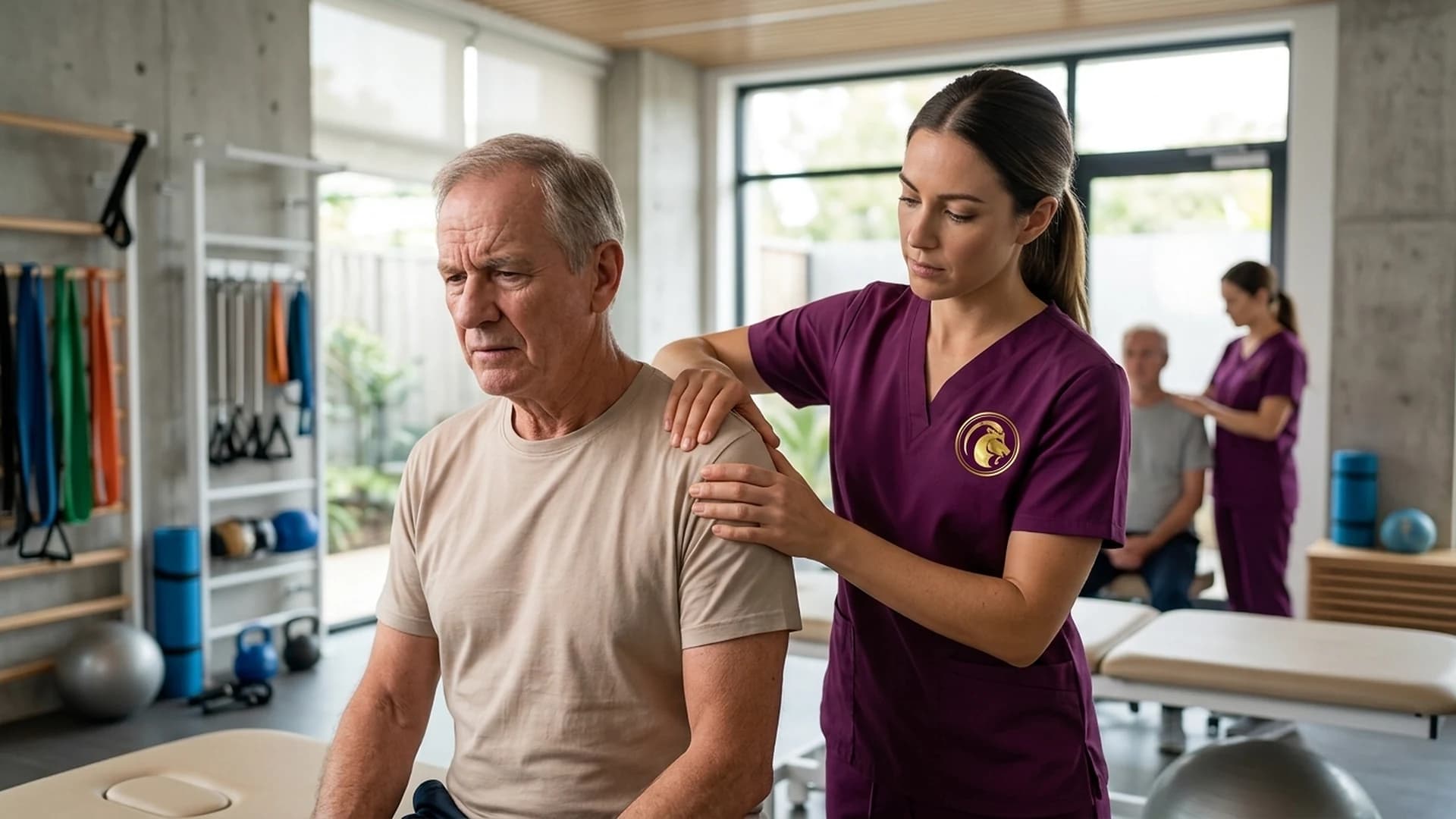
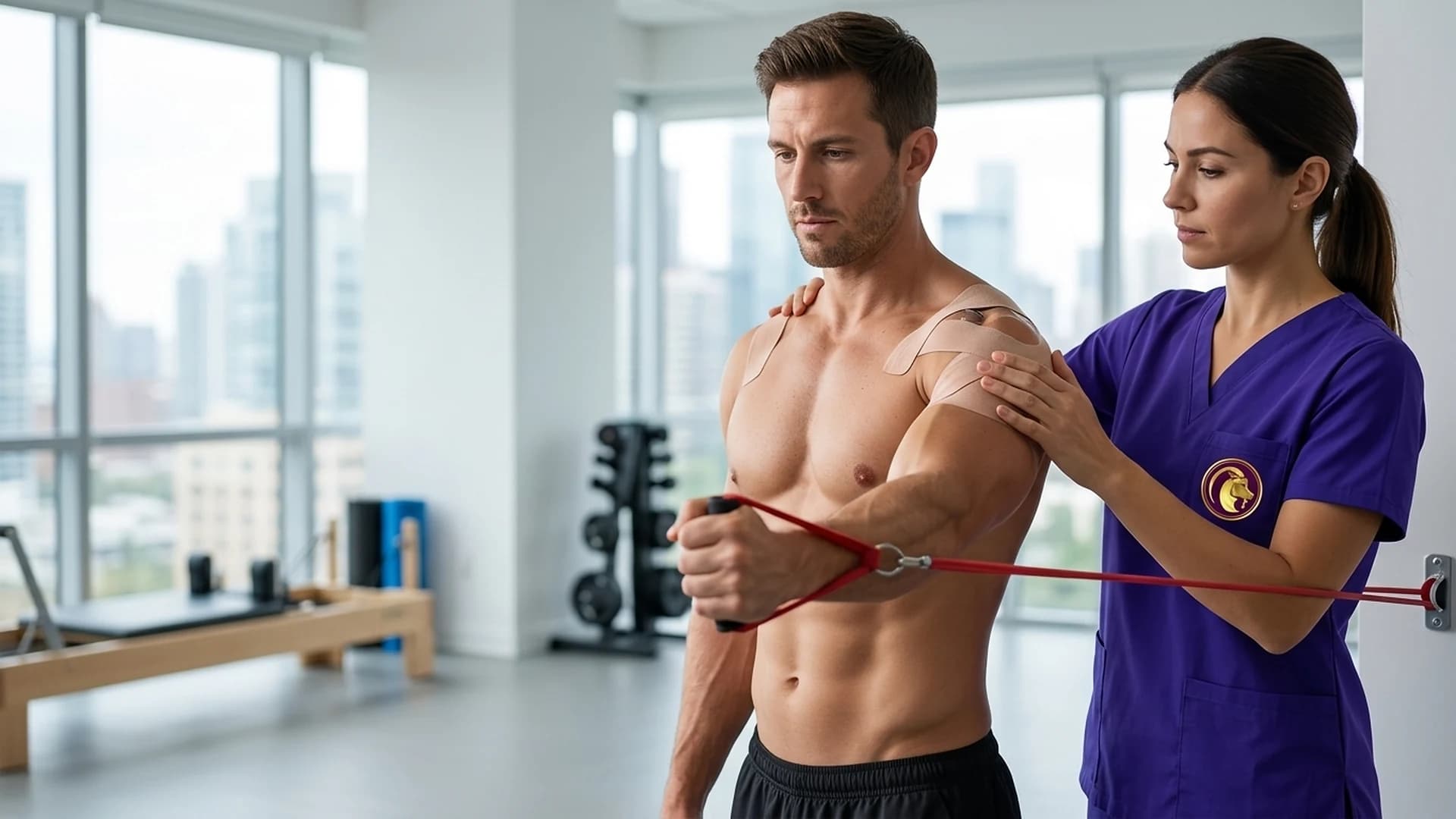
At Aries PhysioCare, our physical therapists implement clinician-administered rehabilitation protocols:
- Specific neuromuscular re-education targeting the serratus anterior using therapist-guided closed-chain wall and surface contact drills
- Lower trapezius selective activation protocols in prone and side-lying postures under direct tactile feedback, deliberately inhibiting upper trapezius dominance
- Manual soft tissue mobilization and trigger point therapy targeting shortened myofascial structures (pectoralis minor, levator scapulae, and subclavius)
- Thoracic spine manual mobilizations and extension re-education to eliminate compensatory thoracic kyphosis that impairs upward scapular rotation
- Real-time postural biofeedback using mirror training and pressure sensors to restore conscious scapular spatial awareness
- Kinetic chain integration: Synchronizing core and pelvic rotational stability with scapular dynamic control during multi-planar reaching tasks
Home Care & Ergonomic Strategies
Supporting recovery through evidence-based ergonomic habits and self-care:
- Implement hourly postural resets: Open the chest, gently draw the lower shoulder blades down and back, and lengthen the back of the neck
- Adjust your computer workstation so that the monitor's top third is at eye level and armrests support the forearms at 90 degrees
- Avoid carrying heavy asymmetric shoulder bags or backpacks over a single shoulder
- Sleep on your back or unaffected side with proper cervical and arm support to prevent nocturnal scapular protraction
- Apply moist heat across the upper trapezius and interscapular region for 15 minutes to relieve chronic muscular fatigue
- Refrain from aggressive, unsupervised overhead military presses or behind-the-neck pulldowns that reinforce aberrant scapular movement patterns
When to Contact Us
Abnormal shoulder blade movement is the hidden root of most chronic shoulder conditions. Contact Aries PhysioCare today for a thorough scapular dyskinesis evaluation and kinetic rehabilitation program.