Introduction: Understanding the Condition
Rotator cuff tendinopathy is one of the most frequent sources of shoulder pain in working-age adults and athletes. Historically mislabeled as tendinitis, modern histopathology demonstrates that this condition is not an acute inflammatory disorder, but rather a non-inflammatory degenerative process characterized by failed healing, hypercellularity, disoriented collagen fibers, and angiofibroblastic hyperplasia. Physical therapy addresses the biological root of tendinopathy through structured mechanotherapy—applying controlled, clinician-supervised mechanical loads to stimulate tenocyte cellular signaling, up-regulate collagen type I synthesis, and normalize the tendon's load-bearing capacity.
Common Symptoms
Key clinical indicators and functional presentations:
- Gradual onset of localized aching over the anterolateral acromion and deltoid region
- Pain exacerbated by repetitive or sustained overhead activities such as painting, tennis, or swimming
- Characteristic painful arc between 70 and 120 degrees of active abduction, with symptom reduction at full overhead elevation
- Morning stiffness and dull ache that temporarily eases with gentle movement but returns following sustained use
- Tenderness to deep palpation over the greater tuberosity of the humerus
- Mild to moderate weakness on resisted isometric testing in external rotation and scaption
Causes & Clinical Diagnosis
Etiological drivers and diagnostic assessment:
- Repetitive mechanical loading beyond the tendon's intrinsic adaptive threshold
- Static, unergonomic seated postures causing protracted scapular alignment and reduced subacromial clearance
- Age-related loss of collagen elasticity, proteoglycan degradation, and localized microvascular insufficiency
- Diagnosis is determined through orthopedic clinical testing (Neer's sign, Hawkins-Kennedy impingement test, Painful Arc test) and musculoskeletal ultrasound revealing tendon thickening, hypoechoic structural changes, and neovascularization on power Doppler.
Pathophysiology & Biomechanical Impact
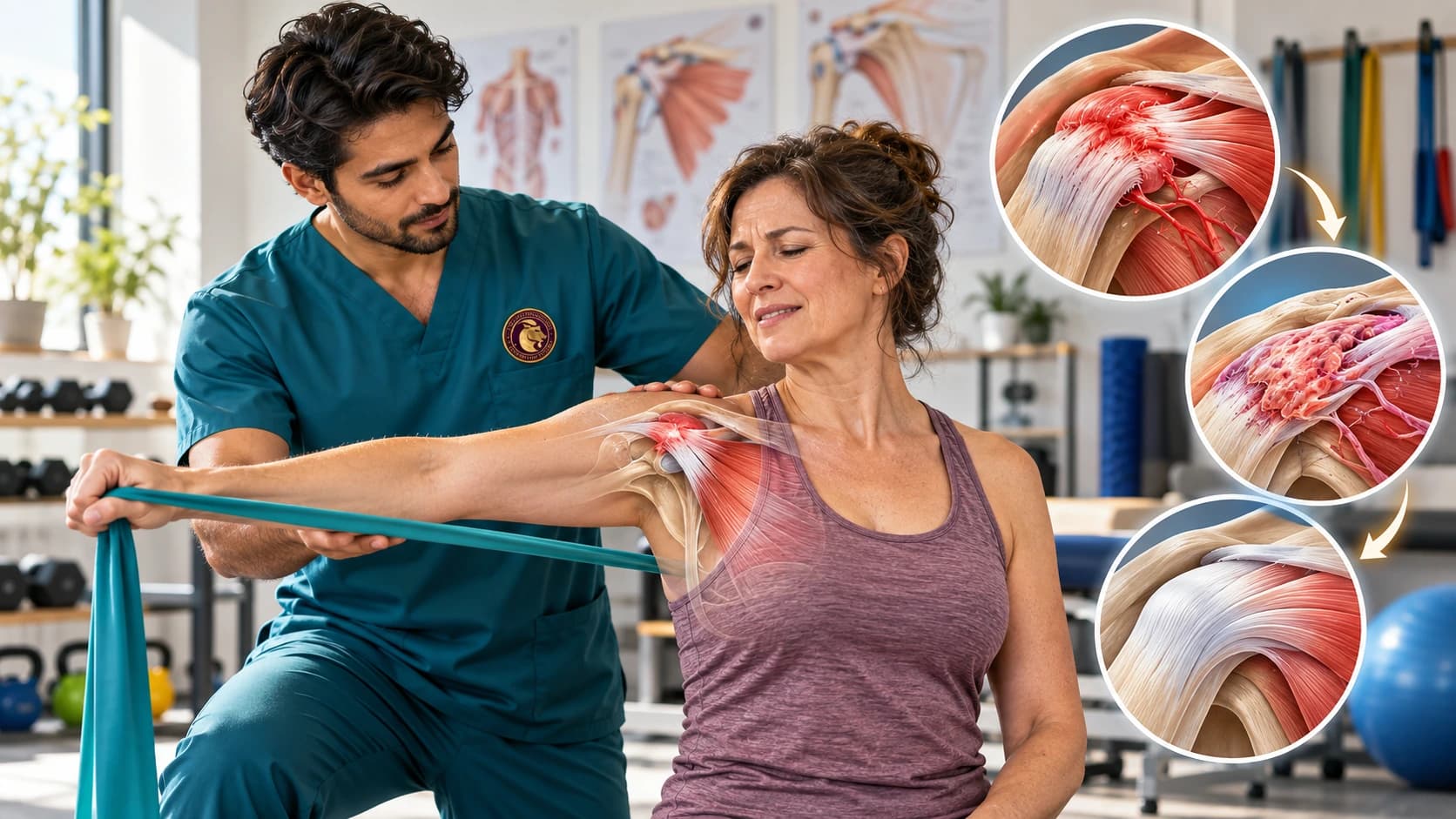
The pathological continuum progresses through reactive tendinopathy, tendon dysrepair, and degenerative tendinopathy. Overload triggers excessive production of aggrecan and biglycan proteoglycans, leading to bound water accumulation and localized tendon swelling. This swelling increases tendon thickness, exacerbating secondary mechanical impingement under the coracoacromial arch. Over time, tenocytes become rounded and chondroid, normal parallel type I collagen bundles dissociate into disorganized type III fibrils, and fragile neovessels infiltrate accompanied by nociceptive nerve sprouting, which drives persistent clinical hypersensitivity.
Evidence-Based Physiotherapy Protocols
At Aries PhysioCare, our physical therapists implement clinician-administered rehabilitation protocols:
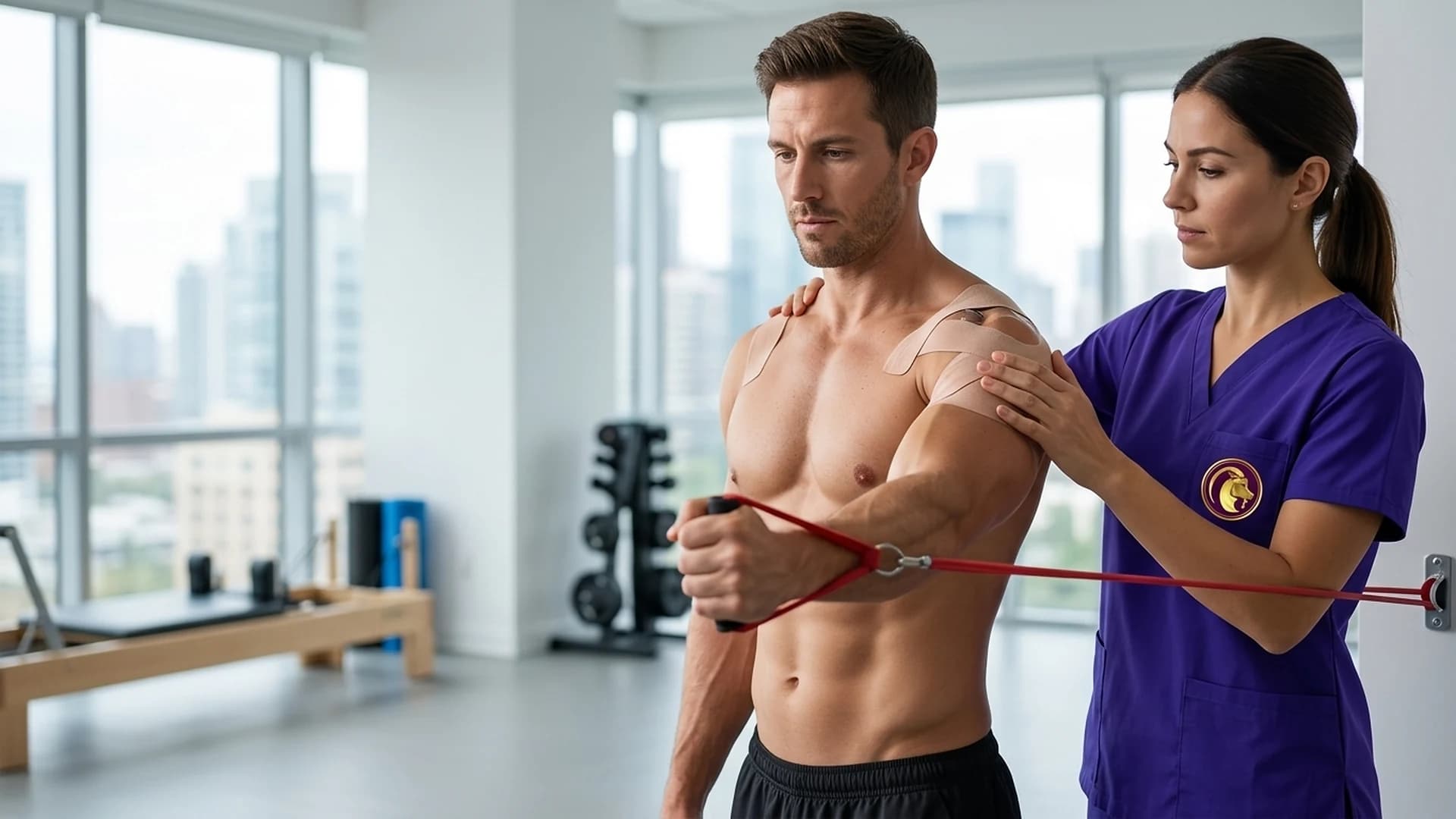
- Therapist-guided isometric loading protocols: Utilizing sustained submaximal isometric contractions at specific angles to induce immediate cortical inhibition and analgesia
- Heavy Slow Resistance (HSR) clinician-administered mechanotherapy: Applying slow, controlled concentric-eccentric mechanical loading to stimulate tenocyte extracellular matrix remodeling
- Maitland manual therapy: Glenohumeral posterior-inferior mobilizations to enhance capsular compliance and restore normal posterior glide during elevation
- Class-IV Deep Tissue Laser Therapy targeting the supraspinatus insertion to accelerate cellular ATP production, stimulate tenocyte proliferation, and modulate local neovascularization
- Instrument-Assisted Soft Tissue Mobilization (IASTM) to address secondary myofascial trigger points in the infraspinatus, teres minor, and pectoralis minor
- Scapular motor control retraining focusing on lower trapezius and serratus anterior activation to ensure optimal glenoid positioning during humeral elevation
Home Care & Ergonomic Strategies
Supporting recovery through evidence-based ergonomic habits and self-care:
- Adhere strictly to activity modification: Avoid provocative repetitive overhead reaching while maintaining functional arm movement below eye level
- Ensure computer mice and keyboards are positioned close to the body with forearms supported to prevent continuous isometric shoulder tension
- Apply thermal contrast therapy: Moist heat for 15 minutes before daily tasks to improve tissue elasticity, followed by cryotherapy post-activity if reactive warmth occurs
- Sleep in a semi-recumbent posture or on the unaffected side with a dedicated pillow supporting the affected arm
- Avoid carrying heavy shoulder bags, backpacks with single straps, or prolonged lifting of loads with extended elbows
- Refrain from aggressive self-stretching or high-speed arm circles, which cause compressive friction across the inflamed tendon insertion
When to Contact Us
Overcome chronic rotator cuff discomfort through scientifically validated tendon remodeling. Contact Aries PhysioCare today to begin an evidence-based shoulder rehabilitation program.