Introduction: Understanding the Condition
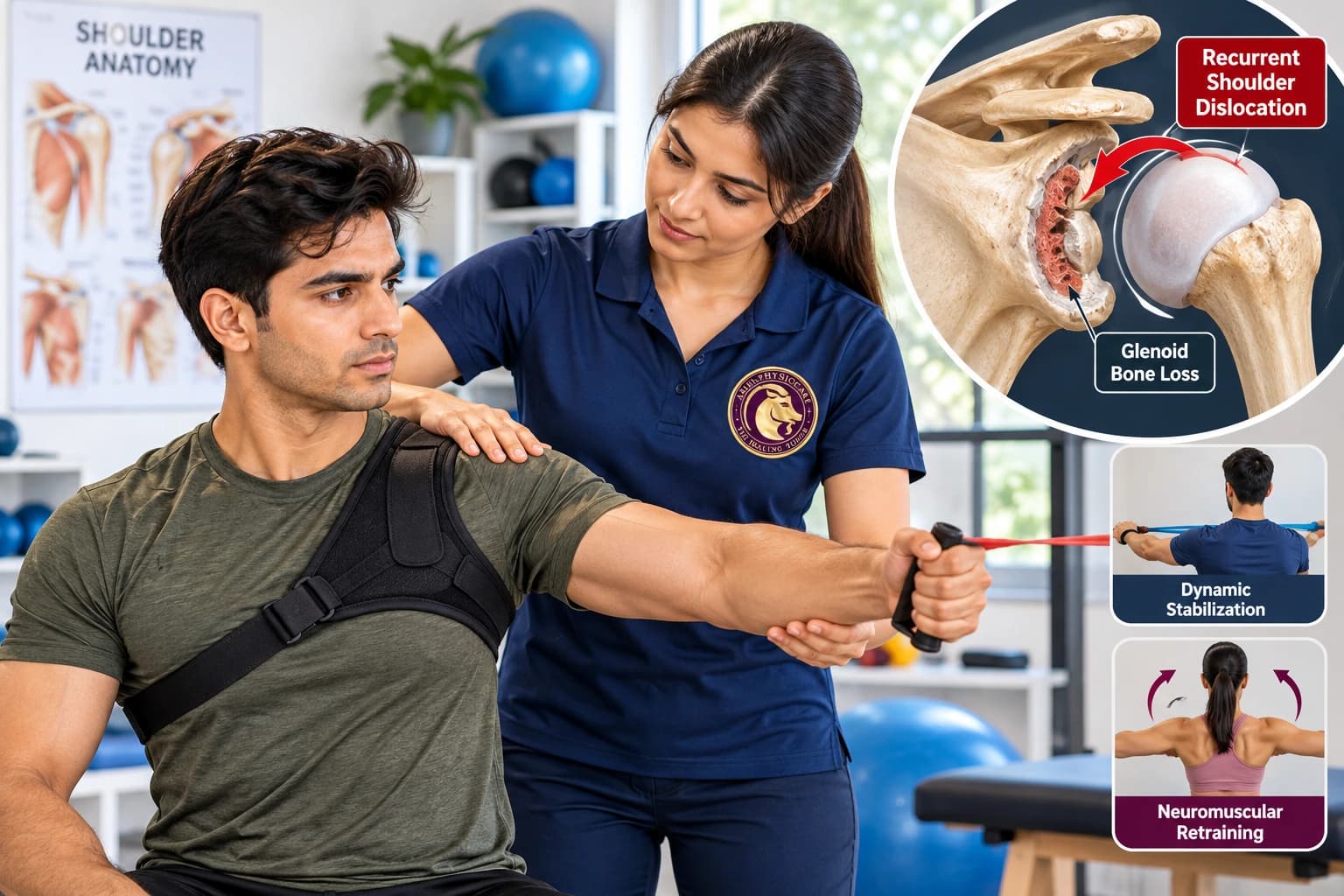
Recurrent shoulder dislocation is a debilitating chronic condition in which the glenohumeral joint dislocates or subluxates repeatedly with progressively diminishing forces, sometimes triggered by trivial daily activities such as rolling over in bed or putting on a jacket. This repetitive instability is driven by progressive structural failure—including chronic Bankart lesions, anterior glenoid rim bone loss, engaging Hill-Sachs defects, and severe capsular laxity. When surgical reconstruction is delayed or contraindicated, comprehensive conservative physical therapy serves as the primary barrier against joint destruction, leveraging dynamic muscular hypertrophy, reactive neuromuscular stabilization, and kinetic chain coordination to compensate for absent anatomical restraints.
Common Symptoms
Key clinical indicators and functional presentations:
- Repeated episodes of complete joint displacement or painful subluxations with minimal mechanical force
- Severe apprehension and fear of movement during daily activities involving arm elevation and external rotation
- Subjective feeling that the shoulder is 'hanging loose' or perpetually out of its socket
- Progressive, cumulative dull periscapular ache and chronic rotator cuff fatigue
- Audible or palpable clunking during routine arm movements as the humeral head subluxates across the glenoid rim
- Secondary joint hypermobility and early degenerative crepitus within the glenohumeral joint
Causes & Clinical Diagnosis
Etiological drivers and diagnostic assessment:
- Young age at first traumatic dislocation (failure of initial capsulolabral healing)
- Accumulated critical anterior glenoid bone loss (inverted pear glenoid) exceeding 15% to 20%
- Large, engaging Hill-Sachs impaction defects on the posterior humeral head
- Diagnosis requires specialized orthopedic stability testing (Apprehension, Relocation, and Surprise tests) paired with 3D CT bone reconstruction to quantify glenoid bone loss and MRI arthrography to assess capsulolabral sleeve integrity.
Pathophysiology & Biomechanical Impact
With every dislocation episode, the anterior glenoid labrum and periosteum become further stripped and displaced medially, a pathology known as a chronic Bankart lesion. Simultaneously, repetitive impacts erode the anterior bony glenoid margin. When bone loss reaches a critical threshold, the effective glenoid arc narrows, making concave-compression mechanics impossible. The humeral head easily slips over the compromised rim. Dynamic stability requires dramatic hypertrophy and hypersensitive neuromuscular pre-activation of the subscapularis, anterior deltoid, and periscapular musculature to create an active muscular barrier.
Evidence-Based Physiotherapy Protocols
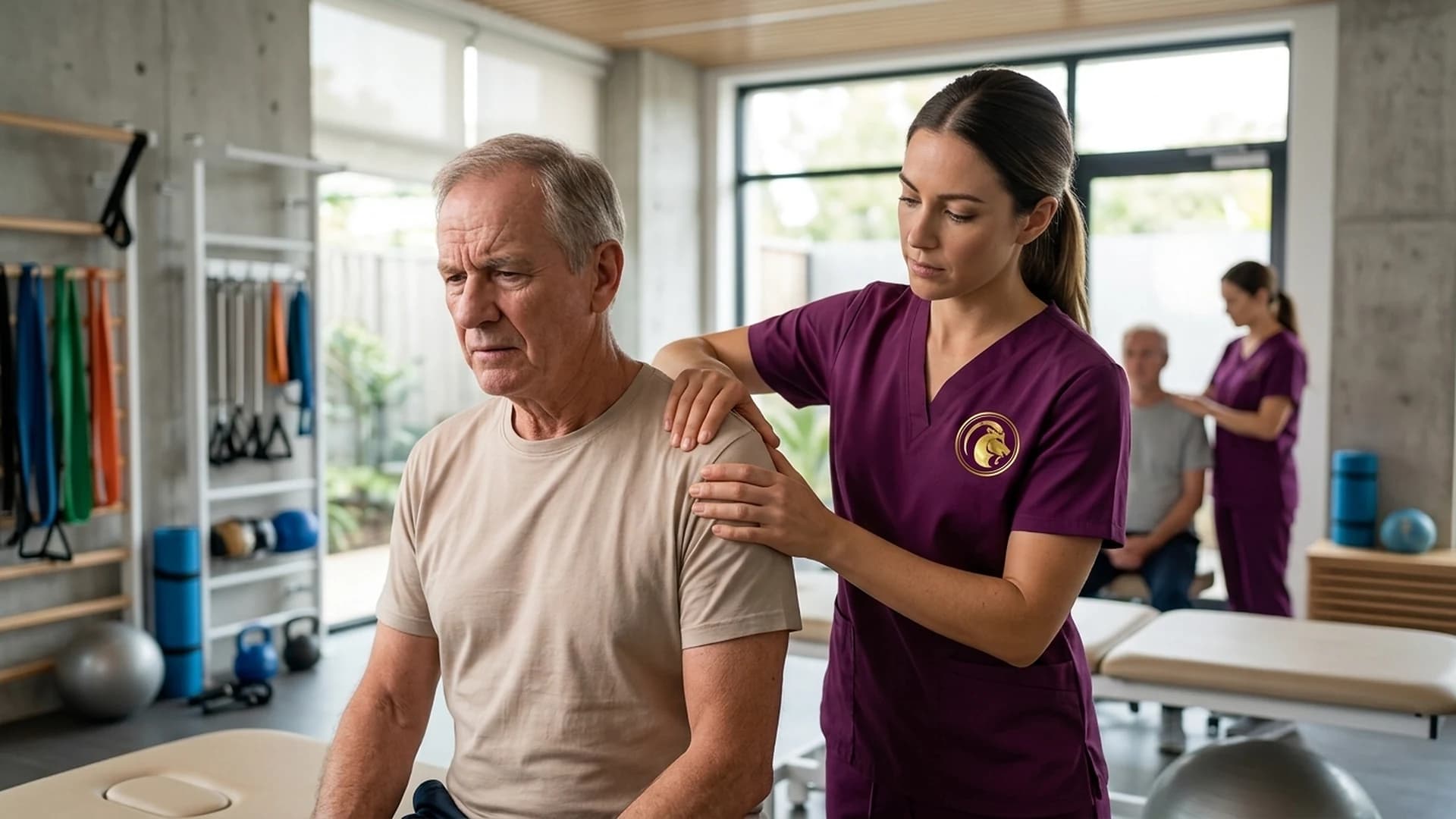
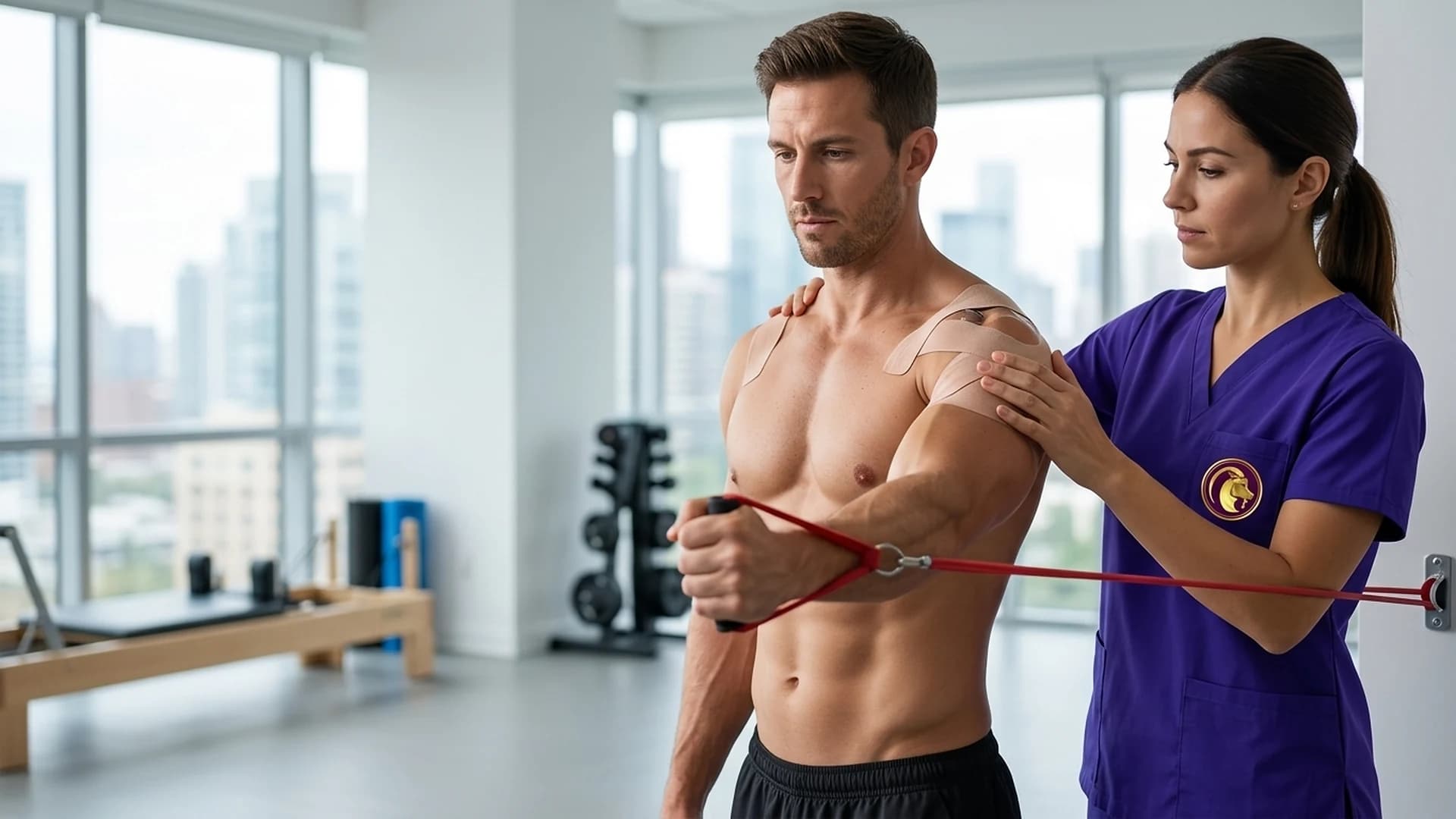
At Aries PhysioCare, our physical therapists implement clinician-administered rehabilitation protocols:
- Dynamic anterior stabilizer hypertrophy: Targeted neuromuscular training of the subscapularis muscle to provide an active anterior muscular buttress across the joint
- Proprioceptive reactive neuromuscular training (RNT): Rapid-response therapist perturbations in safe, controlled ranges to train automatic muscular co-contraction
- Closed-chain multi-planar stability drills utilizing unstable bases of support (wobble boards, balance pads) under strict therapist supervision
- Scapulothoracic re-alignment protocols to ensure the scapula rapidly tracks humeral motion, keeping the intact posterior glenoid positioned beneath the humeral head
- Biophysical modalities: Class-IV Laser and IFT applied to manage chronic secondary cuff tendinopathy and reduce periarticular inflammation
- Functional movement re-patterning to replace high-risk overhead movements with mechanically stable movement pathways
Home Care & Ergonomic Strategies
Supporting recovery through evidence-based ergonomic habits and self-care:
- Strictly avoid end-range external rotation combined with abduction; modify grooming, dressing, and reaching habits accordingly
- Never sleep with the arm raised overhead or resting beneath a pillow; position the arm comfortably on an anterior support pillow
- Avoid all contact sports, martial arts, or aggressive overhead throwing activities without explicit physical therapy clearance
- Utilize supportive athletic taping or functional shoulder stabilizers during unavoidable challenging daily tasks
- Ensure computer workstations keep the keyboard and mouse directly in front of the body to eliminate sudden reaching
- Avoid self-reduction maneuvers or letting untrained individuals pull on the arm if a dislocation occurs; seek immediate professional emergency reduction
When to Contact Us
Take control of chronic shoulder slipping and recurrent instability. Contact Aries PhysioCare today for a clinical dynamic stabilization and joint preservation consultation.