

Introduction: Understanding the Condition
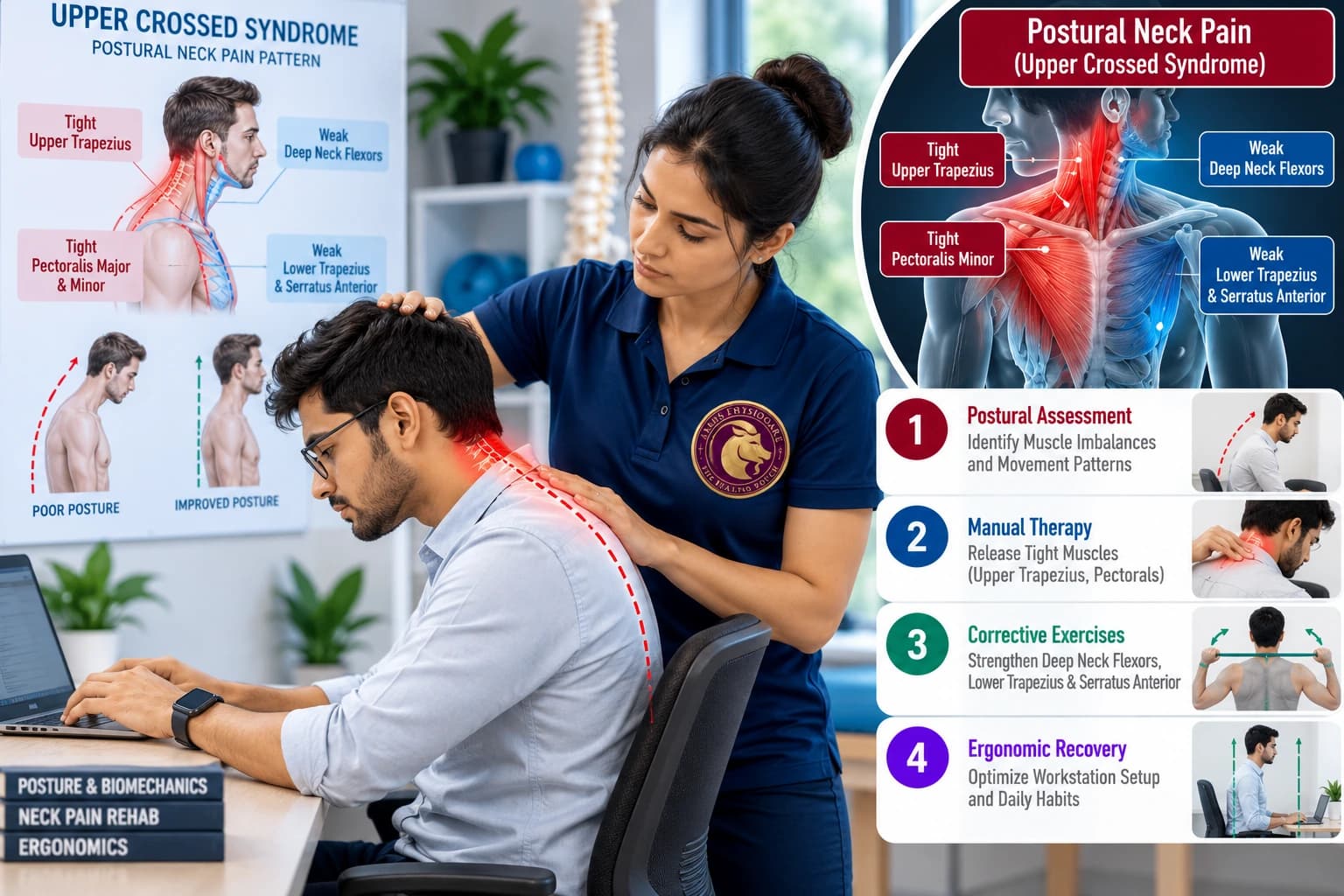
Postural neck pain is a chronic musculoskeletal syndrome arising from habitual, uncorrected sagittal spinal misalignments, most notably Upper Crossed Syndrome (UCS). First classified by clinical neurologist Dr. Vladimir Janda, Upper Crossed Syndrome is characterized by a predictable pattern of muscular imbalance in the upper body: tonic postural muscles (upper trapezius, levator scapulae, pectoralis major and minor) become chronically hypertonic and shortened, while phasic dynamic stabilizers (deep cervical flexors, lower trapezius, serratus anterior, and rhomboids) become inhibited and lengthened. This structural cross-pattern pulls the head forward, rounds the shoulders, and subjects cervical motion segments to persistent shear stress. Targeted physical therapy systematically reverses these imbalances and restores durable postural stability.
Common Symptoms
Key clinical indicators and functional presentations:
- Dull, generalized aching across the back of the neck and upper thoracic spine that worsens as the day progresses
- Prominent forward head posture where the chin projects anterior to the sternal notch
- Rounded shoulders with internal rotation of the humerus and anterior scapular tipping
- Mid-thoracic burning discomfort between the shoulder blades following prolonged desk work
- Suboccipital tension and bilateral headaches emerging during afternoon hours
- Restricted thoracic spine extension, producing a compensatory hyperextension of the upper neck
- Shallow breathing patterns accompanied by tightness across the anterior chest wall
Causes & Clinical Diagnosis
Etiological drivers and diagnostic assessment:
- Sustained sedentary desk occupations, laptop usage, and continuous handheld smartphone viewing
- Improper workstation ergonomics (screens positioned too low, unsupportive chairs, lack of forearm rests)
- Sedentary lifestyle lacking multi-planar thoracic extension and rotational movement
- Psychological stress inducing chronic sympathetic elevation of the shoulder girdle
- Clinical diagnosis involves comprehensive postural grid analysis, craniovertebral angle measurement, pectoralis length testing, and the Deep Neck Flexor Endurance test.
Pathophysiology & Biomechanical Impact
The biomechanical disruption in Upper Crossed Syndrome centers on altered force couples around the cervical spine and scapulothoracic joint. With anterior migration of the head, the center of gravity shifts forward, requiring constant eccentric contraction of the upper trapezius and levator scapulae. This sustained tension creates myofascial ischemic trigger points and alters scapulohumeral rhythm. Concurrently, the thoracic spine becomes fixed in hyperkyphosis, reducing rib cage expansion and altering cervical facet joint gliding during normal head rotation.
Evidence-Based Physiotherapy Protocols
At Aries PhysioCare, our physical therapists implement clinician-administered rehabilitation protocols:
- Postural alignment re-education: Teaching conscious sagittal alignment using laser biofeedback and mirror guidance
- Manual therapy: Myofascial release and active lengthening of shortened pectoralis minor, suboccipitals, and anterior scalenes
- Thoracic spine mobilization: Maitland oscillatory mobilizations and foam-roller extension drills to restore thoracic mobility
- Deep cervical flexor conditioning: Precision activation of the longus colli and capitis using a pressure biofeedback unit
- Scapular stabilizer re-education: Clinician-guided activation of the lower trapezius and serratus anterior to correct anterior scapular tilt
- Ergonomic workstation evaluation and posture habit re-engineering administered by occupational physical therapists
Home Care & Ergonomic Strategies
Supporting recovery through evidence-based ergonomic habits and self-care:
- Position computer monitors directly at eye level so your gaze rests on the top third of the display without forward head tilt
- Sit with hips and knees at 90-degree angles, feet supported on the floor, and a lumbar support pillow placed behind the lower back
- Practice hourly postural resets: Gently tuck the chin slightly and glide the shoulder blades down and back toward your back pockets
- Perform gentle chest-opening stretches over a foam roller or supportive rolled towel placed along the spine for 10 minutes daily
- Avoid working on laptops directly from beds or soft sofas that encourage forward slumping
- Maintain an active daily walking routine to promote reciprocal arm swing and thoracic spinal rotation
When to Contact Us
Correct your posture, eliminate chronic neck fatigue, and stand tall with confidence. Contact Aries PhysioCare today for an in-depth postural evaluation and personalized rehabilitation program.