
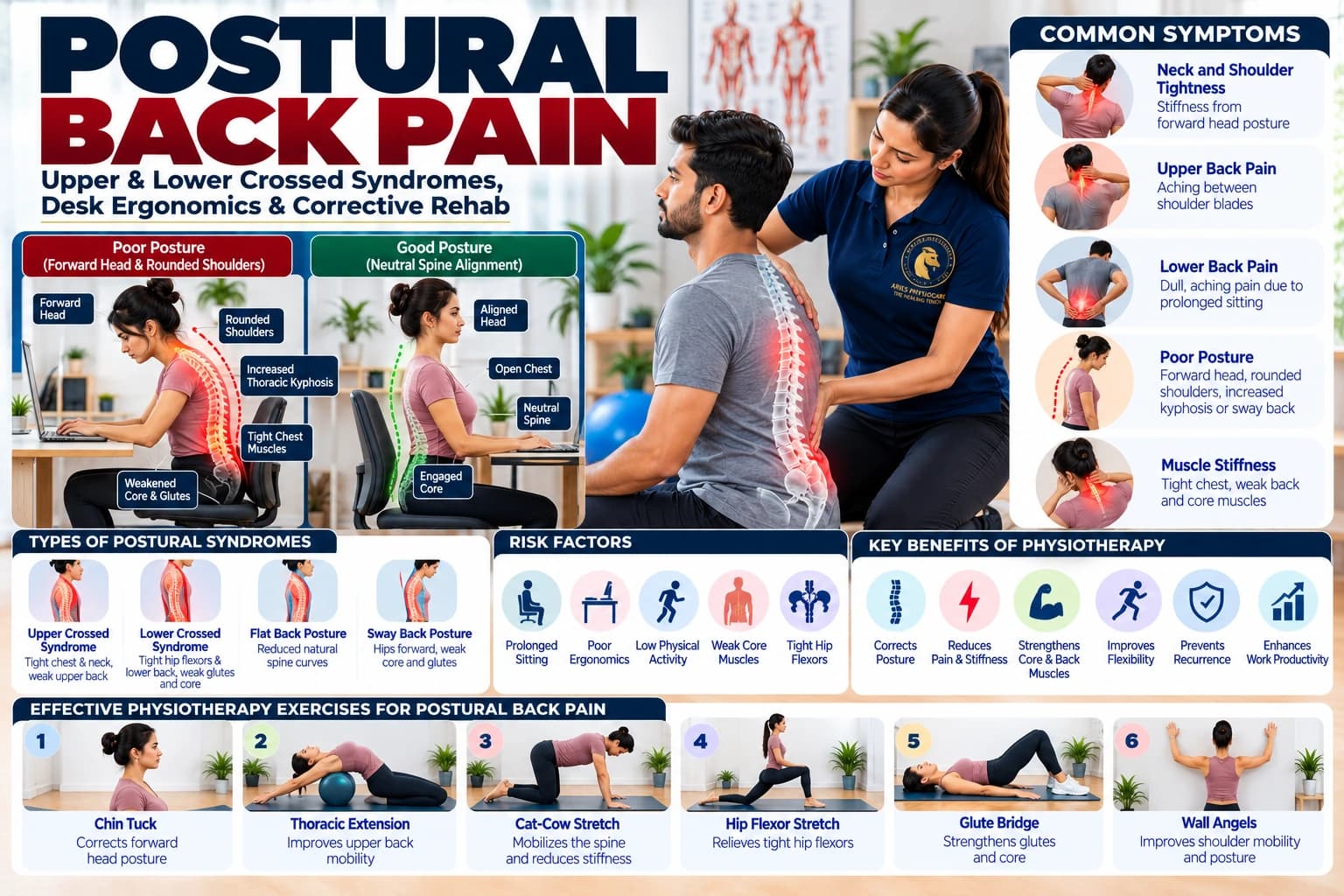

Introduction: Understanding Postural Back Pain
In our digital, screen-dominated world, postural back pain has become a modern epidemic. Human spinal anatomy evolved for dynamic movement, yet millions of individuals now spend 8 to 12 hours a day seated in slumped, forward-head postures. Postural back pain does not result from acute trauma, but from the cumulative creep and micro-strain of tissues held in mechanical disadvantage. Over time, predictable muscle imbalances develop that alter the spine's natural S-curve and generate chronic daily aching.
Common Symptoms of Postural Back Pain
Chronic fatigue and postural strain signs:
- Dull, aching fatigue in the upper neck, mid-back, and lumbosacral region by mid-afternoon
- Constant desire to crack or pop your back to find temporary relief
- Rounded shoulders and prominent forward-head posture ("tech neck")
- Excessive inward arch in the lower back or slumped flat-back posture
- Persistent tightness across the trapezius, levator scapulae, and hip flexors
- Headaches starting at the base of the skull radiating over the forehead
- Relief experienced when engaging in physical exercise or changing seated positions
Causes & Clinical Diagnosis
Biomechanical imbalances (Janda's Syndromes):
- Lower Crossed Syndrome: Tight hip flexors and lumbar erectors paired with weak abdominals and gluteals
- Upper Crossed Syndrome: Tight pectorals and suboccipitals paired with weak deep neck flexors and rhomboids
- Poor workstation ergonomics (monitor too low, chair lacking lumbar support)
- Clinical diagnosis involves plumb line postural alignment testing, muscle length tests (Thomas test), and static endurance evaluations.
Pathophysiology & Biomechanical Impact
Holding a slumped posture places posterior spinal ligaments on continuous stretch (ligamentous creep). In forward-head posture, every inch the head moves forward adds an effective 10 pounds of mechanical load on cervical and upper thoracic musculature, leading to chronic myofascial trigger points.
Evidence-Based Physiotherapy Protocols
- Targeted lengthening of hypertonic muscles (psoas, upper traps, pectoralis minor)
- Neuromuscular activation of inhibited stabilizers (lower trapezius, serratus anterior, transversus abdominis)
- Thoracic spine extension and rotation mobilizations over foam rollers
- Ergonomic workstation assessment and individualized biofeedback postural retraining
Home Care & Ergonomic Strategies
- Position computer screens so the top third of the monitor sits directly at eye level
- Practice micro-movement intervals: every 30 minutes, adjust sitting posture and realign head over shoulders
- Incorporate standing desk intervals (aim for 20 minutes standing per hour)
- Incorporate ergonomic workstation postural adjustments and gentle shoulder retractions
When to Contact Us
Eliminate chronic desk fatigue and restore your natural posture. Contact Aries PhysioCare for personalized home ergonomic assessments and corrective postural physiotherapy.