Introduction: Understanding Post-Surgical Spine Recovery
Undergoing spinal surgery—whether a microdiscectomy, decompression laminectomy, or multi-level spinal fusion—is a major medical milestone. However, the surgeon's hands in the operating room only accomplish structural decompression or mechanical stabilization; true functional recovery, pain-free mobility, and prevention of recurrent disc herniation depend entirely on structured post-operative physiotherapy. Evidence shows that guided rehabilitation starting in early post-op phases accelerates return to normal activities and eliminates chronic guarding.
Common Symptoms
Phased post-operative recovery indicators:
- Incisional soreness, swelling, and superficial numbness around the surgical scar
- Residual neural sensitivity as compressed nerve roots regenerate and de-swell
- Paraspinal muscle stiffness and weakness following surgical tissue retraction
- Difficulty getting in and out of bed or transitioning to standing without assistance
- Fear of re-injuring the surgical site during routine movements (kinesiophobia)
- Gait alterations and loss of balance due to prolonged pre-surgical deconditioning
- Gradual return of sensory perception and motor strength in previously numb extremities
Causes & Clinical Diagnosis
Key surgical procedures:
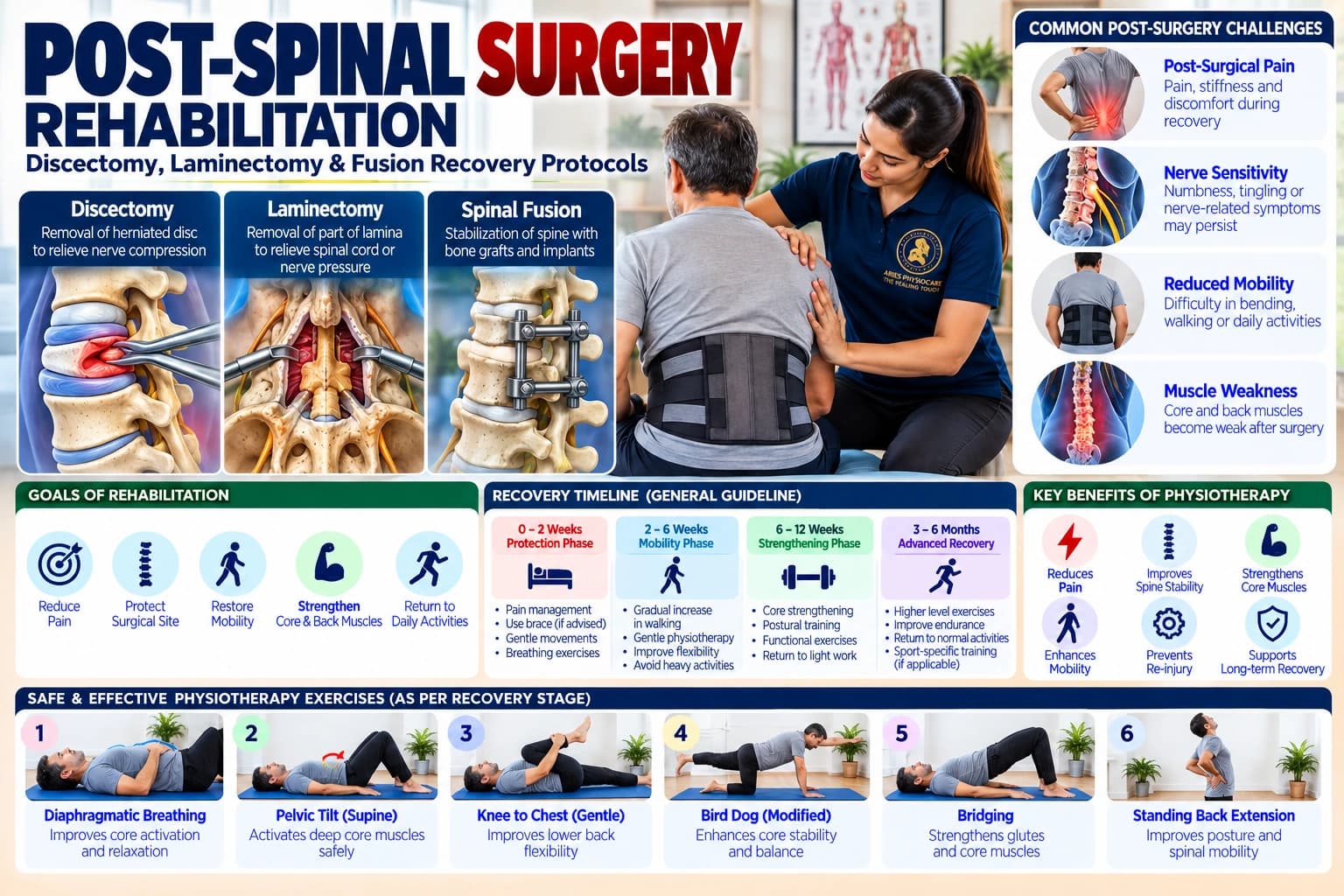
- Microdiscectomy: Removal of herniated disc fragment; focus on preventing recurrent re-herniation
- Laminectomy: Decompression of central stenosis; focus on core stabilization and posture
- Spinal Fusion: Arthrodesis with pedicle screws; strict adherence to fusion consolidation timelines
- The fundamental rule of early spine rehab is "No BLT": No Bending, No Lifting (>5 lbs), and No Twisting for the first 6 weeks.
Pathophysiology & Biomechanical Impact
Surgical trauma causes inflammatory tissue exudate that can organize into dense epidural fibrosis and paraspinal scar tissue. Gentle, progressive movement protocols prevent nerve root tethering and restore healthy microcirculation to healing paraspinal tissues.
Evidence-Based Physiotherapy Protocols
- Phase 1 (Weeks 1–4): Safe log-rolling, neural flossing, gentle walking, and transversus abdominis bracing
- Phase 2 (Weeks 5–8): Progressive pelvic stability, hip mobility, and gentle isometric core strengthening
- Phase 3 (Weeks 9–12+): Functional movement re-education, graded lifting mechanics, and cardiovascular conditioning
- Gentle scar tissue mobilization to prevent restrictive cutaneous-fascial tethering
Home Care & Ergonomic Strategies
- Maintain a daily walking schedule, starting with 5–10 minutes 3 times a day and progressing gradually
- Use a raised toilet seat and firm armchair to avoid excessive deep hip and spinal flexion
- Wear your prescribed post-operative lumbar brace during all out-of-bed transfers as directed by your surgeon
- Inspect the surgical incision daily for signs of infection (redness, drainage, increased heat)
When to Contact Us
Ensure the success of your spinal surgery with specialized in-home rehabilitation. Contact Aries PhysioCare today for dedicated post-operative spine physiotherapy and personalized recovery pathways.