Introduction: Understanding the Condition
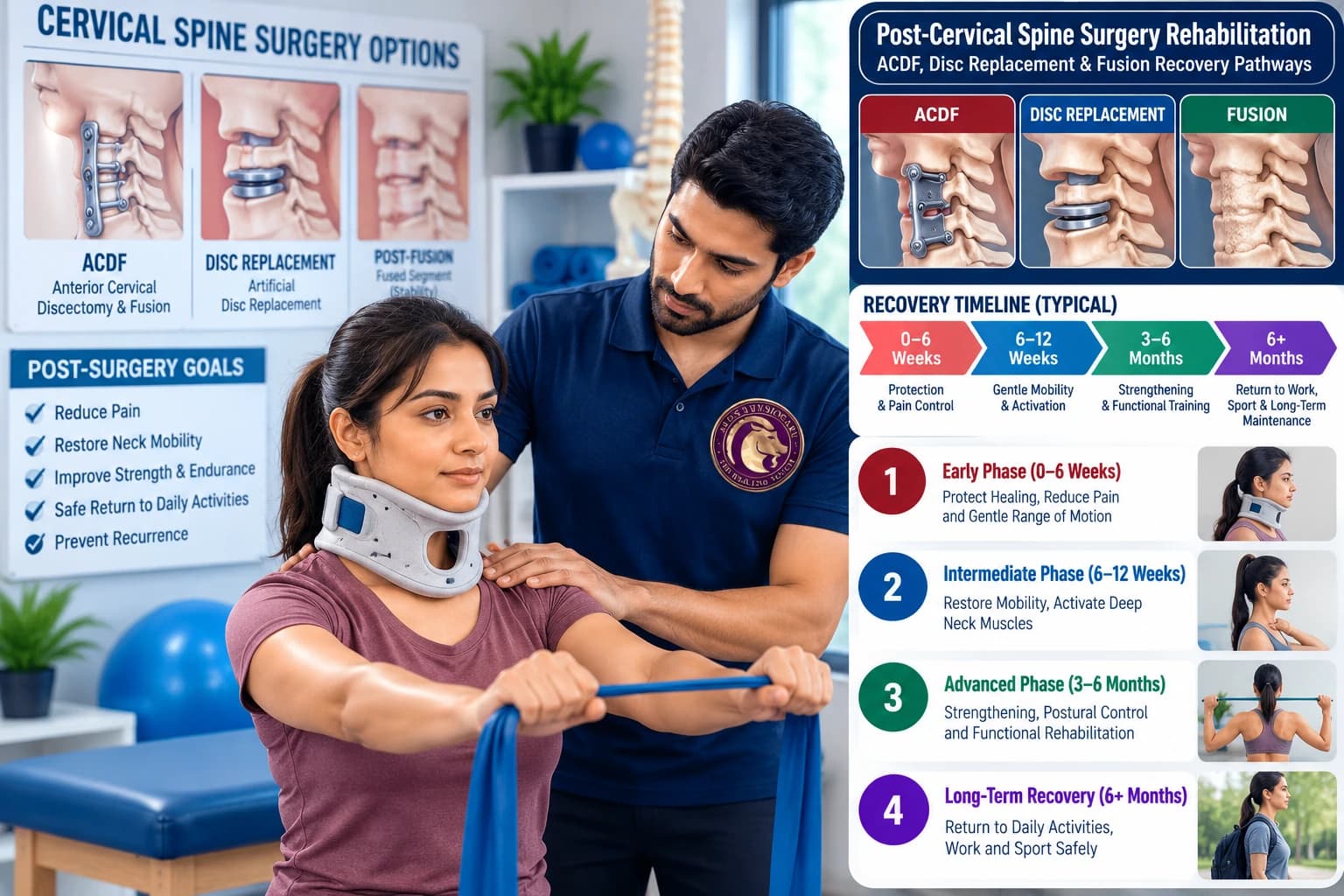
Undergoing cervical spine surgery—such as Anterior Cervical Discectomy and Fusion (ACDF), Artificial Cervical Disc Arthroplasty (CDA), or posterior decompression laminectomy—is a significant medical step to relieve spinal cord or nerve root compression. However, while the surgical procedure successfully restores anatomical space and stabilizes the motion segment, full functional recovery, neck mobility, and return to daily activities depend upon structured post-operative physiotherapy. Evidence shows that guided, phased physical therapy protects the surgical graft or prosthesis, manages scar tissue formation, and retrains stabilizing muscles to prevent adjacent segment disease.
Common Symptoms
Key clinical indicators and functional presentations:
- Incisional soreness, swelling, and superficial numbness along the anterior or posterior surgical scar
- Temporary dysphagia (difficulty swallowing) or hoarseness following anterior cervical approaches (ACDF)
- Residual nerve sensitivity or paresthesia as previously compressed nerve roots heal and regenerate
- Significant paraspinal muscular stiffness and weakness resulting from intra-operative surgical retraction
- Apprehension and fear of moving the neck or engaging in daily functional tasks (kinesiophobia)
- Loss of balance and postural deconditioning from pre-surgical functional decline
- Gradual return of strength, sensory perception, and motor coordination in previously affected limbs
Causes & Clinical Diagnosis
Etiological drivers and diagnostic assessment:
- Anterior Cervical Discectomy and Fusion (ACDF) utilizing bone grafts, interbody cages, and anterior titanium plates
- Cervical Artificial Disc Replacement (arthroplasty) designed to preserve segmental motion
- Posterior cervical laminectomy and instrumented fusion for multi-level central spinal canal stenosis
- Post-surgical precautions follow strict surgeon-directed protocols, including adherence to bone fusion consolidation timelines and prescribed cervical collar wear.
Pathophysiology & Biomechanical Impact
Surgical access routes create localized soft tissue trauma, inflammatory exudates, and tissue disruption. Following anterior approaches, prevertebral fascial dissection can produce transient esophageal edema. As tissue repair proceeds, fibrous scar tissue develops along fascial planes. Early, gentle, supervised physical therapy ensures that scar tissue matures without forming restrictive adhesions that anchor neural structures or compromise normal swallowing mechanics.
Evidence-Based Physiotherapy Protocols
At Aries PhysioCare, our physical therapists implement clinician-administered rehabilitation protocols:
- Phase 1 (Weeks 1–4, Protection & Early Mobility): Gentle postural re-education, scapular retraction within tolerance, safe bed mobility, walking programs, and adherence to collar precautions
- Phase 2 (Weeks 5–8, Early Strengthening): Gentle isometric deep cervical stabilizer activation, active cervical range of motion within surgeon guidelines, and thoracic mobilization
- Phase 3 (Weeks 9–12+, Functional Restoration): Dynamic cervical motor control conditioning, upper extremity resistance training, and functional lifting biomechanics
- Gentle scar tissue mobilization once surgical incisions are fully healed and cleared by the surgical team
- Ergonomic workplace and home assessment to ensure long-term protection of adjacent spinal segments
Home Care & Ergonomic Strategies
Supporting recovery through evidence-based ergonomic habits and self-care:
- Strictly adhere to your surgeon's prescribed cervical collar wear schedule during ambulation and vehicle travel
- Engage in daily walking intervals on flat, safe surfaces, starting with 10 minutes and progressing gradually as stamina improves
- Avoid bending, heavy lifting (>5 kg), or sudden twisting of the neck during the initial 6 to 8 weeks
- Use an elevated reading stand and ensure mobile screens are held directly at eye level to prevent downward cervical loading
- Sleep in a supported neutral posture with a contoured cervical pillow, avoiding stomach sleeping entirely
- Inspect the surgical incision daily for signs of infection (redness, persistent drainage, localized warmth, or fever)
When to Contact Us
Ensure the enduring success of your cervical surgery with specialized in-home rehabilitation. Contact Aries PhysioCare today for dedicated post-operative spine physiotherapy and personalized recovery pathways.