
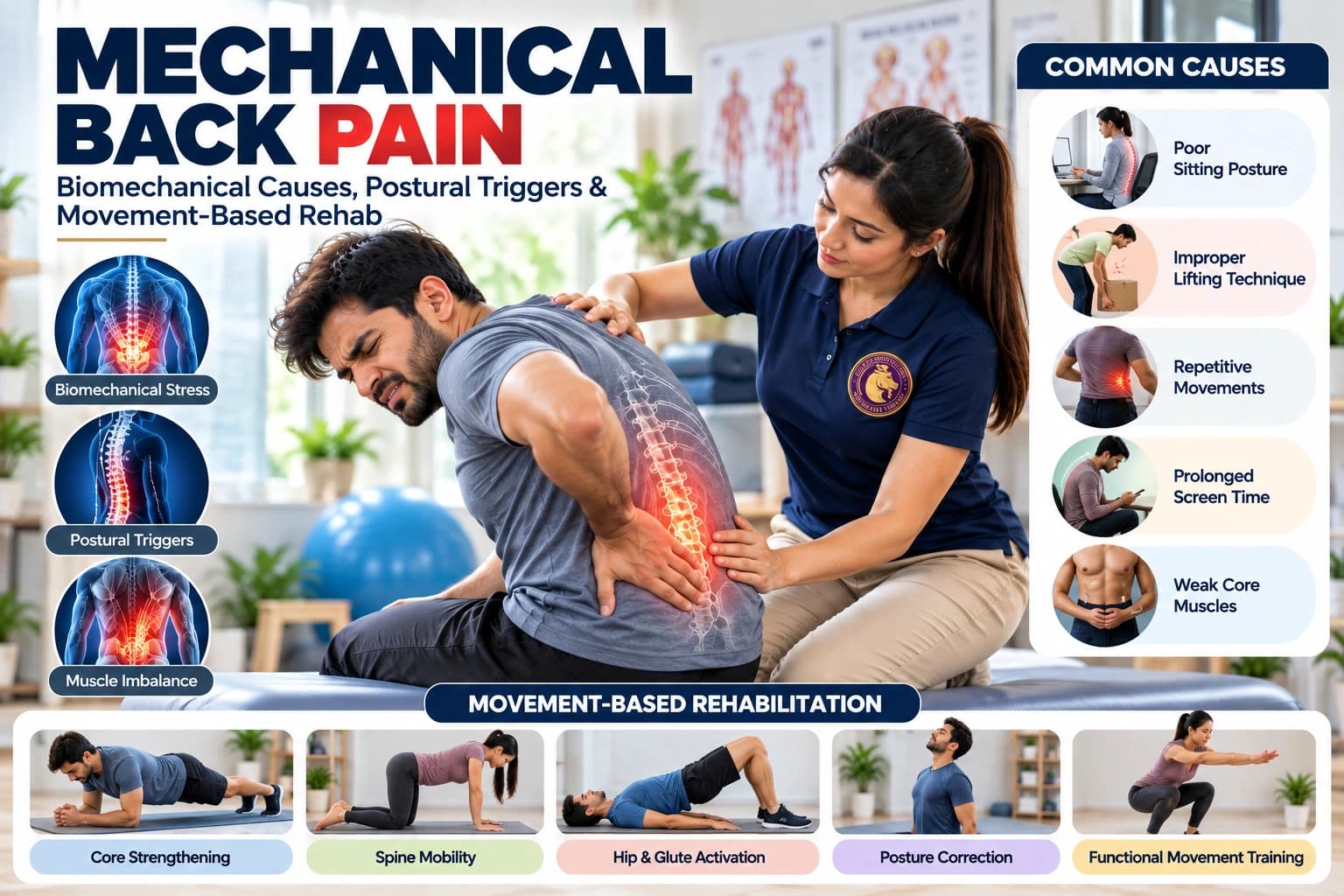

Introduction: Understanding Mechanical Back Pain
Mechanical back pain refers to back pain that is directly provoked or relieved by specific movements, postures, or mechanical loads. Unlike inflammatory conditions that ache at rest, mechanical back pain has an identifiable anatomical mechanical trigger—such as prolonged flexion, repetitive lifting, or hyperextension. Identifying and correcting the mechanical fault is the cornerstone of lasting recovery.
Common Symptoms of Mechanical Back Pain
Movement-dependent symptoms include:
- Pain that worsens after prolonged sitting, standing, or driving
- Immediate relief when lying down or changing positions
- Catching sensation when transitioning from bent to upright posture
- Tightness across the lumbosacral belt region
- Achiness after repetitive bending, lifting, or household chores
- Lack of nocturnal pain (sleep is generally comfortable once settled)
- Symmetrical or unilateral focal lumbar tenderness
Causes & Clinical Diagnosis
Primary mechanical culprits:
- Flexion-intolerant back pain from sustained slouched desk posture
- Extension-intolerant back pain from excessive lumbar lordosis and facet compression
- Gluteal amnesia and tight hip flexors altering pelvic kinetics
- Diagnosis involves testing repetitive movements in sagittal and frontal planes to categorize mechanical directional preference.
Pathophysiology & Biomechanical Impact
Continuous static loading stretches posterior ligamentous structures and increases intradiscal pressure. The surrounding spinal ligaments develop creep deformation, temporarily losing their elastic recoil capacity and exposing vertebral joints to elevated shearing forces.
Evidence-Based Physiotherapy Protocols
- Correction of mechanical directional intolerance (flexion vs. extension bias)
- Hip hinge re-training to decouple lumbar spinal movement from pelvic rotation
- Supervised clinical gluteal activation and posterior chain motor control to offload the spine
- Ergonomic postural correction and core stability sequencing
Home Care & Ergonomic Strategies
- Practice proper lifting technique: bend through knees and hips, keeping objects close
- Place a supportive lumbar cushion behind your back when seated
- Avoid sitting continuously for longer than 45 minutes
- Integrate thoracic extensions over a foam roller or chair back daily
When to Contact Us
Solve mechanical back pain at its biomechanical root. Contact Aries PhysioCare to schedule an in-depth home functional assessment and tailored recovery program.