Introduction: Understanding Lumbar Spondylosis
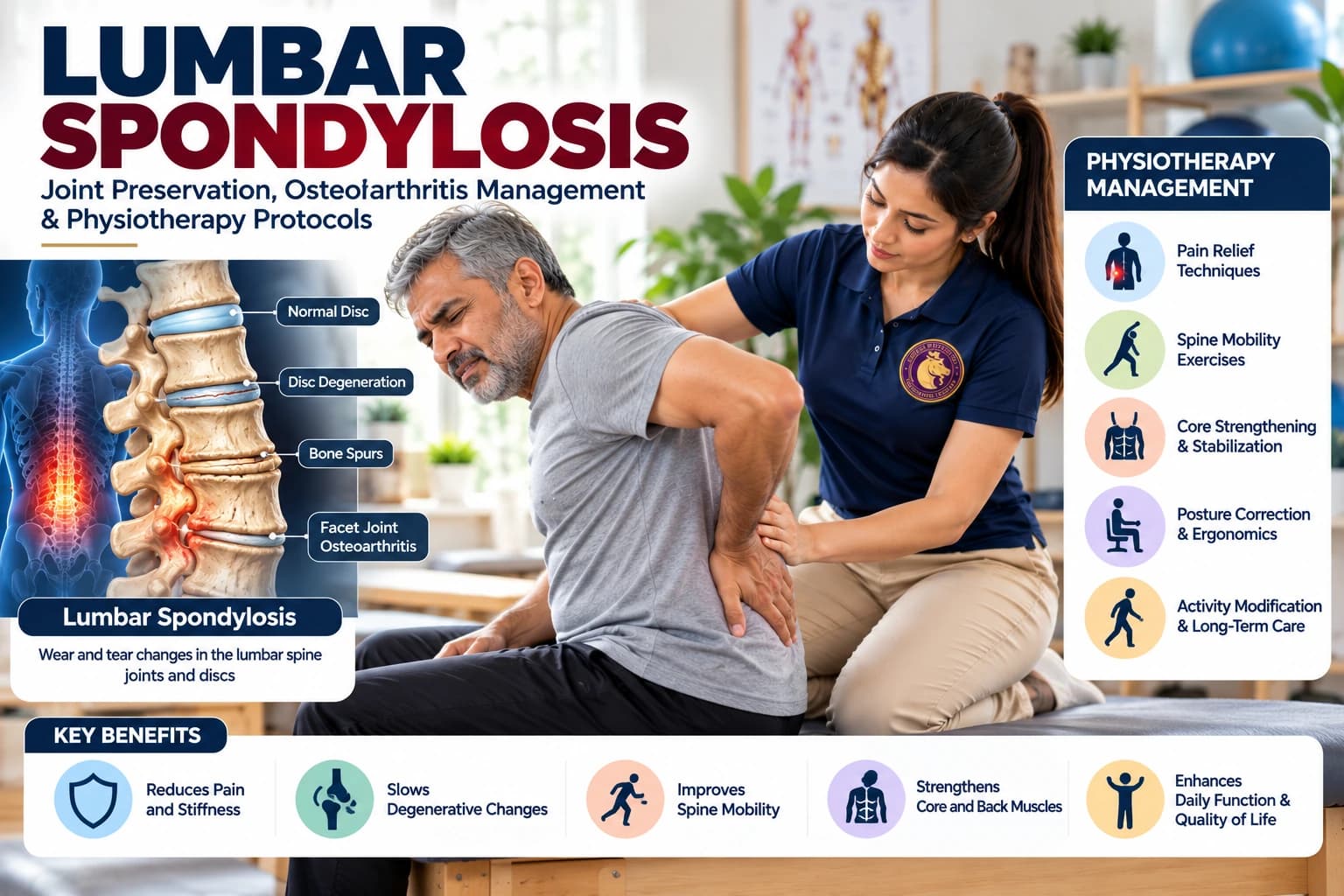
Lumbar spondylosis is an age-related degenerative condition affecting the intervertebral discs and facet joints of the lower spine, analogous to osteoarthritis in other joints. As discs dehydrate and lose height, the body responds by forming osteophytes (bone spurs) to stabilize the segment. While common on imaging in adults over 40, symptoms only arise when joint stiffness, muscular fatigue, or nerve irritation develop. Proactive physiotherapy preserves joint nutrition and full functional independence.
Common Symptoms of Lumbar Spondylosis
Degenerative lumbar features:
- Morning stiffness in the lower back lasting 15–30 minutes
- Dull, deep ache that improves after gentle moving about
- Pain aggravated by prolonged standing or walking on hard surfaces
- Crepitus or crunching sensations during spinal twisting
- Generalized reduction in lumbar flexion and side-bending flexibility
- Muscle fatigue in paraspinal muscles towards the evening
- Occasional mild buttock ache without true radiating numbness
Causes & Clinical Diagnosis
Key contributing factors:
- Natural biological aging and disc matrix dehydration
- Decades of repetitive axial loading or high-impact manual labor
- Previous spinal trauma or unaddressed postural malalignments
- Diagnosis is established through physical examination assessing range of motion, combined with lumbar spine X-rays revealing disc space narrowing and marginal osteophytes.
Pathophysiology & Biomechanical Impact
Loss of disc height shifts up to 70% of axial load onto the posterior facet joints. The resultant articular cartilage thinning causes micro-friction, capsular thickening, and ligamentum flavum hypertrophy, progressively narrowing the neuroforaminal canals.
Evidence-Based Physiotherapy Protocols
- Grade II & III Maitland joint mobilizations to restore synovial fluid lubrication
- Low-impact aerobic conditioning (recumbent stationary cycling, gentle walking)
- Deep core neuromuscular activation and guided lumbopelvic alignment to decompress facet joints
- Class IV Laser therapy and localized thermotherapy to alleviate chronic periarticular stiffness
Home Care & Ergonomic Strategies
- Apply warm moist heat to the lower back for 15 minutes upon waking
- Perform gentle therapist-guided joint unweighting and warm-up movements before standing
- Wear cushioned footwear with supportive arch support to absorb walking impact
- Stay consistently active with low-impact aquatic therapy or daily walks
When to Contact Us
Maintain a healthy, flexible spine as you age. Contact Aries PhysioCare for comprehensive in-home lumbar spondylosis therapy and personalized joint preservation plans.