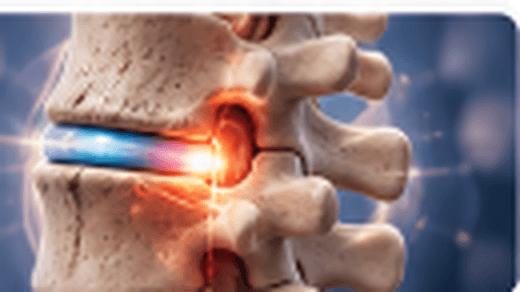
Introduction: Understanding Lumbar Disc Prolapse
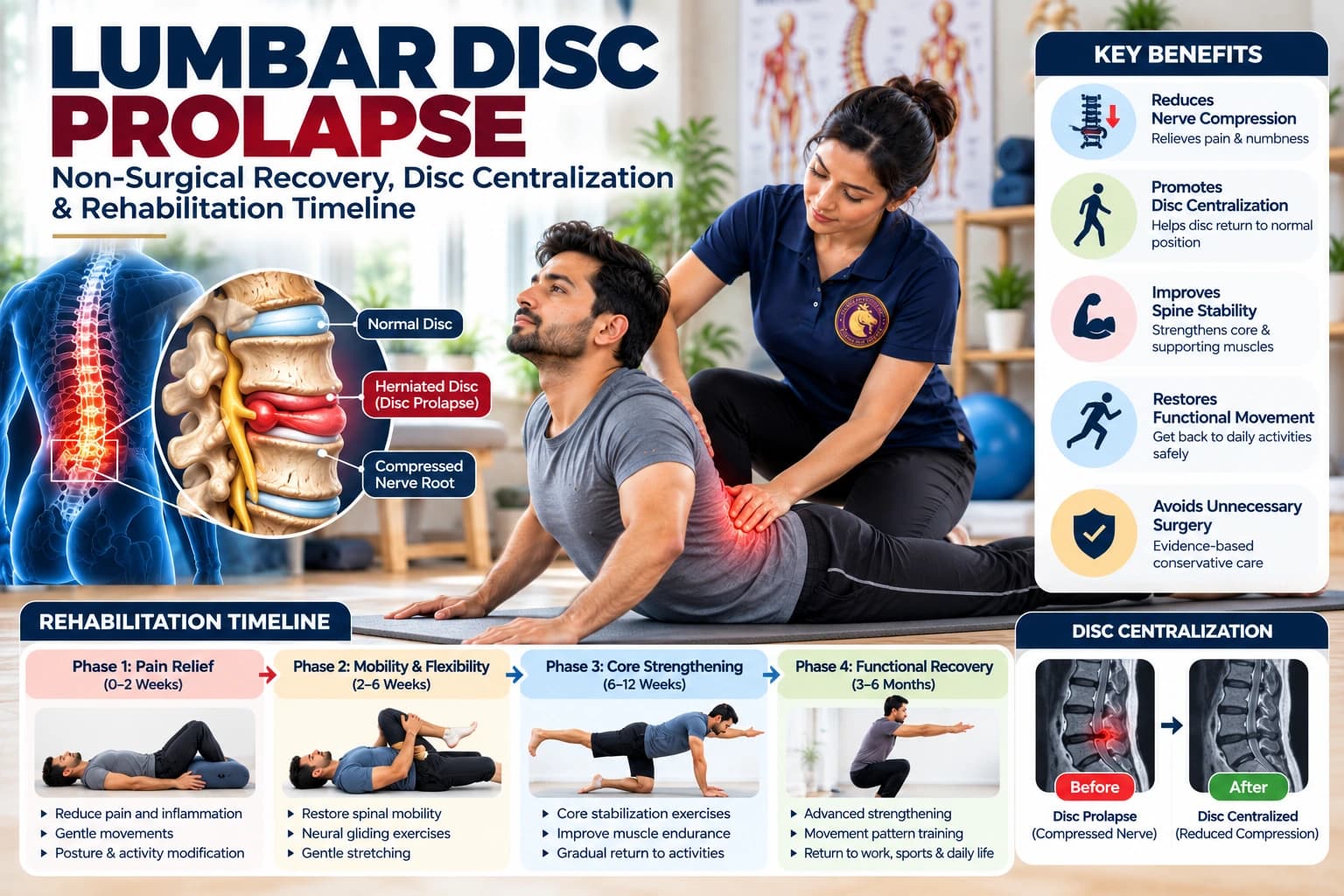
Lumbar disc prolapse occurs when the tough outer ring (annulus fibrosus) tears, allowing the soft inner gel (nucleus pulposus) to extrude into the spinal canal or intervertebral foramen. Most commonly occurring at the L4-L5 or L5-S1 levels, it can compress adjacent nerve roots, producing intense lower back and radiating leg pain. Groundbreaking clinical research confirms that the majority of extruded disc material undergoes natural macrophage-mediated resorption within 6 to 12 weeks with conservative physiotherapy.
Common Symptoms of Disc Prolapse
Neural and mechanical presentation:
- Sharp, electric shock-like pain shooting into the buttock, thigh, calf, or foot
- Severe worsening of pain when coughing, sneezing, or bearing down (Valsalva maneuver)
- Inability to sit for more than 5–10 minutes without agonizing leg pain
- Numbness, tingling, or loss of sensation in specific dermatomes (L5 top of foot, S1 sole)
- Weakness when attempting to walk on toes (S1) or heels (L5)
- Prominent lateral shift where the torso tilts away from the painful side
- Dull, constant ache at the base of the spine
Causes & Clinical Diagnosis
Common triggers:
- Sudden lifting of heavy loads with a rounded lumbar spine
- Cumulative micro-trauma from long hours of sedentary vehicle driving or desk work
- Rapid rotational twist combined with flexion
- Diagnosis is confirmed via positive Straight Leg Raise (SLR), Slump test, and lumbar MRI identifying the precise level and orientation of extrusion.
Pathophysiology & Biomechanical Impact
Extruded nuclear material produces both physical compression of the descending nerve root and a fierce chemical radiculitis driven by phospholipase A2 and inflammatory prostaglandins. This double insult causes acute intraneural edema and pain firing.
Evidence-Based Physiotherapy Protocols
- McKenzie Mechanical Diagnosis & Therapy (MDT) to identify directional preference and centralize radiating leg pain
- Gentle mechanical spinal decompression / positional traction
- Neural mobilization (nerve gliding / flossing) once acute chemical inflammation subsides
- High-frequency IFT to block peripheral pain signals at the spinal cord gate
Home Care & Ergonomic Strategies
- Adopt the prone lying position (flat on stomach) with a pillow under hips to unload disc pressure
- Eliminate forward bending, twisting, and heavy lifting entirely during acute phase
- Use standing or walking intervals rather than continuous seated rest
- Wear a supportive lumbar brace only during necessary transfers to avoid muscular atrophy
When to Contact Us
Avoid unnecessary surgery with structured conservative treatment. Contact Aries PhysioCare for specialized home physiotherapy protocols designed for rapid disc recovery.