
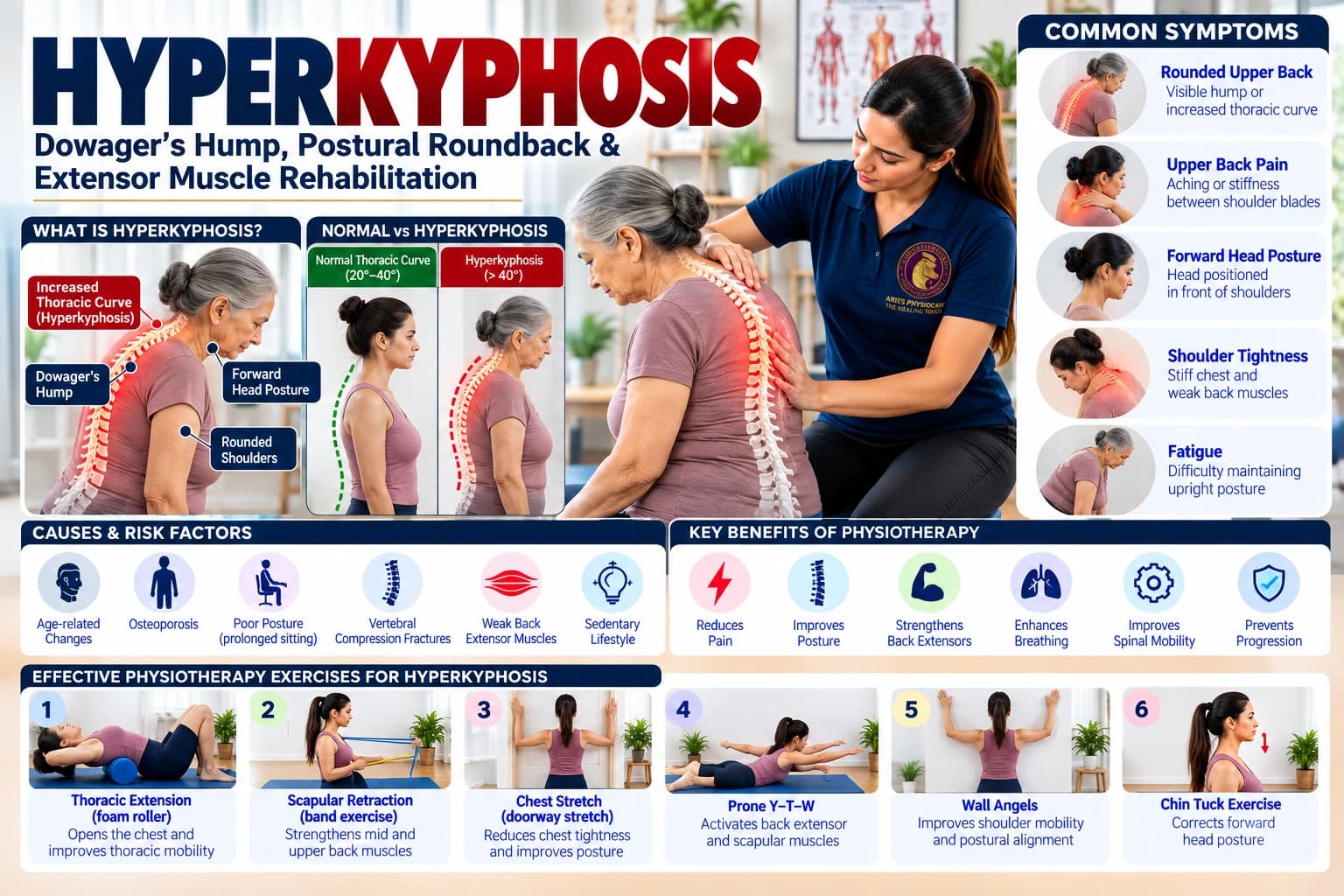

Introduction: Understanding Hyperkyphosis
While the thoracic spine naturally possesses a gentle forward curve (typically 20 to 40 degrees), hyperkyphosis describes an exaggerated, pathological rounding exceeding 50 degrees. Commonly manifesting as a "humpback" or "Dowager’s hump" in older adults, it can stem from habitual poor posture, osteoporotic vertebral micro-fractures, or age-related extensor muscle atrophy. Hyperkyphosis is not just a cosmetic concern; it impairs respiratory function, increases fall risk, and causes chronic mid-back pain. Targeted physiotherapy can reverse postural curves and stabilize structural kyphosis.
Common Symptoms of Hyperkyphosis
Physical presentation:
- Noticeable rounded upper back and protruding forward head posture
- Difficulty looking straight ahead without straining the neck muscles
- Aching fatigue between the shoulder blades and across the cervico-thoracic junction
- Decreased chest expansion and sensation of shallow, restricted breathing
- Impaired balance and forward-shifted center of gravity increasing fall risk
- Early satiety and gastrointestinal reflux caused by abdominal compression
- Inability to stand flat against a wall with head and shoulder blades touching
Causes & Clinical Diagnosis
Major contributing factors:
- Osteoporosis leading to subclinical anterior wedge compression fractures
- Age-related fatty infiltration and sarcopenia of the spinal extensor musculature
- Decades of uncorrected desk slouching and physical inactivity
- Diagnosis involves standing lateral thoracic radiography to measure Cobb angle of kyphosis, occiput-to-wall distance, and DEXA bone density scanning.
Pathophysiology & Biomechanical Impact
As thoracic curvature increases, the lever arm of gravity pulls the torso further forward. To prevent falling, spinal extensor muscles must generate immense continuous counter-torque, leading to chronic myofascial exhaustion, pain, and accelerated compressive loading on anterior vertebral bodies.
Evidence-Based Physiotherapy Protocols
- High-intensity progressive resistance training for the deep thoracic extensors (erector spinae, multifidus)
- Scapular retraction and depression retraining to open the anterior chest wall
- Foam roller and thoracic spine extension mobilizations
- Dynamic balance and proprioceptive retraining to prevent falls caused by forward postural tilt
Home Care & Ergonomic Strategies
- Perform prone "Y-to-W" scapular retractions and prone press-ups daily
- Avoid heavy forward lifting or vigorous abdominal crunches, which increase anterior vertebral compression
- Ensure adequate dietary calcium and vitamin D alongside weight-bearing exercises to protect bone density
- Set up an upright reading and television viewing environment that eliminates neck straining
When to Contact Us
Stand tall, breathe better, and protect your spine from progressive rounding. Contact Aries PhysioCare for specialized home physiotherapy and evidence-based kyphosis rehabilitation.