Introduction: Understanding the Condition
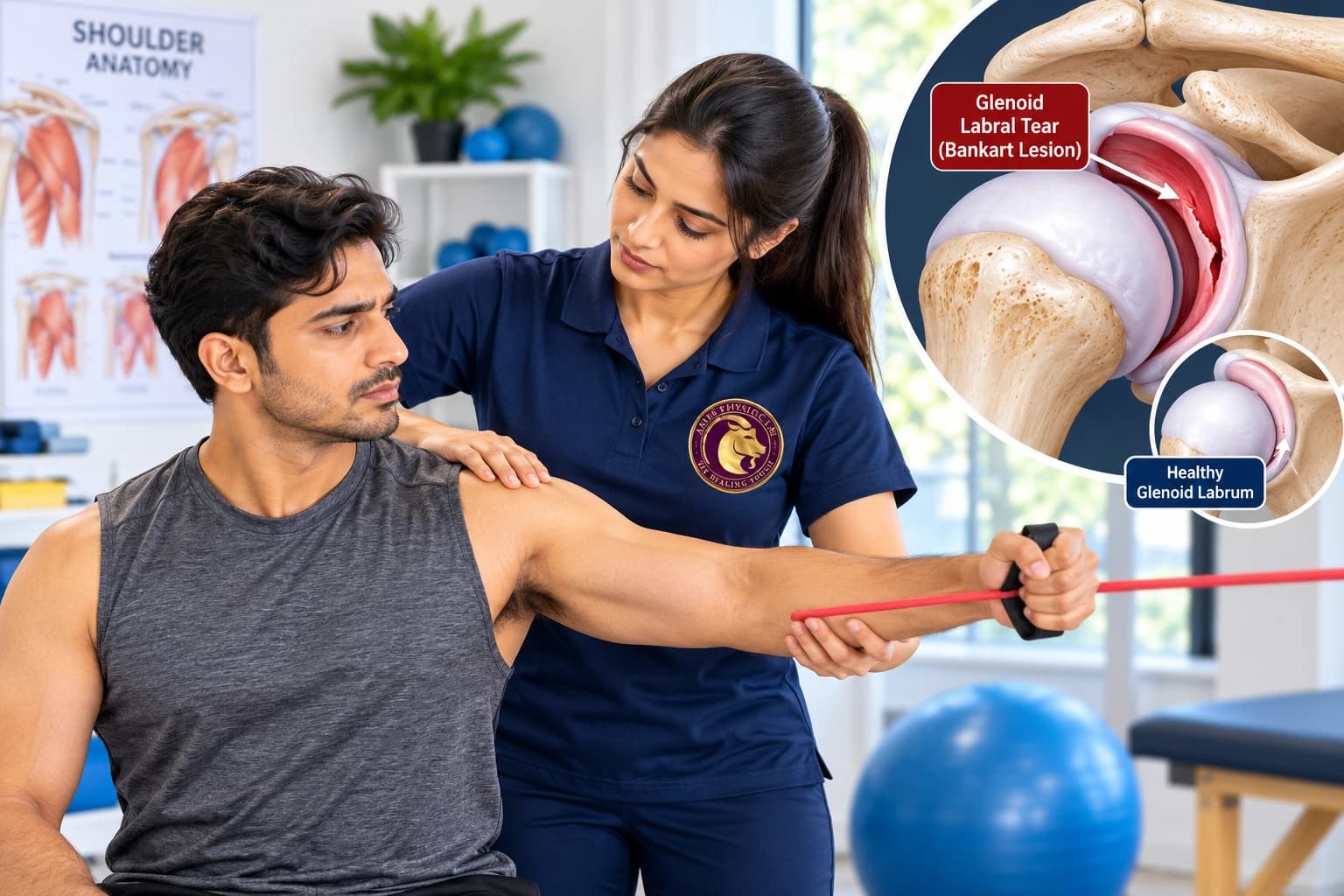
The glenoid labrum is a specialized ring of dense fibrocartilaginous tissue that circumscribes the rim of the shallow glenoid fossa. It plays an indispensable role in shoulder stability, deepening the shallow glenoid socket by nearly 50% and serving as the primary attachment zone for the glenohumeral ligaments and long head of the biceps tendon. A labral tear can occur anterior-inferiorly (Bankart lesion) following traumatic dislocations, superiorly (SLAP lesion), or posterior-inferiorly. Labral detachment compromises the joint's negative intra-articular fluid seal, promoting pathological humeral head translation. Comprehensive physical therapy focuses on dynamic stabilization, neuromuscular control, and correcting abnormal scapulohumeral kinematics to bypass the structural defect.
Common Symptoms
Key clinical indicators and functional presentations:
- Deep, aching pain located deep inside the glenohumeral joint that is difficult to pinpoint
- Frequent mechanical catching, popping, clicking, or locking sensations during rotational arm movements
- Subjective sense of instability, joint looseness, or apprehension during arm elevation
- Pain exacerbated by overhead loading, heavy pushing, or end-range rotational activities
- Loss of maximal muscular force during pushing or overhead functional tasks
- Secondary posterior shoulder tightness and compensatory scapular winging
Causes & Clinical Diagnosis
Etiological drivers and diagnostic assessment:
- High-energy traumatic joint subluxation or acute shoulder dislocation
- Repetitive micro-trauma from overhead athletic throwing, tennis serving, or heavy bench pressing
- Sudden, forceful traction loading on the arm, such as catching a heavy falling object
- Diagnosis is made using specialized orthopedic clinical tests (O'Brien's active compression test, Crank test, Clunk test, Kim test) confirmed via high-resolution 3T MRI arthrography with intra-articular gadolinium contrast.
Pathophysiology & Biomechanical Impact
Because the labrum is largely avascular—with blood supply limited to its peripheral capsular junction—tears rarely heal spontaneously. Detachment of the labrum impairs the suction-cup effect that normally centers the humeral head. Furthermore, labral disruptions compromise sensory mechanoreceptors embedded within the fibrocartilage, delaying protective reflexive muscular contraction. This produces excessive multi-directional micro-translations, irritating the joint capsule, inciting reactive synovitis, and predisposing the rotator cuff to secondary impingement wear.
Evidence-Based Physiotherapy Protocols
At Aries PhysioCare, our physical therapists implement clinician-administered rehabilitation protocols:
- Kinetic chain closed-pack stabilization: Supervised closed kinetic chain exercises to engage dynamic co-contraction and restore joint centration without shearing the labrum
- Therapist-guided rotator cuff strengthening focusing on the infraspinatus, teres minor, and subscapularis to re-establish dynamic humeral head containment
- Maitland manual therapy: Gentle posterior and inferior glenohumeral joint mobilizations to resolve secondary posterior capsular contracture without stressing the labrum
- Class-IV Deep Tissue Laser Therapy and IFT applied to control joint synovitis, reduce intra-articular effusion, and alleviate deep resting pain
- Scapular upward rotation and posterior tilt neuromuscular retraining to ensure the glenoid fossa moves synchronously with the humerus
- Proprioceptive biofeedback training to restore joint position sense and protective neuromuscular reflexes
Home Care & Ergonomic Strategies
Supporting recovery through evidence-based ergonomic habits and self-care:
- Avoid deep pushing movements, such as standard floor push-ups, heavy bench presses, or pushing heavy furniture
- Keep daily reaching tasks within the visual field and below shoulder height to avoid triggering mechanical catching
- Sleep on your back or unaffected side with a pillow supporting the arm to eliminate torsional joint torque
- Apply cryotherapy packs for 15 minutes across the anterior and lateral shoulder after prolonged daily use
- Modify workstations so keyboards and tools are positioned close to the body, avoiding unsupported reach
- Avoid aggressive passive arm pulling, hanging from overhead bars, or sudden traction forces on the arm
When to Contact Us
Experiencing deep shoulder clicking, catching, and persistent instability? Contact Aries PhysioCare today to schedule a detailed labral clinical assessment.