Introduction: Understanding the Condition
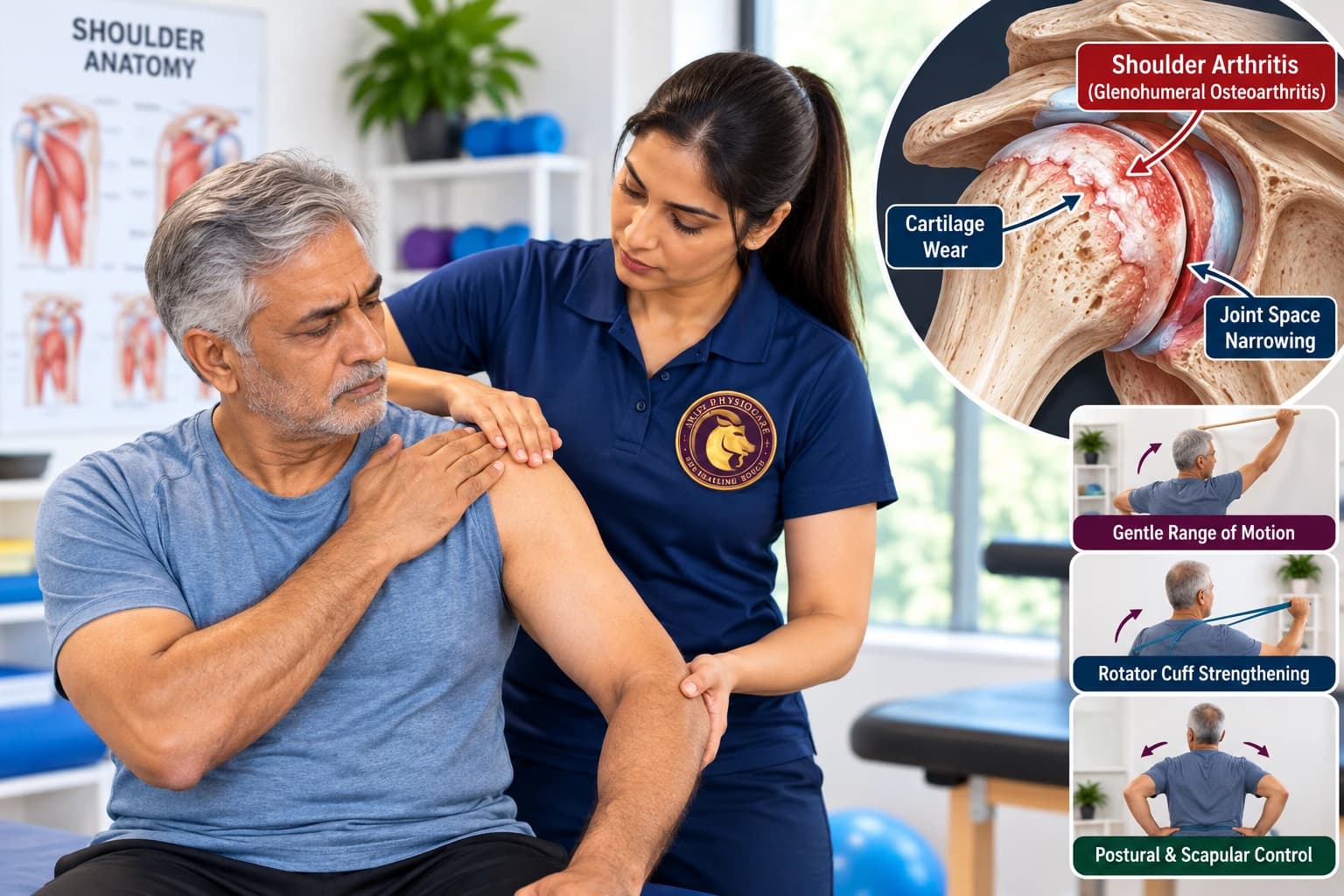
Glenohumeral osteoarthritis is a progressive, degenerative articular condition characterized by the gradual loss of hyaline cartilage lining the humeral head and glenoid fossa, accompanied by subchondral bone sclerosis, marginal osteophyte formation, and secondary capsular contracture. While less common than osteoarthritis of the knee or hip, it imposes profound functional restrictions, significantly diminishing the ability to perform daily self-care and maintain overhead reach. Modern orthopedic physical therapy focuses on joint preservation—utilizing gentle non-impactive joint mobilizations, periarticular muscular conditioning, and therapeutic biophysical agents to maintain functional independence and delay or avoid surgical joint replacement.
Common Symptoms
Key clinical indicators and functional presentations:
- Deep, aching pain located within the shoulder joint that intensifies during movement and cold weather
- Prominent morning stiffness that gradually eases with gentle, warm activity but worsens after sustained exertion
- Audible and palpable grinding, clicking, or crunching (crepitus) throughout active and passive range of motion
- Progressive, symmetric loss of shoulder mobility, most notably in external rotation and abduction
- Severe nocturnal discomfort when rolling onto the affected joint, leading to chronic sleep disruption
- Compensatory shoulder hiking and excessive scapulothoracic movement to compensate for lost glenohumeral motion
Causes & Clinical Diagnosis
Etiological drivers and diagnostic assessment:
- Primary idiopathic age-related wear and tear of articular hyaline cartilage
- Secondary post-traumatic osteoarthritis following prior fractures of the proximal humerus or recurrent dislocations
- Post-capsulorrhaphy arthropathy following prior surgical over-tightening of the joint capsule
- Diagnosis is confirmed through clinical mobility testing demonstrating capsular pattern restriction correlated with standard shoulder radiographs (true AP, axillary, and scapular Y views) revealing joint space narrowing, inferior humeral osteophytes, and subchondral sclerosis.
Pathophysiology & Biomechanical Impact
Osteoarthritis begins with chondrocyte metabolic failure, leading to the depletion of proteoglycans and disruption of the collagen meshwork within the hyaline matrix. As cartilage thins and erodes, bare subchondral bone is exposed to abrasive frictional contact, resulting in eburnation and micro-fractures that stimulate subchondral bone cyst formation. The joint attempts reparative bridging by forming osteophytes around the anatomic neck of the humerus. Simultaneously, the synovial membrane becomes chronically inflamed by microscopic cartilage debris, thickening the joint capsule and severely restricting rotational arthrokinematics.
Evidence-Based Physiotherapy Protocols
At Aries PhysioCare, our physical therapists implement clinician-administered rehabilitation protocols:
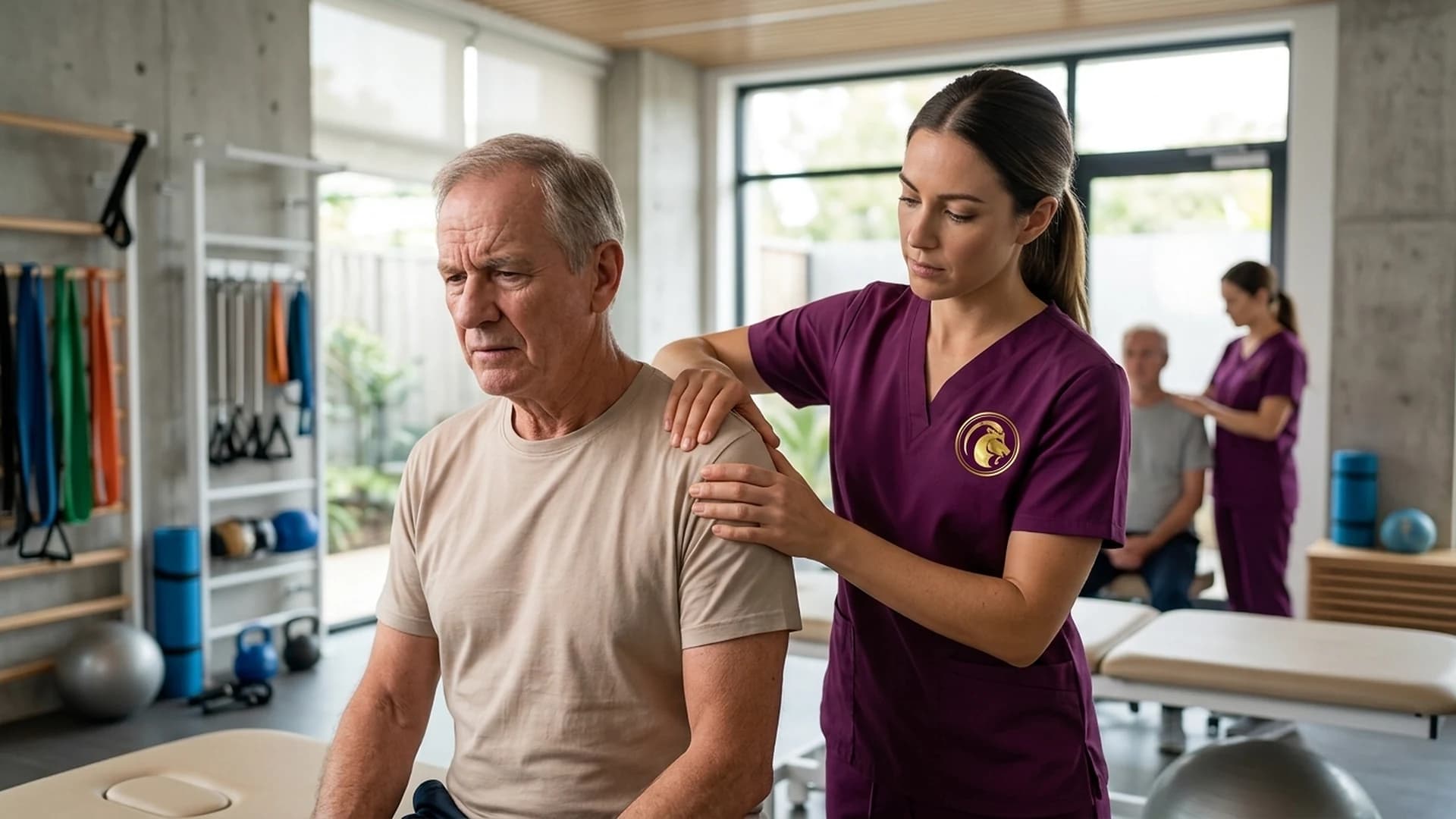
- Kaltenborn and Maitland manual therapy: Gentle Grade I and II joint distraction and oscillating mobilizations to improve synovial fluid nutrition and reduce articular friction
- Targeted Radiofrequency (Tecar) Therapy and Class-IV Laser Therapy to alleviate deep joint pain, reduce capsular stiffness, and improve periarticular vascular perfusion
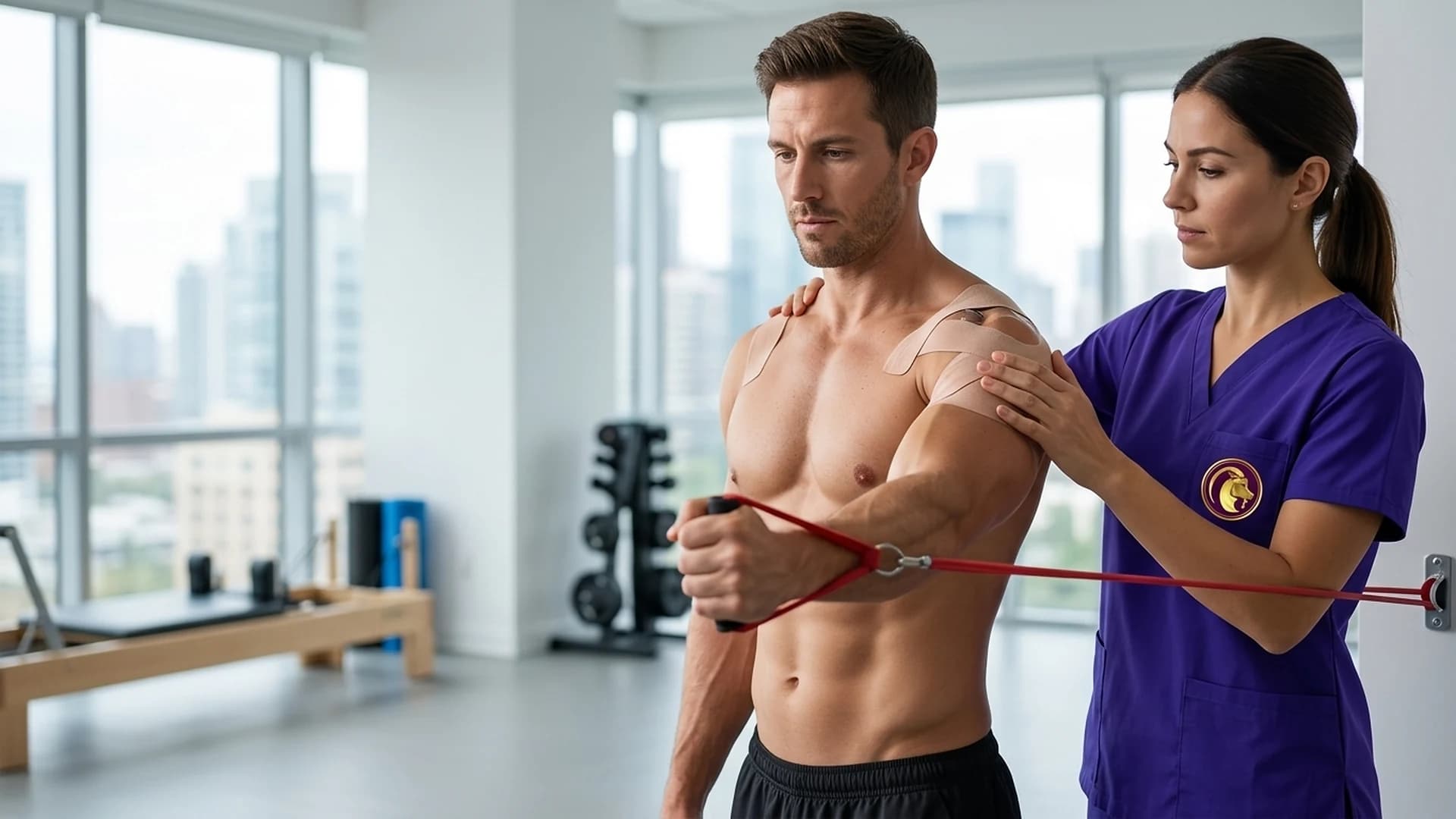
- Low-load, non-impactive rotator cuff and deltoid neuromuscular re-education to maintain dynamic joint containment without cartilage compression
- Scapular motor control training to optimize scapulothoracic contribution and offload degenerative glenohumeral contact surfaces
- Hydro-collator thermal therapy applied prior to rehabilitation sessions to increase tissue extensibility and reduce morning muscular guarding
- Calibrated Interferential Therapy (IFT) across the joint line for effective non-pharmacological pain gate modulation
Home Care & Ergonomic Strategies
Supporting recovery through evidence-based ergonomic habits and self-care:
- Apply moist heat packs over the anterior and posterior shoulder for 15 to 20 minutes each morning to relieve overnight joint stiffness
- Incorporate ergonomic tools with extended handles (e.g., long-handled reachers, shoehorns) to minimize painful overhead and behind-the-back reaches
- Sleep on your back or unaffected side with a supportive pillow placed under the arm to maintain a neutral, unweighted humeral position
- Avoid high-impact activities, ballistic arm swinging, or lifting heavy household objects with an outstretched arm
- Reorganize everyday kitchen and closet items between waist and chest level to preserve remaining joint mobility
- Refrain from forceful self-manipulation or aggressive stretching into painful joint resistance barriers
When to Contact Us
Do not allow shoulder arthritis to steal your daily independence. Contact Aries PhysioCare today to begin an evidence-based joint preservation physical therapy program.