
Introduction: Understanding Failed Back Surgery Syndrome
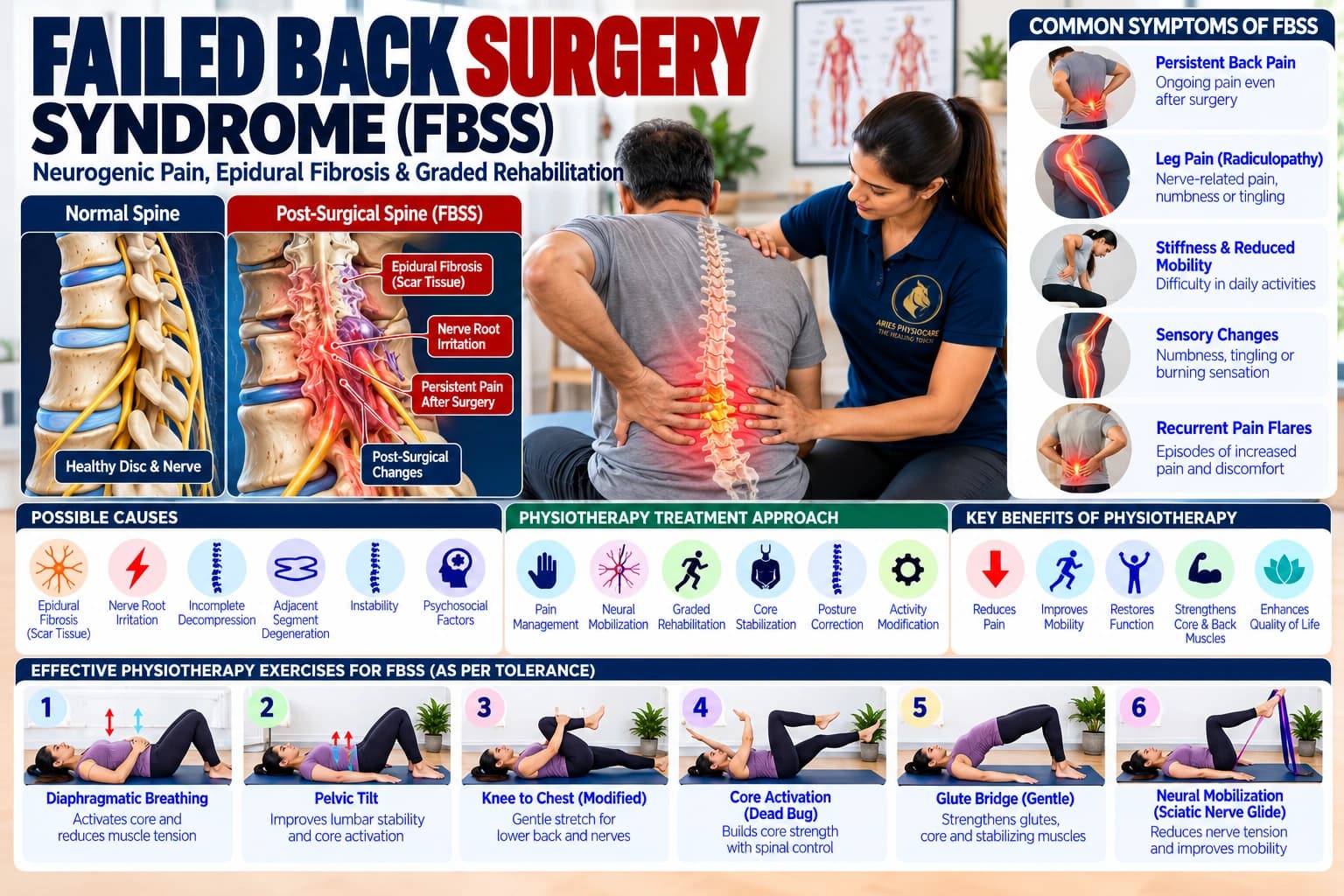
Failed Back Surgery Syndrome (FBSS) is an umbrella clinical term describing persistent, new, or recurrent back or leg pain following one or more spinal surgical procedures. Affecting between 10% and 40% of post-operative patients, it can be an emotionally devastating and physically exhausting experience. However, FBSS does not mean you are incurable or doomed to permanent agony. Modern multimodal physiotherapy combines neurodynamic desensitization, gentle motor control retraining, and pain neuroscience education to break the chronic cycle and restore meaningful functional independence.
Common Symptoms of Failed Back Surgery Syndrome
Persistent post-operative distress:
- Continued or worsening radiating neuropathic leg pain despite technically successful surgery
- Deep, burning, or aching lower back pain around the surgical site
- Severe hypersensitivity to light touch, cold, or mechanical clothing pressure (allodynia)
- Significant psychological distress, movement anxiety, and loss of confidence in physical capacity
- Severe muscle deconditioning and rapid fatigue during standing or walking
- Adjacent segment breakdown causing new mechanical pain above or below a fusion level
- Sleep disturbances and reliance on high-dose neuropathic medications
Causes & Clinical Diagnosis
Underlying pathological drivers:
- Epidural fibrosis: Dense postoperative scar tissue tethering or compressing nerve roots
- Adjacent Segment Disease (ASD): Accelerated wear at mobile segments next to a fused joint
- Incomplete decompression or recurrent disc herniation at the same level
- Central sensitization and altered spinal cord pain processing
- Comprehensive diagnostic workup includes contrast-enhanced MRI (to distinguish scar tissue from recurrent disc) and functional movement analysis.
Pathophysiology & Biomechanical Impact
Perineural fibrosis limits normal physiological excursion of the nerve root during limb movement, converting normal stretches into agonizing tensile traction. Simultaneously, altered dorsal horn signaling amplifies pain perception, creating a persistent alarm state in the nervous system.
Evidence-Based Physiotherapy Protocols
- Pain Neuroscience Education (PNE): Reframing pain physiology to downregulate central nervous system alarm signals
- Graded motor imagery and ultra-gentle neurodynamic sliders to mobilize tethered nerve roots without provoking flare-ups
- Segmental stabilization focused on gentle breathing, core awareness, and pacing rather than forceful strengthening
- Calibrated TENS and High-Intensity Laser Therapy to reduce peri-neural hypersensitivity
Home Care & Ergonomic Strategies
- Practice activity pacing: break daily tasks into manageable, timed intervals before pain begins
- Avoid sudden aggressive exercise regimens that trigger debilitating inflammatory flare-ups
- Implement daily diaphragmatic relaxation breathing and mindfulness meditation to calm sympathetic tone
- Use supportive, ergonomic seating with heat therapy during rest intervals
When to Contact Us
You do not have to live in despair after spine surgery. Contact Aries PhysioCare for empathetic, highly specialized in-home physiotherapy tailored specifically for Failed Back Surgery Syndrome.