Introduction: Understanding the Condition
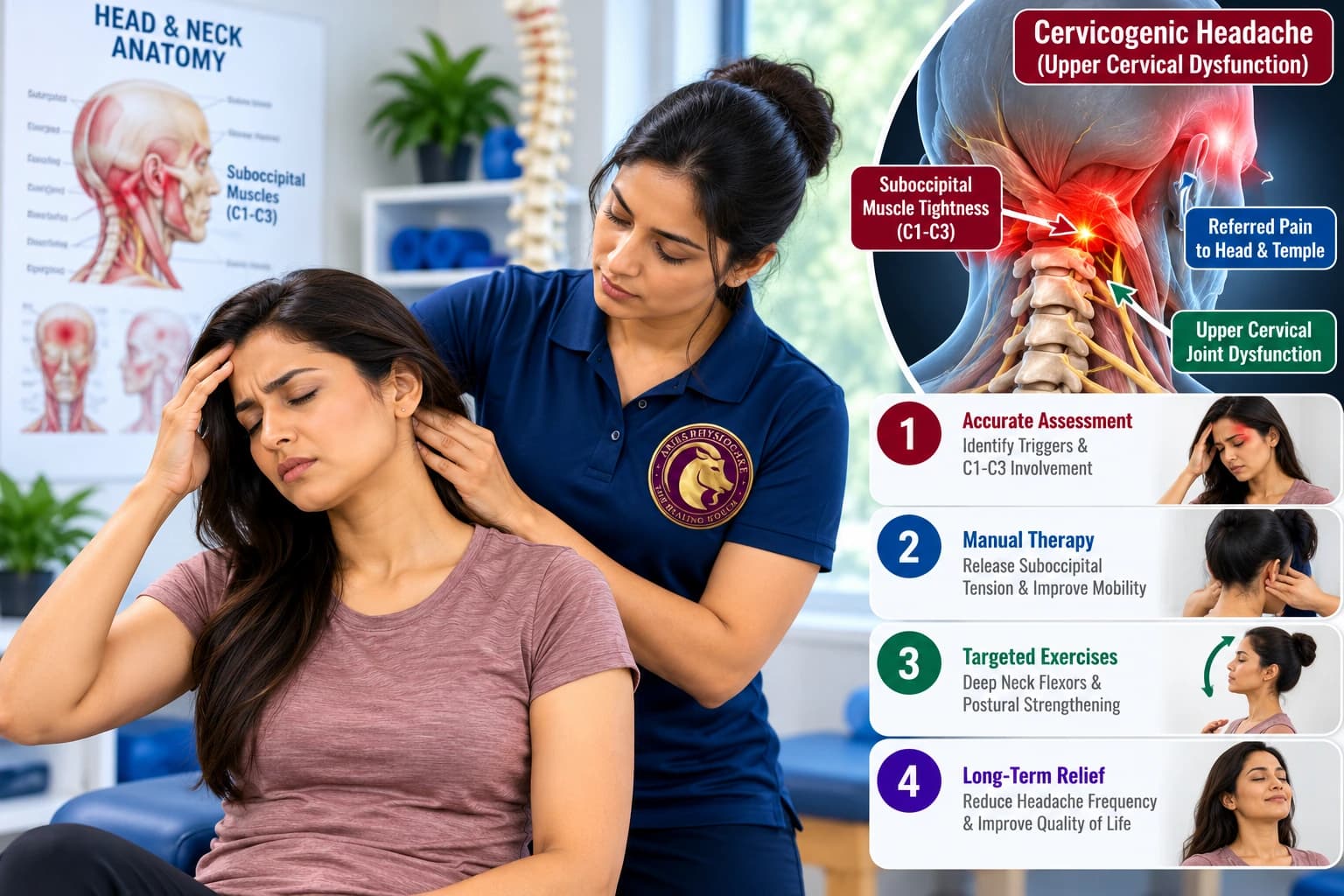
A cervicogenic headache (CGH) is a secondary headache disorder characterized by referred pain arising from musculoskeletal dysfunction within the upper cervical spine (specifically segments C1, C2, and C3). Frequently misdiagnosed as tension-type headache or migraine, cervicogenic headaches are distinguished by their strictly unilateral presentation, precipitation by neck movement or sustained awkward head postures, and co-occurring upper neck stiffness. Because sensory afferents from upper cervical nerves converge directly with the trigeminal nerve in the brainstem, physical therapy targeting the upper cervical motion segments delivers highly effective, lasting relief where medications fail.
Common Symptoms
Key clinical indicators and functional presentations:
- Strictly unilateral head pain that begins at the occiput or suboccipital base and radiates forward over the crown to the temple, forehead, or eye
- Headache episodes triggered or reproduced by sustained neck positions (such as desk work) or active neck movements
- Restricted active and passive upper cervical rotation, especially on the symptomatic side
- Profound tenderness and active myofascial trigger points upon palpation of the suboccipital, upper trapezius, and levator scapulae muscles
- A non-throbbing, moderate, dull-to-aching pain quality that can persist continuously for hours or days
- Co-occurring ipsilateral neck, shoulder, or interscapular discomfort
- Temporary relief achieved following diagnostic upper cervical joint mobilization or local anesthetic blockade
Causes & Clinical Diagnosis
Etiological drivers and diagnostic assessment:
- Atlanto-occipital (C0-C1), atlanto-axial (C1-C2), or C2-C3 zygapophyseal joint dysfunction and hypomobility
- Chronic forward head carriage placing severe compressive shortening on the suboccipital muscle group
- Whiplash injuries or minor concussive trauma causing suboccipital ligamentous sprains
- Prolonged static occupational postures (microscope work, multi-monitor desk setups, drafting)
- Clinical diagnosis utilizes the Cervical Flexion-Rotation Test (FRT), which exhibits greater than 90% sensitivity and specificity in detecting C1-C2 articular dysfunction.
Pathophysiology & Biomechanical Impact
The physiological mechanism of cervicogenic headache centers on the trigeminocervical nucleus located in the upper cervical spinal cord. Sensory afferent fibers from the C1, C2, and C3 spinal nerves (which innervate upper cervical facet joints, suboccipital muscles, and dura mater) converge onto second-order nociceptive neurons that also receive sensory inputs from the ophthalmic division of the trigeminal nerve (CN V). The brainstem cannot distinguish the precise origin of the noxious stimulus, perceiving cervical articular distress as pain radiating into the forehead, temple, and retro-orbital region.
Evidence-Based Physiotherapy Protocols
At Aries PhysioCare, our physical therapists implement clinician-administered rehabilitation protocols:
- Cervical Flexion-Rotation Test (FRT) guided manual therapy: Specific Mulligan C1-C2 Sustained Natural Apophyseal Glides (SNAGs) to immediately restore rotational symmetry
- Maitland manual mobilizations applied to the C0-C1 and C2-C3 zygapophyseal motion segments
- Targeted suboccipital release and gentle myofascial trigger point deactivation
- Craniocervical flexion training using pressure biofeedback to re-educate the deep neck flexors (longus capitis and colli)
- Postural biofeedback training to correct forward head tilt and optimize scapulothoracic alignment
- Calibrated therapeutic laser and gentle dry needling protocols administered by certified specialists
Home Care & Ergonomic Strategies
Supporting recovery through evidence-based ergonomic habits and self-care:
- Align workstation displays directly in front of your visual horizon to prevent habitual upward chin tilting or sustained rotation
- Practice hourly postural micro-breaks: Gently lengthen the back of the neck as if lifting the crown toward the ceiling
- Apply moist heat wraps to the suboccipital base for 15 minutes to alleviate tension at the skull base
- Sleep with an ergonomically contoured cervical pillow that supports the cervical lordosis without propping the head forward
- Avoid reading or using handheld mobile devices while resting flat in bed
- Refrain from aggressive self-stretching or vigorous head rolling, which can irritate sensitized upper cervical facet joints
When to Contact Us
Stop suffering from persistent, misdiagnosed headaches. Contact Aries PhysioCare to receive an accurate upper cervical evaluation and targeted physical therapy relief.