Introduction: Understanding the Condition
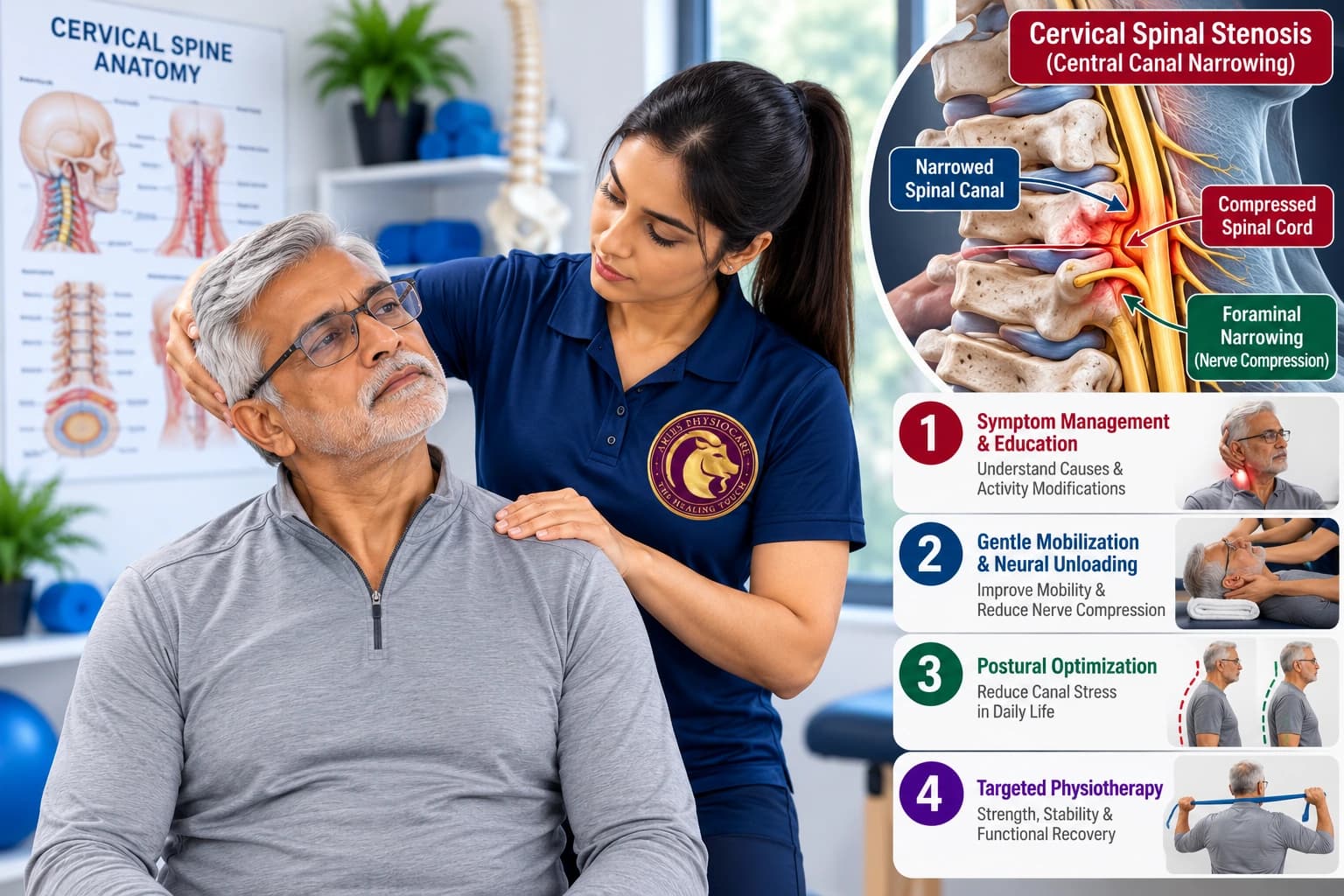
Cervical spinal stenosis refers to the pathological narrowing of the central spinal canal, lateral recesses, or intervertebral foramina of the cervical spine. This narrowing reduces the anatomical space available for the spinal cord and exiting cervical nerve roots. Frequently resulting from a combination of degenerative disc bulging, facet hypertrophy, and thickening of the ligamentum flavum, cervical stenosis predominantly affects older adults. Because extension narrows the spinal canal further, individuals often adopt a compensatory forward-stooped posture. Specialized physical therapy focuses on flexion-biased spinal opening, posture optimization, and preserving functional independence while monitoring closely for neurological compromise.
Common Symptoms
Key clinical indicators and functional presentations:
- Chronic neck stiffness and aching that worsens significantly with neck extension or looking upward
- Bilateral shoulder, arm, or hand aching and numbness exacerbated by upright standing or walking
- Subjective sensations of stiffness or clumsiness in the fingers when buttoning shirts or tying shoes
- Symptom relief experienced when sitting, leaning forward, or resting the head in slight flexion
- Balance unsteadiness or mild gait changes during brisk walking or turning
- Reduced cervical range of motion in all planes, particularly in extension and rotation
- Occasional widespread paresthesia or 'pins and needles' down both arms
Causes & Clinical Diagnosis
Etiological drivers and diagnostic assessment:
- Degenerative spondylosis: Advanced disc collapse, osteophyte formation, and facet joint arthrosis
- Hypertrophy, folding, or calcification of the ligamentum flavum
- Congenitally narrow central spinal canal (Torg-Pavlov ratio less than 0.82)
- Degenerative retrolisthesis or anterolisthesis producing dynamic canal compromise
- Clinical diagnosis requires careful neurological examination (gait evaluation, tandem walk, Romberg test, Hoffman's reflex, and inverted supinator sign) correlated with cervical MRI or CT myelography.
Pathophysiology & Biomechanical Impact
Dynamic cervical biomechanics directly impact canal volume: neck extension decreases central canal cross-sectional area by up to 16% and reduces neuroforaminal dimensions by up to 20% due to inward buckling of the ligamentum flavum. Sustained narrowing compromises microvascular perfusion to neural tissues, producing transient ischemic neurogenic symptoms during upright physical exertion.
Evidence-Based Physiotherapy Protocols
At Aries PhysioCare, our physical therapists implement clinician-administered rehabilitation protocols:
- Flexion-biased movement therapy: Clinician-guided protocols that preserve neuroforaminal and canal dimensions
- Gentle manual cervical distraction: Therapist-delivered axial decompression to momentarily expand compromised canal volume
- Thoracic and rib cage mobilization: Restoring mid-back mobility to eliminate excessive compensatory cervical extension demands
- Proprioceptive and balance retraining: Challenging dynamic postural stability to reduce fall risk in older adults
- Calibrated electrotherapy (TENS and low-level laser) for non-pharmacological management of periarticular pain
- Clinician-supervised isometric motor control conditioning to stabilize hypermobile adjacent segments
Home Care & Ergonomic Strategies
Supporting recovery through evidence-based ergonomic habits and self-care:
- Avoid prolonged looking upward or activities that force the neck into sustained hyperextension (such as painting ceilings or overhead shelving)
- Utilize supportive seating with high backrests and armrests to offload the cervical spine during sitting
- Sleep with a supportive cervical pillow that accommodates neutral to slight forward-cradled head positioning
- Install secure grab bars and eliminate loose throw rugs throughout the home to minimize fall hazards
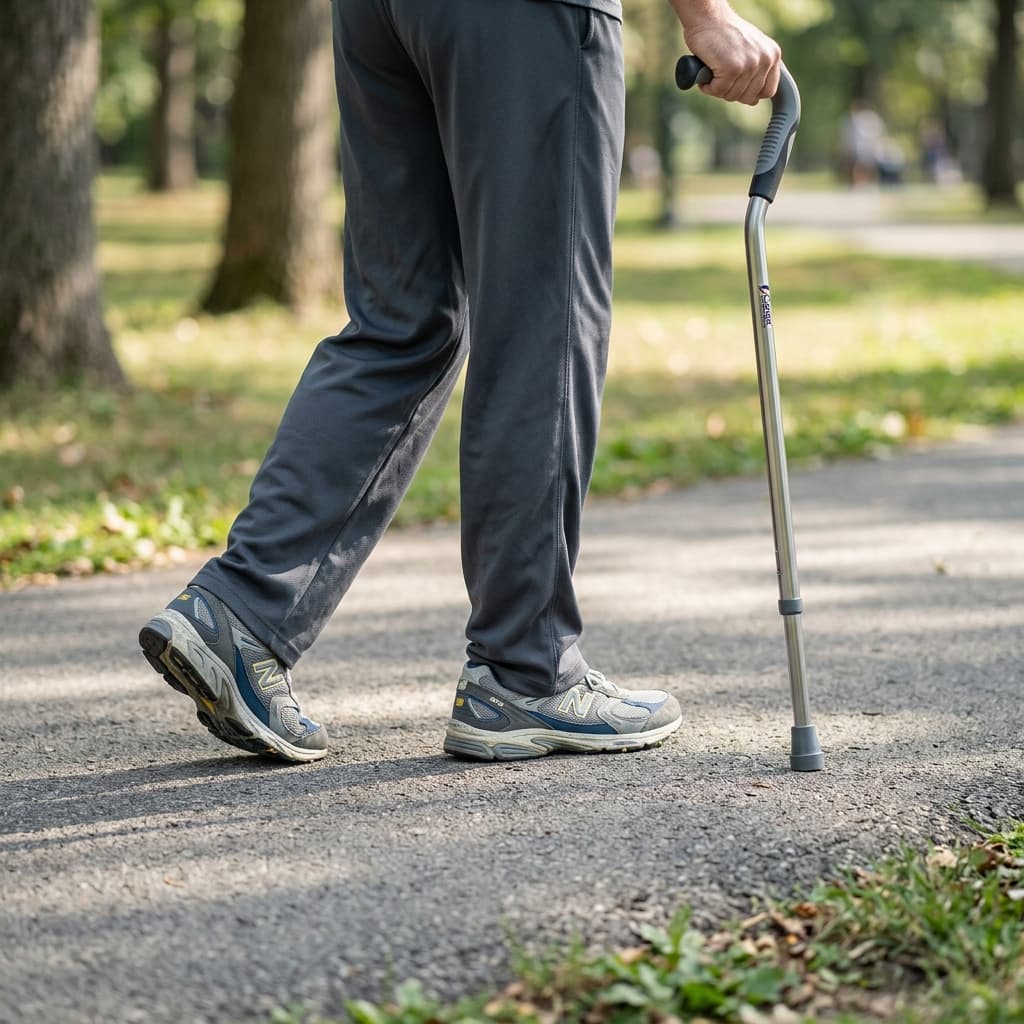
- Maintain regular, gentle flat-surface walking sessions to promote systemic conditioning without jarring spinal impacts
- Refrain from high-velocity cervical manipulations or unsupervised neck hyperextension drills
When to Contact Us
Manage cervical stenosis safely and maintain confident mobility. Contact Aries PhysioCare today for specialized home-based physiotherapy and comprehensive neurological monitoring.