Introduction: Understanding the Condition
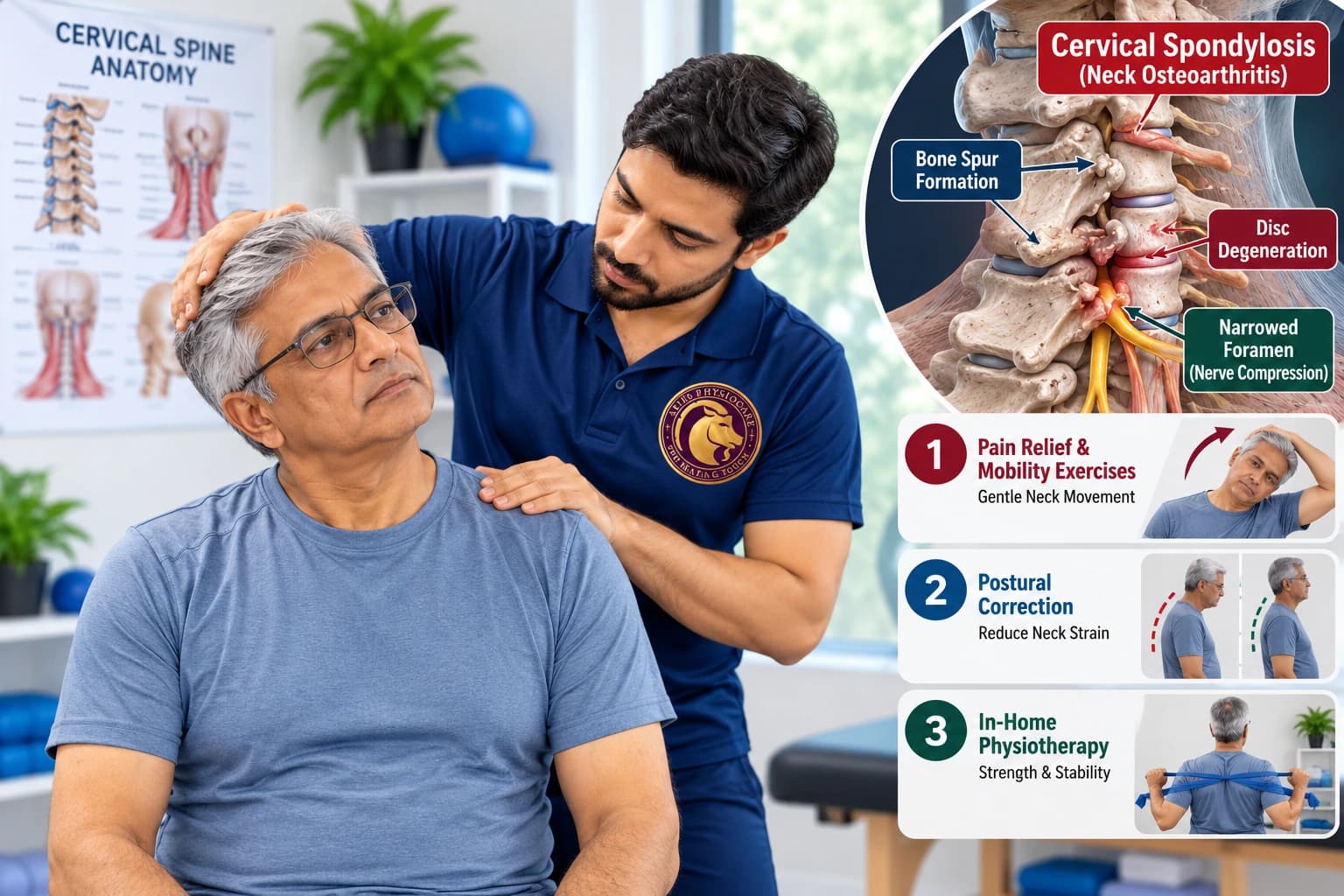
Cervical spondylosis is an age-related degenerative condition characterized by progressive wear of the cervical intervertebral discs, uncovertebral joints (joints of Luschka), and posterior facet joints. Commonly referred to as osteoarthritis of the neck, it affects more than 85% of adults over the age of 60, although modern sedentary lifestyles have accelerated its onset in younger populations. As intervertebral discs lose hydration and elasticity, compensatory osteophytes (bone spurs) develop along vertebral margins. Specialized physiotherapy preserves neuroforaminal patency, maintains functional range of motion, and prevents functional decline without surgical intervention.
Common Symptoms
Key clinical indicators and functional presentations:
- Gradual onset of deep, aching cervical stiffness that is most pronounced upon awakening
- Audible or palpable grinding, clicking, or crepitus during active head rotation
- Symptom aggravation during prolonged static upright positions or high-impact activities
- Secondary tension headaches radiating along the greater occipital nerve distribution
- Progressive reduction in lateral flexion and neck extension range of motion
- Muscular fatigue and knotting across the cervicothoracic junction
- Intermittent radiating shoulder discomfort that improves with recumbent cervical unweighting
Causes & Clinical Diagnosis
Etiological drivers and diagnostic assessment:
- Natural biological desiccation of the nucleus pulposus and loss of proteoglycan content
- Decades of cumulative axial loading, vibration exposure, or heavy manual labor
- Chronic uncorrected forward head carriage placing continuous compressive strain on lower cervical segments (C5–C7)
- Congenitally narrow spinal canal predisposing to symptomatic joint encroachment
- Diagnosis is grounded in cervical biomechanical examination, dermatomal testing, and correlation with plain cervical radiographs or MRI documenting disc height narrowing and osteophytosis.
Pathophysiology & Biomechanical Impact
As cervical discs collapse, the biomechanical axis of motion shifts posteriorly, forcing the zygapophyseal and uncovertebral joints to absorb up to 60% of axial compressive loads. This overload results in chondromalacia, articular capsule thickening, and reactive marginal osteophyte formation. Over time, osteophytes can encroach upon the intervertebral foramina or central canal, creating mechanical friction against exiting nerve roots during cervical extension and lateral rotation.
Evidence-Based Physiotherapy Protocols
At Aries PhysioCare, our physical therapists implement clinician-administered rehabilitation protocols:
- Targeted manual traction: Controlled mechanical or therapist-administered axial unloading to decompress compromised motion segments
- Maitland Grade II and III passive joint mobilizations to restore synovial fluid circulation and capsular extensibility
- High-Frequency Ultrasound and Class-IV Laser therapy to downregulate local chronic periarticular inflammatory mediators
- Supervised isometric cervical stabilizer conditioning to enhance dynamic segmental protection without inducing shearing forces
- Thoracic spine and rib cage mobilizations to compensate for cervical hypomobility and optimize load distribution
- Clinician-monitored postural restoration protocols focusing on active cervical elongation and retraction
Home Care & Ergonomic Strategies
Supporting recovery through evidence-based ergonomic habits and self-care:
- Avoid sleeping on multiple stacked pillows, which forces the cervical spine into excessive forward flexion throughout the night
- Incorporate ergonomic desk adjustments with elevated document holders and forearms supported at 90-degree angles
- Apply morning moist heat wraps across the neck and upper trapezius for 15 minutes to reduce morning articular gelation
- Engage in low-impact aerobic activities such as walking or recumbent cycling to promote systemic circulation and joint nourishment
- Avoid sudden high-impact jolting or prolonged hyperextended neck postures (such as painting ceilings or overhead viewing)
- Maintain adequate daily hydration to support cellular fluid homeostasis in connective tissues
When to Contact Us
Maintain healthy joint function and stay pain-free as you age. Contact Aries PhysioCare to schedule a specialized clinical cervical assessment and receive an individualized joint preservation protocol.