
Introduction: Understanding the Condition
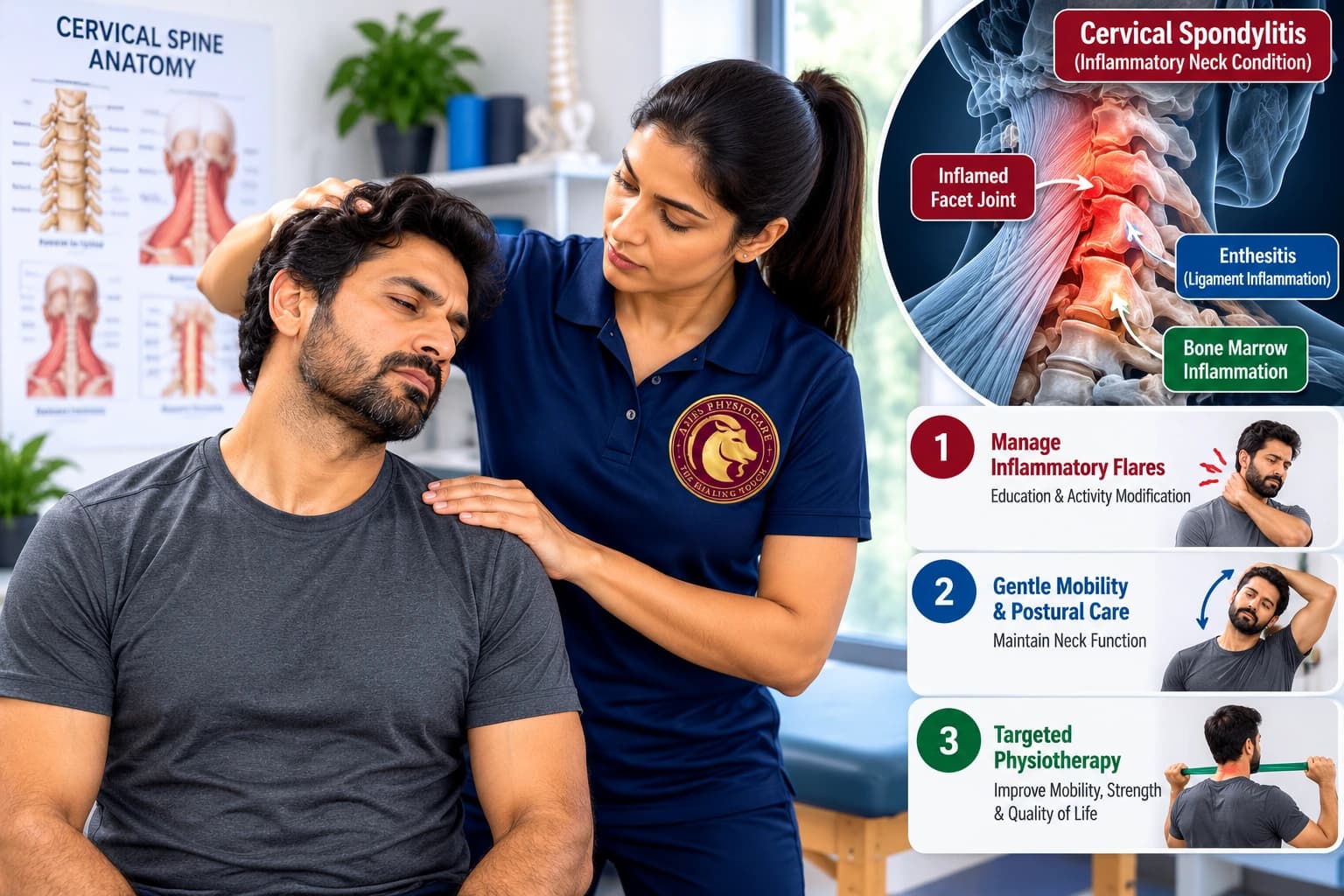
Cervical spondylitis refers to inflammatory involvement of the cervical vertebrae, intervertebral joints, and surrounding entheses (ligamentous attachment zones). Unlike mechanical cervical spondylosis, cervical spondylitis often possesses an autoimmune or systemic inflammatory etiology, presenting with severe morning stiffness and inflammatory night pain that disturbs sleep. If unmanaged, chronic inflammation can precipitate erosive structural damage, ligamentous calcification, and progressive spinal rigidity. Specialized clinical physiotherapy plays a pivotal role in managing inflammatory flares, preserving spinal flexibility, and protecting thoracic respiratory excursions.
Common Symptoms
Key clinical indicators and functional presentations:
- Profound morning neck stiffness lasting greater than 45 to 60 minutes
- Inflammatory night pain that awakens the patient during the second half of the night
- Discomfort that paradoxically improves with gentle physical activity but intensifies during rest
- Focal tenderness over the cervical spinous processes and cervicothoracic junction
- Systemic fatigue, malaise, or co-occurring inflammatory joint complaints
- Gradual reduction in cervical sagittal mobility leading to compensatory forward head posture
- Occasional bilateral suboccipital and temporal aching
Causes & Clinical Diagnosis
Etiological drivers and diagnostic assessment:
- Autoimmune systemic inflammatory arthropathies, including Ankylosing Spondylitis and Psoriatic Arthritis, often linked to HLA-B27
- Reactive inflammatory cascades following systemic bacterial or viral infections
- Chronic microvascular inflammation at the entheseal fibrocartilage insertions
- Diagnosis combines medical rheumatological screening (ESR, C-Reactive Protein, HLA-B27 genotyping) with cervical MRI demonstrating active bone marrow edema and discovertebral junction inflammation.
Pathophysiology & Biomechanical Impact
Systemic inflammatory cytokines (tumor necrosis factor-alpha, interleukin-17, and interleukin-23) specifically target the fibrocartilaginous entheses where the anterior and posterior longitudinal ligaments attach to vertebral bodies. Chronic inflammatory infiltration causes subchondral osteitis and focal bone erosions. During periods of remissive repair, excess osteoblastic activity leads to syndesmophyte formation (bony bridging across disc spaces), threatening progressive spinal ankylosis (fusion).
Evidence-Based Physiotherapy Protocols
At Aries PhysioCare, our physical therapists implement clinician-administered rehabilitation protocols:
- Gentle active-assisted range of motion within pain-free physiological arcs to maintain capsular elasticity during remission phases
- Thermal contrast protocols: Superficial cooling during acute inflammatory flares and deep moist heat during chronic stiffness phases
- Diaphragmatic and costal breathing expansion therapy to preserve thoracic mobility and prevent restrictive pulmonary deficits
- Clinician-supervised postural endurance training to counteract progressive sagittal spinal flexion and forward stooping
- Gentle myofascial release of hypertonic cervical and pectoral muscle groups under close monitoring
- Activity pacing and energetic load management education delivered by senior physical therapists
Home Care & Ergonomic Strategies
Supporting recovery through evidence-based ergonomic habits and self-care:
- Sleep on a firm, supportive mattress using a single low-profile cervical contour pillow to prevent neck flexion contractures
- Take warm morning showers to systematically loosen paraspinal muscles prior to initiating daily routines
- Avoid high-intensity impact exercises or aggressive spinal manipulations that can destabilize inflamed entheses
- Incorporate structured movement breaks every 30 minutes during desk work to prevent inflammatory stasis
- Maintain an anti-inflammatory nutritional and hydration protocol as guided by clinical healthcare providers
- Refrain from prolonged immobilization or rigid neck collars unless specifically ordered by your attending medical specialist
When to Contact Us
Safeguard your cervical mobility and prevent long-term spinal rigidity. Contact Aries PhysioCare for expert in-home physiotherapy and tailored inflammatory spine rehabilitation.