Introduction: Understanding the Condition
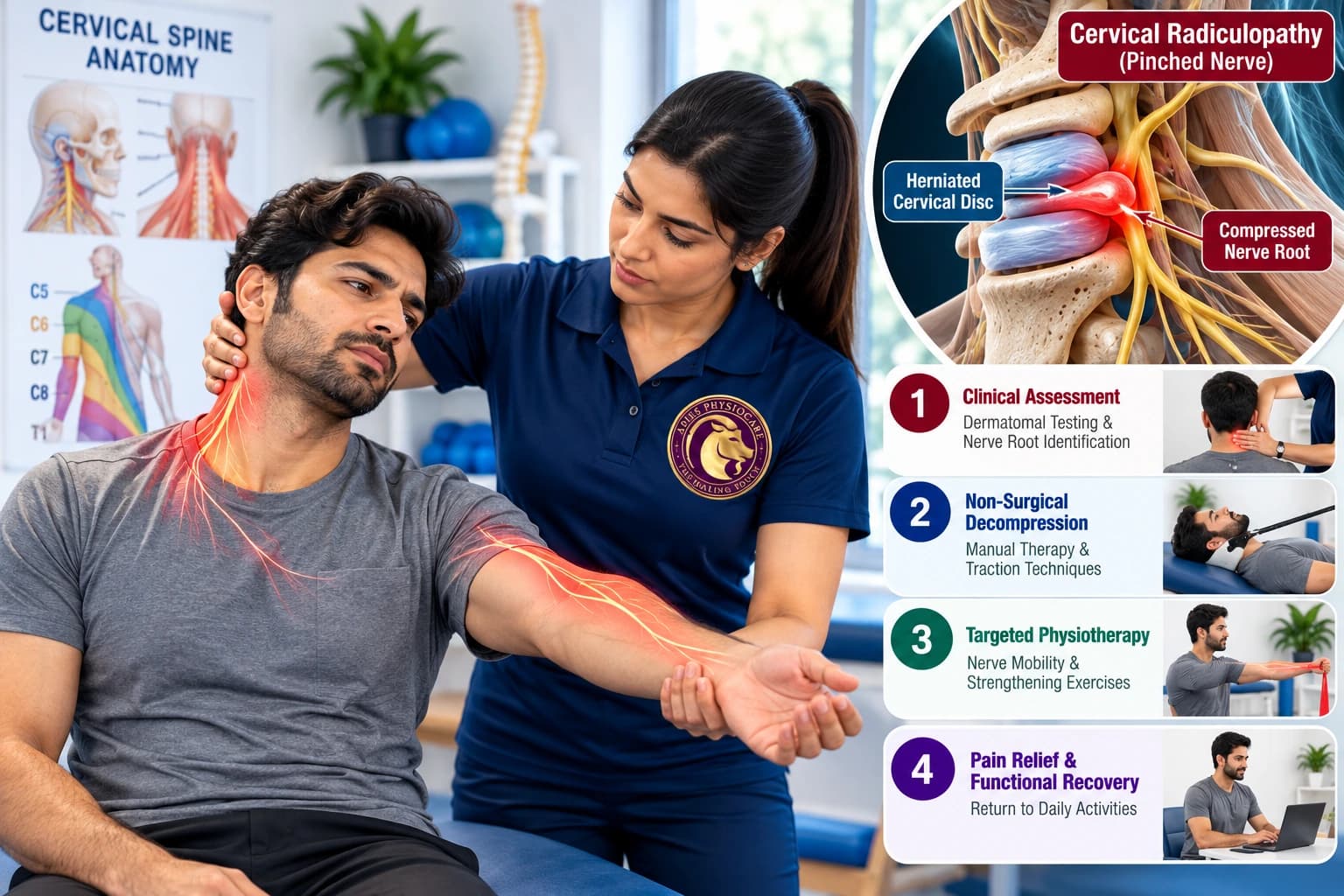
Cervical radiculopathy is a neurological condition resulting from compression, tethering, or chemical inflammation of a cervical spinal nerve root as it exits the neuroforamen. Commonly known as a 'pinched nerve,' it produces a distinct triad of radiating arm pain, sensory changes, and motor weakness mapped precisely along specific dermatomes and myotomes. Most commonly involving the C6 and C7 nerve roots, cervical radiculopathy can be intensely debilitating. Evidence-based conservative physiotherapy is the recognized gold-standard first-line treatment, achieving over 85% success without requiring invasive epidural injections or surgical decompression.
Common Symptoms
Key clinical indicators and functional presentations:
- Unilateral lancinating, electric, or searing pain traveling down the arm into the thumb, middle fingers, or pinky
- Persistent numbness or pins-and-needles paresthesia in discrete cutaneous dermatomal distributions
- Motor weakness, such as difficulty with wrist extension (C6), elbow extension (C7), or finger abduction (C8)
- Diminished or absent deep tendon reflexes (biceps, brachioradialis, or triceps)
- Sharp pain exacerbation when tilting the head backward or turning toward the symptomatic side
- Deep, gnawing ache medial to the scapula that is frequently misidentified as a shoulder pathology
- Difficulty maintaining arm position while driving, typing, or writing
Causes & Clinical Diagnosis
Etiological drivers and diagnostic assessment:
- Lateral cervical disc herniation compressing the exiting nerve root (dominant in adults under 50)
- Degenerative uncovertebral or facet joint osteophytes narrowing the neuroforaminal opening (dominant in adults over 50)
- Foraminal stenosis from loss of intervertebral disc height
- Clinical diagnosis is established via Wainner's Clinical Prediction Rule: positive Spurling's test, positive Upper Limb Neurodynamic Test (ULNT1), positive Cervical Distraction test, and ipsilateral cervical rotation less than 60 degrees.
Pathophysiology & Biomechanical Impact
Mechanical compression impairs intraneural microvascular blood flow, creating local ischemia and axonal transport stasis. Simultaneously, chemical mediators (prostaglandins, substance P, and interleukins) increase vascular permeability, inducing intraneural edema and ectopic electrical discharge from sensory axons. This sensitization lowers the activation threshold, converting minor neck movements into severe, radiating electrical bursts down the limb.
Evidence-Based Physiotherapy Protocols
At Aries PhysioCare, our physical therapists implement clinician-administered rehabilitation protocols:
- Upper Limb Neurodynamic Mobilizations (ULNT sliders and tensioners): Controlled techniques to restore neural compliance without provoking inflammatory flare-ups
- Mechanical and manual cervical foraminal distraction: Calibrated axial traction to expand neuroforaminal volume by up to 25%
- Mulligan Lateral Glides: Mobilization with movement performed in supine and sitting to immediately offload compressed nerve roots
- Calibrated electro-analgesia: Interferential Therapy (IFT) and TENS targeted to the cervical nerve exit zones
- Targeted deep cervical flexor and lower scapular stabilizer retraining under clinician supervision
- Progressive functional reconditioning to restore upper limb power and endurance
Home Care & Ergonomic Strategies
Supporting recovery through evidence-based ergonomic habits and self-care:
- Incorporate the shoulder abduction relief position (resting the forearm on a pillow or atop the head) during acute painful spikes
- Avoid carrying handheld items or shoulder bags on the symptomatic side to eliminate downward traction on nerve roots
- Utilize an ergonomically fitted cervical support pillow during sleep to keep the neck in neutral alignment
- Ensure computer monitors are centered directly in front of your visual field to eliminate persistent cervical rotation
- Apply cryotherapy along the base of the neck for 15 minutes post-activity to manage perineural swelling
- Never perform forceful unsupervised arm pulling or ballistic neck movements
When to Contact Us
Relieve pinched nerve pain and restore full strength to your arm. Contact Aries PhysioCare for specialized in-home cervical radiculopathy physiotherapy.