Introduction: Understanding the Condition
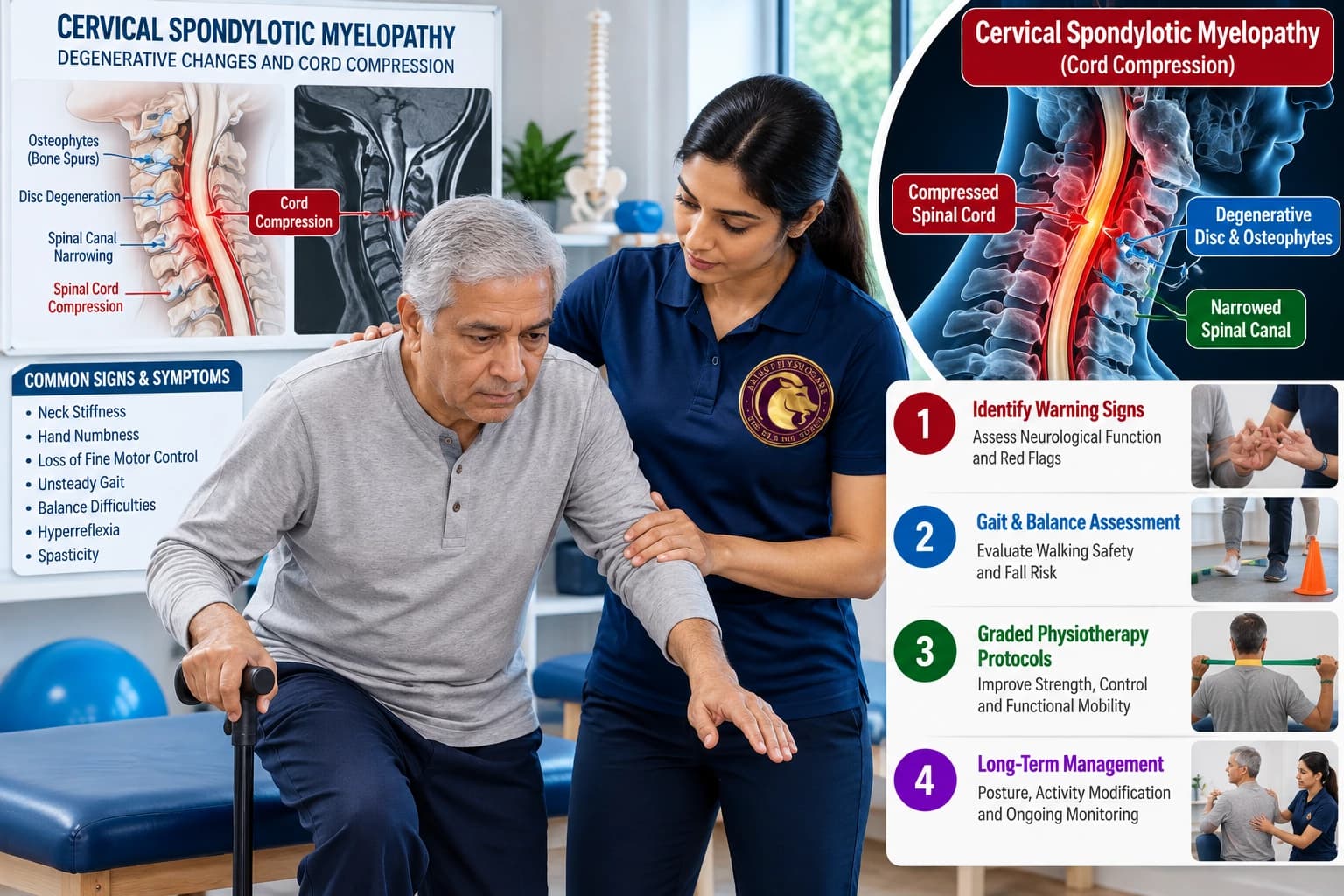
Cervical Spondylotic Myelopathy (CSM) is the most common cause of non-traumatic spinal cord dysfunction in adults over 50 years of age. Unlike cervical radiculopathy which involves compression of an individual peripheral nerve root, myelopathy results from pathological compression of the spinal cord itself within a narrowed central cervical canal. Because the spinal cord contains vital descending motor pathways and ascending sensory tracts, cervical myelopathy presents with upper motor neuron signs, including progressive hand clumsiness, gait unsteadiness, and sensory ataxia. While severe progressive cases require surgical decompression, specialized neuro-physiotherapy is essential for functional preservation, fall prevention, and post-decompression recovery.
Common Symptoms
Key clinical indicators and functional presentations:
- Loss of fine motor dexterity in the hands: Difficulty buttoning shirts, writing legibly, or manipulating keys
- Gait unsteadiness, described as feeling 'drunk' or walking on an uneven surface, particularly in dim lighting
- Subjective heaviness, weakness, or stiffness in both legs during ambulation (spastic paraparesis)
- Bilateral tingling, numbness, or loss of proprioceptive vibration sensation in the fingers and feet
- Presence of upper motor neuron signs: Hyperreflexia, positive Hoffman's sign, positive Babinski sign, and sustained clonus
- Lhermitte's sign: An electric shock-like sensation traveling down the spine into the limbs upon neck flexion
- Urinary urgency, frequency, or hesitancy in advanced stages of spinal cord compression
Causes & Clinical Diagnosis
Etiological drivers and diagnostic assessment:
- Advanced cervical spondylosis with large posterior osteophytes and calcified disc bulges
- Congenital cervical spinal canal stenosis (anteroposterior diameter less than 13 mm)
- Ossification of the Posterior Longitudinal Ligament (OPLL) or hypertrophy of the ligamentum flavum
- Dynamic spinal cord compression provoked by micro-instability and dynamic cervical flexion-extension
- Clinical diagnosis requires thorough neurological examination (testing reflexes, finger escape sign, grip-and-release test, tandem gait, Romberg test) correlated immediately with high-resolution cervical MRI.
Pathophysiology & Biomechanical Impact
Pathological central canal narrowing inflicts chronic mechanical compressive and shear stress on the spinal cord. This mechanical distortion compresses micro-vessels in the anterior spinal artery and pial capillary plexus, leading to localized spinal cord ischemia, demyelination of the corticospinal and dorsal column tracts, and apoptotic death of oligodendrocytes. With ongoing dynamic compression, irreversible cystic myelomalacia can develop within the spinal cord parenchyma.
Evidence-Based Physiotherapy Protocols
At Aries PhysioCare, our physical therapists implement clinician-administered rehabilitation protocols:
- Strict avoidance of high-velocity cervical manipulations, end-range traction, or aggressive hyperextension vectors
- Sensorimotor balance and proprioceptive retraining: Balance platform drills and tandem gait practice under close supervision to reduce fall risk
- Fine motor coordination therapy: Task-oriented manual dexterity training to preserve hand functional capacity
- Gait retraining and assistive device prescription (canes, walking frames) to ensure maximum ambulation safety
- Core and pelvic girdle stabilization to optimize walking biomechanics and reduce compensatory cervical stress
- Comprehensive neurological monitoring: Objective tracking using the modified Japanese Orthopaedic Association (mJOA) score
Home Care & Ergonomic Strategies
Supporting recovery through evidence-based ergonomic habits and self-care:
- Install secure grab bars in bathrooms, remove loose throw rugs, and ensure well-lit corridors to minimize fall risk
- Wear supportive, flat footwear with slip-resistant soles both indoors and outdoors
- Avoid carrying heavy loads with both hands simultaneously, which compromises balance and protective arm reactions
- Rest the neck in a neutral posture using a supportive cervical pillow; avoid sleeping with the neck hyperextended
- Avoid high-impact physical activities, contact sports, or sudden jarring movements that risk spinal cord contusion
- Report any acute deterioration in walking balance, hand grip strength, or bowel/bladder control immediately to your medical team
When to Contact Us
Protect your neurological health and preserve independent walking balance. Contact Aries PhysioCare for specialized neuro-physiotherapy evaluation and comprehensive fall-prevention care.