Introduction: Understanding the Condition
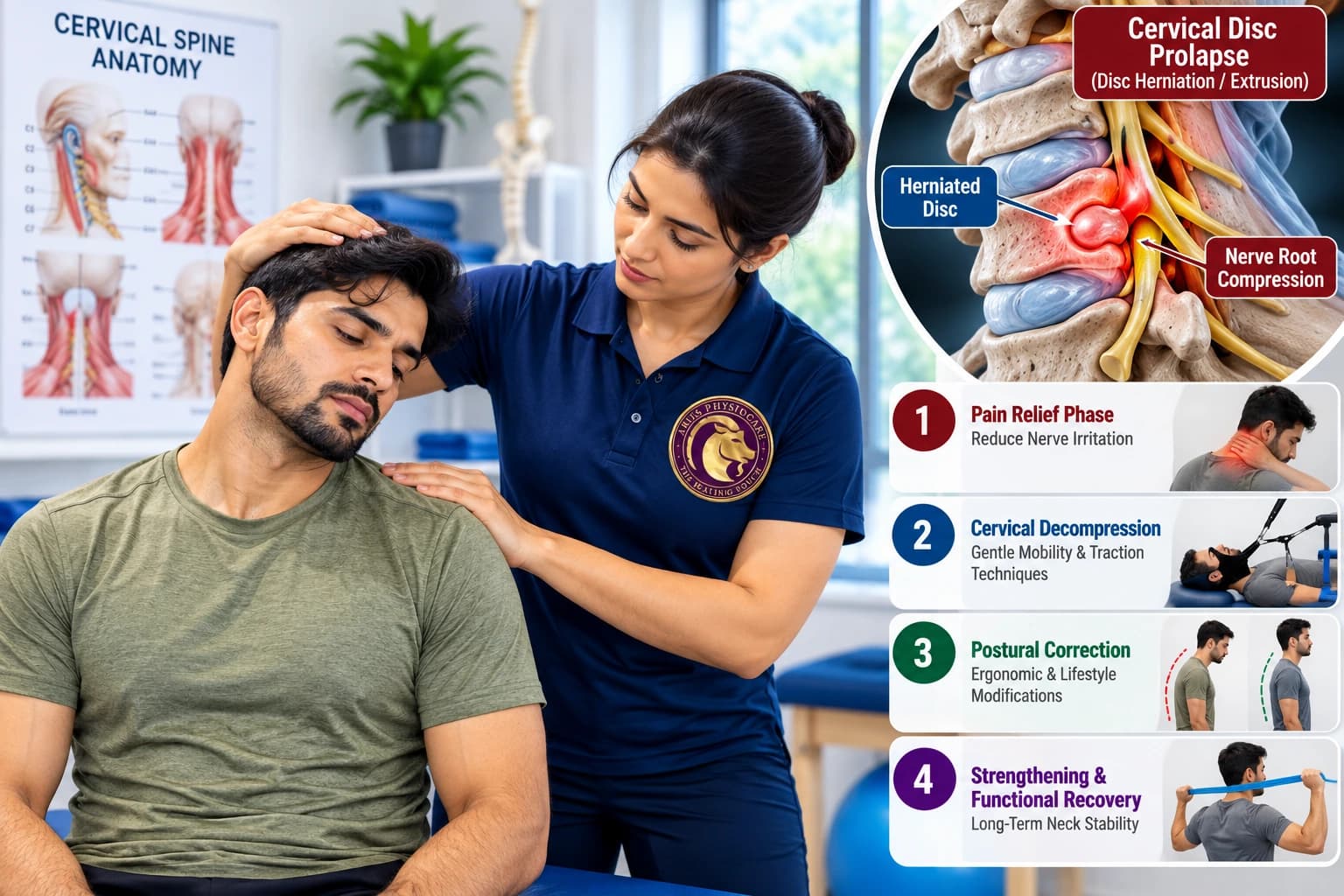
A cervical disc prolapse, or herniated disc, occurs when the inner gelatinous nucleus pulposus penetrates through a structural tear in the surrounding annulus fibrosus, protruding into the spinal canal or intervertebral foramen. Most frequently occurring at the C5–C6 and C6–C7 levels, cervical disc prolapses can cause acute, severe neck pain and radiating radiculopathy into the arm. While an MRI confirming a herniation can be alarming, high-level clinical research demonstrates that up to 90% of cervical disc herniations undergo natural biological resorption and symptom resolution with comprehensive, evidence-based physiotherapy.
Common Symptoms
Key clinical indicators and functional presentations:
- Sudden or progressive onset of acute neck and scapular pain following flexion or rotational movements
- Intense radiating, burning, or lancinating pain traveling down the arm, forearm, or fingers
- Dermatomal numbness, paresthesia, and 'electric shock' sensations provoked by coughing or sneezing
- Subjective upper limb weakness, such as reduced grip strength or difficulty lifting the arm
- Marked antalgic posture: The patient holds their neck stiffly inclined away from the symptomatic side
- Temporary symptom reduction when placing the hand of the affected arm on top of the head (Bakody's sign)
- Severe sleep disturbance due to an inability to find a comfortable recumbent head position
Causes & Clinical Diagnosis
Etiological drivers and diagnostic assessment:
- Age-related degenerative fissures within the outer concentric lamellae of the annulus fibrosus
- Repetitive occupational cervical loading, heavy lifting, or sustained flexed neck postures
- Acute traumatic acceleration injuries or sudden compressive axial forces
- Clinical diagnosis involves comprehensive neurological examination (biceps, brachioradialis, and triceps reflex testing; dermatome sensory mapping; myotome strength scoring) and the Spurling test correlated with cervical MRI.
Pathophysiology & Biomechanical Impact
The extruded nucleus pulposus produces clinical pathology through two synergistic mechanisms: direct mechanical displacement of the exiting nerve root against the bony uncinate process, and intense chemical radiculitis driven by pro-inflammatory cytokines (phospholipase A2, TNF-alpha, nitric oxide). Over an 8 to 16 week window, the body's vascular and immune response deploys macrophages that phagocytose and enzymatically degrade the exposed herniated fragment (spontaneous disc resorption).
Evidence-Based Physiotherapy Protocols
At Aries PhysioCare, our physical therapists implement clinician-administered rehabilitation protocols:
- Mechanical Diagnosis and Therapy (MDT / McKenzie Method): Directional preference testing to achieve rapid centralization of peripheral arm pain
- Therapeutic cervical traction: Clinician-administered manual or mechanical distraction to widen the neuroforamen and reduce intradiscal pressure
- Neurodynamic nerve gliding: Gentle median, radial, and ulnar nerve mobilization techniques to restore neural excursion and eliminate perineural edema
- High-Intensity Class-IV Laser and calibrated Interferential Therapy (IFT) to downregulate acute chemical neuro-inflammation
- Supervised isometric cervical stabilizer activation, strictly avoiding painful provocative vectors
- Graded criteria-based progression toward functional movement re-education and cervical motor control
Home Care & Ergonomic Strategies
Supporting recovery through evidence-based ergonomic habits and self-care:
- Maintain comfortable neutral resting postures; utilize a small rolled towel beneath the neck curve when supine
- Avoid carrying heavy loads, groceries, or backpacks with the symptomatic upper extremity
- Limit continuous computer and mobile phone viewing; ensure screens are placed squarely at eye level
- Apply cold therapy packs to the lateral neck for 15 minutes several times daily to suppress acute nerve inflammation
- Refrain from aggressive unsupervised stretching or forceful rotational cracking of the neck
- Avoid prolonged sitting in deep, unsupportive soft sofas that round the upper back and thrust the neck forward
When to Contact Us
Avoid unnecessary spinal surgery and conquer radiating arm pain safely. Contact Aries PhysioCare today for specialized in-home cervical disc decompression and personalized rehabilitation.