Introduction: Understanding the Condition
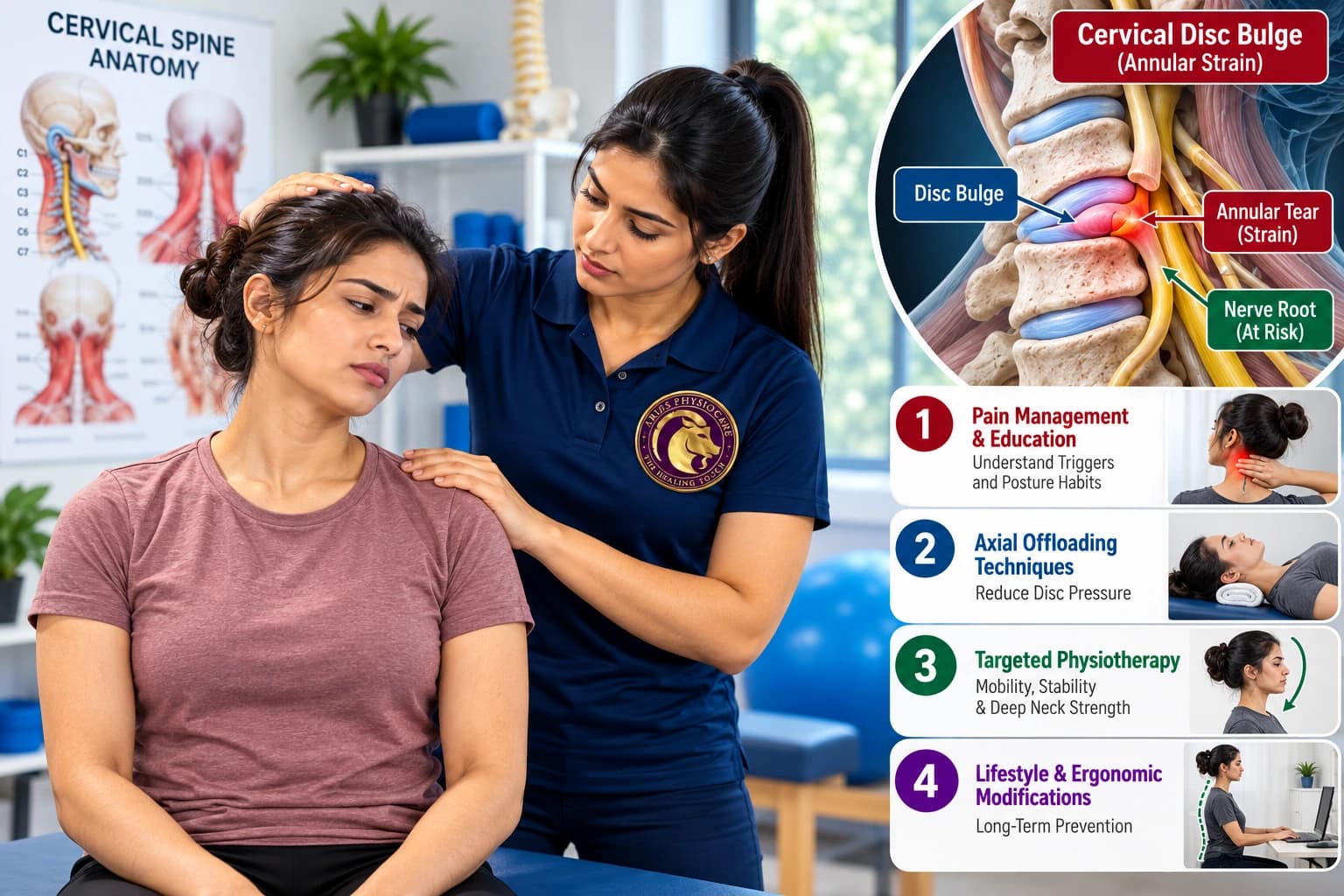
A cervical disc bulge is one of the most frequent findings reported on diagnostic cervical MRI examinations. Unlike an acute disc prolapse where the internal nucleus tears through the outer wall, a disc bulge involves generalized, symmetrical or asymmetrical extension of the intact annular circumference beyond the vertebral body margins. Often described as a 'flattened tire' bulging outward under compressive load, a cervical disc bulge can cause significant neck stiffness, localized discomfort, and early neuroforaminal crowding. Proactive physiotherapy decompresses the disc, corrects faulty spinal kinematics, and prevents progression to annular rupture.
Common Symptoms
Key clinical indicators and functional presentations:
- Generalized aching and stiffness across the posterior neck and upper trapezius
- Discomfort that intensifies following prolonged desk sitting or screen viewing
- Intermittent tightness radiating toward the supraspinous fossa or acromion
- Sensation of cervical tension and restricted neck rotation, particularly when checking blind spots while driving
- Occasional mild tingling sensations in the shoulder or upper arm without true muscle weakness
- Morning cervical tightness that gradually improves after warm showers and light activity
- Pain elicited during combined cervical extension and axial compression
Causes & Clinical Diagnosis
Etiological drivers and diagnostic assessment:
- Chronic forward head posture shifting gravitational load anteriorly onto cervical discs
- Repetitive occupational neck flexion (text-neck, laptop usage, prolonged reading)
- Early age-related dehydration and loss of disc shock-absorbing resilience
- Weakness in the deep cervical stabilizing musculature
- Clinical diagnosis involves postural biomechanical assessment, active range of motion evaluation, and cervical quadrant provocative testing correlated with MRI findings.
Pathophysiology & Biomechanical Impact
Under sustained compressive and flexural loads, the nucleus pulposus exerts continuous radial pressure against the inner annular lamellae. Over time, micro-delaminations occur within the fibrocartilaginous rings, permitting circumferential bulging. This outward distension reduces the anteroposterior diameter of the spinal canal and encroaches upon the anterior margins of the intervertebral foramina, creating mechanical abutment against adjacent pain-sensitive ligamentous structures.
Evidence-Based Physiotherapy Protocols
At Aries PhysioCare, our physical therapists implement clinician-administered rehabilitation protocols:
- Directional preference testing: Assessing cervical retraction and extension vectors to encourage inward centralization of disc material
- Manual cervical traction: Gentle therapist-guided longitudinal distraction to promote negative intradiscal hydrostatic pressure
- Segmental Maitland mobilizations to address hypomobile cervicothoracic junction segments
- Therapeutic Ultrasound and Class-IV Laser therapy to enhance cellular repair within outer annular fibers
- Clinician-supervised deep neck flexor motor control conditioning using pressure biofeedback
- Scapular stabilization retraining to enhance kinetic chain support for the cervical column
Home Care & Ergonomic Strategies
Supporting recovery through evidence-based ergonomic habits and self-care:
- Elevate laptop and computer screens so you look directly straight ahead rather than downward
- Take scheduled posture breaks every 30 to 45 minutes: Stand tall and gently reset your head over your shoulders
- Use a high-quality orthopedic contoured cervical pillow to maintain the natural cervical lordotic curve during sleep
- Maintain daily hydration to support cellular fluid exchange within the intervertebral disc matrix
- Avoid sleeping prone (on your stomach), which forces the neck into sustained end-range rotation throughout the night
- Refrain from heavy overhead weightlifting or unsupervised strenuous neck flexion exercises
When to Contact Us
Address a cervical disc bulge early before it progresses to nerve root entrapment. Contact Aries PhysioCare for professional in-home physiotherapy and tailored disc care.