
Introduction: Understanding the Condition
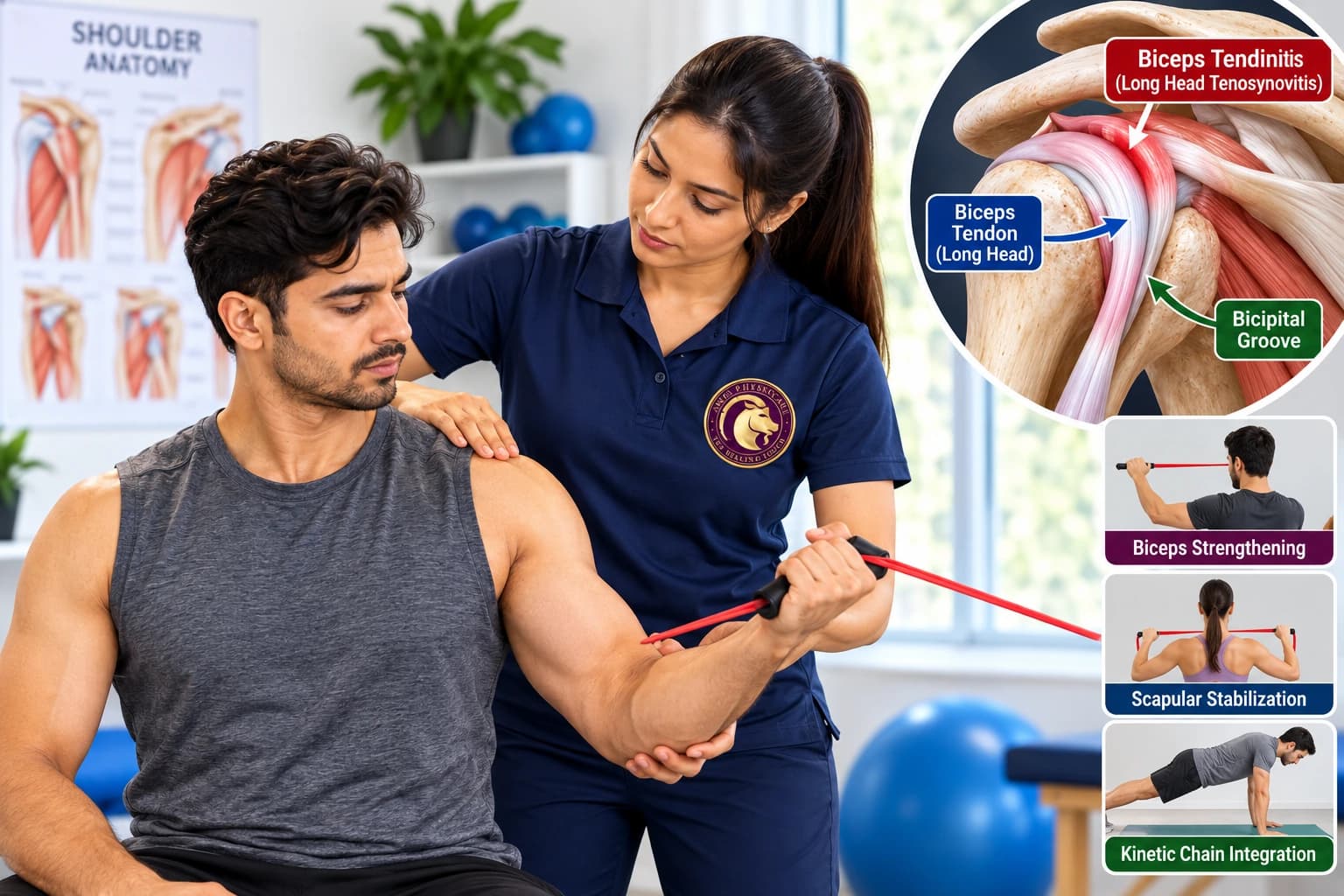
Biceps tendinitis is an inflammatory and degenerative condition affecting the tendon of the long head of the biceps brachii (LHB) as it traverses through the narrow fibro-osseous bicipital groove on the anterior humerus. While isolated primary biceps tendinitis accounts for less than 5% of presentations, secondary biceps tenosynovitis is extraordinarily prevalent, almost invariably coexisting with rotator cuff tears, subacromial impingement, or labral pathology. The long head of the biceps plays a secondary role as a dynamic anterior stabilizer and humeral head depressor. Chronic friction within the groove, combined with subluxation of the transverse humeral ligament, results in disabling anterior shoulder pain that responds exceptionally well to targeted, non-operative physiotherapy.
Common Symptoms
Key clinical indicators and functional presentations:
- Localized, sharp or deep aching pain centered directly over the anterior shoulder within the bicipital groove
- Pain exacerbated by overhead lifting, carrying heavy objects with flexed elbows, or reaching behind the body
- Tenderness to light palpation along the bicipital groove with the arm placed in 15 degrees of internal rotation
- Audible or palpable snapping, clicking, or popping sensation over the anterior shoulder during rotation
- Pain radiating down the anterior arm into the biceps muscle belly
- Worsening discomfort during loaded elbow flexion combined with forearm supination
Causes & Clinical Diagnosis
Etiological drivers and diagnostic assessment:
- Repetitive micro-trauma from sustained overhead lifting, tennis, badminton, or swimming
- Secondary mechanical friction caused by subacromial impingement or underlying rotator cuff deficiency
- Instability or subluxation of the LHB tendon due to a tear of the transverse humeral ligament or subscapularis tendon
- Clinical diagnosis utilizes classic orthopedic provocative testing (Speed's test, Yergason's test, Upper Cut test) paired with dynamic musculoskeletal ultrasound evaluating tendon gliding, groove stability, and synovial sheath effusion.
Pathophysiology & Biomechanical Impact
The long head of the biceps enters the shoulder joint through the bicipital groove, held securely by the transverse humeral ligament and the sling fibers of the coracohumeral ligament and subscapularis. Because the synovial sheath of the tendon communicates directly with the glenohumeral joint cavity, any intra-articular inflammation rapidly translates into tenosynovitis. Repetitive gliding under tensile and compressive load causes sheath thickening, vascular proliferation, and fibrillar delamination. If the stabilizing sling tears, the tendon repeatedly subluxates over the lesser tuberosity, causing intense mechanical irritation and eventual structural failure.
Evidence-Based Physiotherapy Protocols
At Aries PhysioCare, our physical therapists implement clinician-administered rehabilitation protocols:
- Instrument-Assisted Soft Tissue Mobilization (IASTM) and gentle transverse friction over the bicipital groove to eliminate peri-tendinous adhesions and promote collagen alignment
- Maitland glenohumeral joint mobilizations: Posterior and inferior glides to widen subacromial space and reduce anterior mechanical compression
- Class-IV Deep Tissue Laser Therapy and Ultrasound applied along the anterior groove to down-regulate inflammatory tenosynovitis and stimulate tendon healing
- Calibrated eccentric loading protocols under physical therapist guidance to enhance tendon tensile strength and restore cellular load-bearing capacity
- Scapulothoracic motor control retraining focusing on the serratus anterior and rhomboids to optimize the orientation of the glenoid and bicipital pulley
- Dynamic rotator cuff co-activation training to offload the secondary stabilizing burden placed upon the long head of the biceps
Home Care & Ergonomic Strategies
Supporting recovery through evidence-based ergonomic habits and self-care:
- Avoid carrying heavy groceries, weighted shopping bags, or backpacks with the forearm flexed in front of the body
- Refrain from exercises that combine loaded elbow flexion and shoulder flexion (such as heavy preacher curls or chin-ups)
- Apply cold therapy packs over the anterior shoulder for 15 minutes after extended daily activities to control synovial sheath swelling
- Maintain proper workstation ergonomics with arms supported on desk surfaces to avoid static hanging tension on the biceps tendon
- Sleep on your back or unaffected side with the arm resting comfortably on a supportive pillow
- Avoid aggressive self-directed cross-arm stretching or deep, painful self-massaging over the anterior groove
When to Contact Us
Anterior shoulder pain from biceps tendinitis requires expert clinical guidance to prevent tendon rupture. Contact Aries PhysioCare today for a thorough musculoskeletal evaluation.