
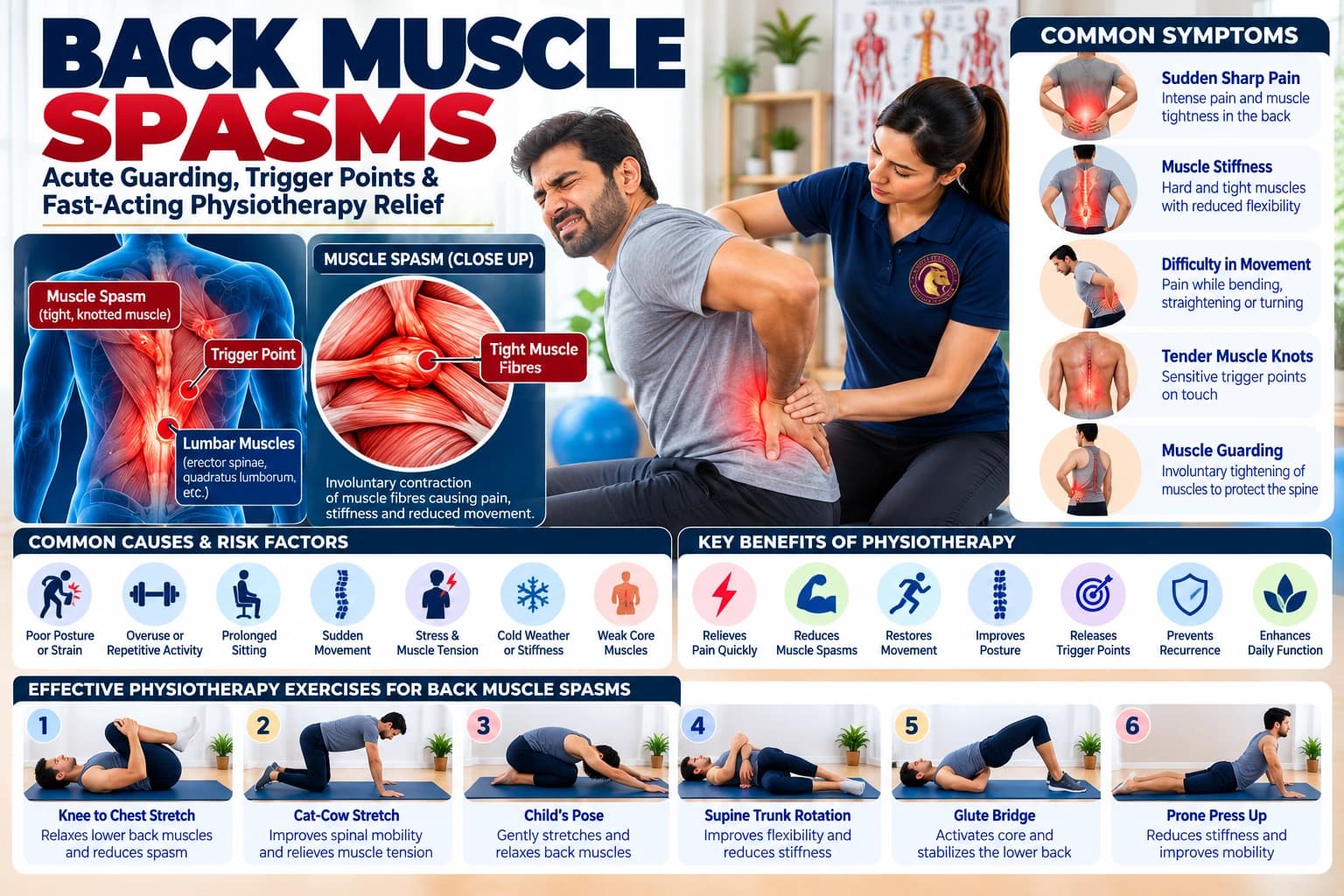

Introduction: Understanding Back Muscle Spasms
A severe back muscle spasm is one of the most agonizing acute physical sensations a person can experience. Often striking out of nowhere, paraspinal muscles contract into a rock-hard, involuntary cramp that temporarily locks the entire torso in place. In the majority of cases, a muscle spasm is not an isolated muscular flaw, but the body's protective neuromuscular reflex designed to splint an underlying inflamed disc, facet joint, or strained ligament. Breaking the spasm-pain-spasm cycle requires skilled clinical intervention.
Common Symptoms of Back Muscle Spasms
Acute contraction indicators:
- Sudden, uncontrollable tightening and cramping of paraspinal muscles
- Visible distortion or sideways tilting of the torso (antalgic posture)
- Palpable, tender muscle knots and taut bands in the lumbar erectors or quadratus lumborum
- Severe pain on any attempt to stand upright, turn over in bed, or bend
- Inability to take deep breaths without feeling sharp back catching
- Persistent dull, throbbing background ache punctuated by acute stabbing twinges
- Complete resolution of pain when lying in a comfortable supported position
Causes & Clinical Diagnosis
Primary spasm triggers:
- Sudden overload on cold, deconditioned paraspinal muscles
- Protective response to an underlying acute disc bulge or facet joint impingement
- Severe electrolyte depletion (magnesium, potassium) or systemic dehydration
- Emotional stress and prolonged postural static tension
- Clinical assessment focuses on locating taut bands, evaluating neurological integrity, and identifying the underlying joint or disc trigger.
Pathophysiology & Biomechanical Impact
Acute irritation releases substance P and bradykinin, firing pain signals to the spinal cord. The alpha motor neurons respond with continuous efferent firing, causing prolonged actin-myosin cross-bridge binding. This creates localized tissue ischemia, lactic acid accumulation, and further pain, perpetuating the vicious spasm cycle.
Evidence-Based Physiotherapy Protocols
- Calibrated dry needling or ischemic compression to release myofascial trigger points
- High-Intensity Laser Therapy (HILT) to accelerate cellular ATP and wash out ischemic metabolites
- Reciprocal inhibition stretching (contracting the abdominals to reflexively relax back extensors)
- Gentle positional traction and passive oscillatory mobilizations to calm the nervous system
Home Care & Ergonomic Strategies
- Rest in the 90-90 position (lying on your back on the floor with calves resting on a chair)
- Apply moist heat packs for 15–20 minutes to improve blood flow to ischemic muscles
- Stay well hydrated and replenish electrolytes with coconut water or oral rehydration
- Avoid aggressive, painful stretching during the acute 48-hour spasm phase
When to Contact Us
Do not suffer in bed trapped by agonizing spasms. Contact Aries PhysioCare for rapid in-home physiotherapy visits and immediate muscular pain relief.