
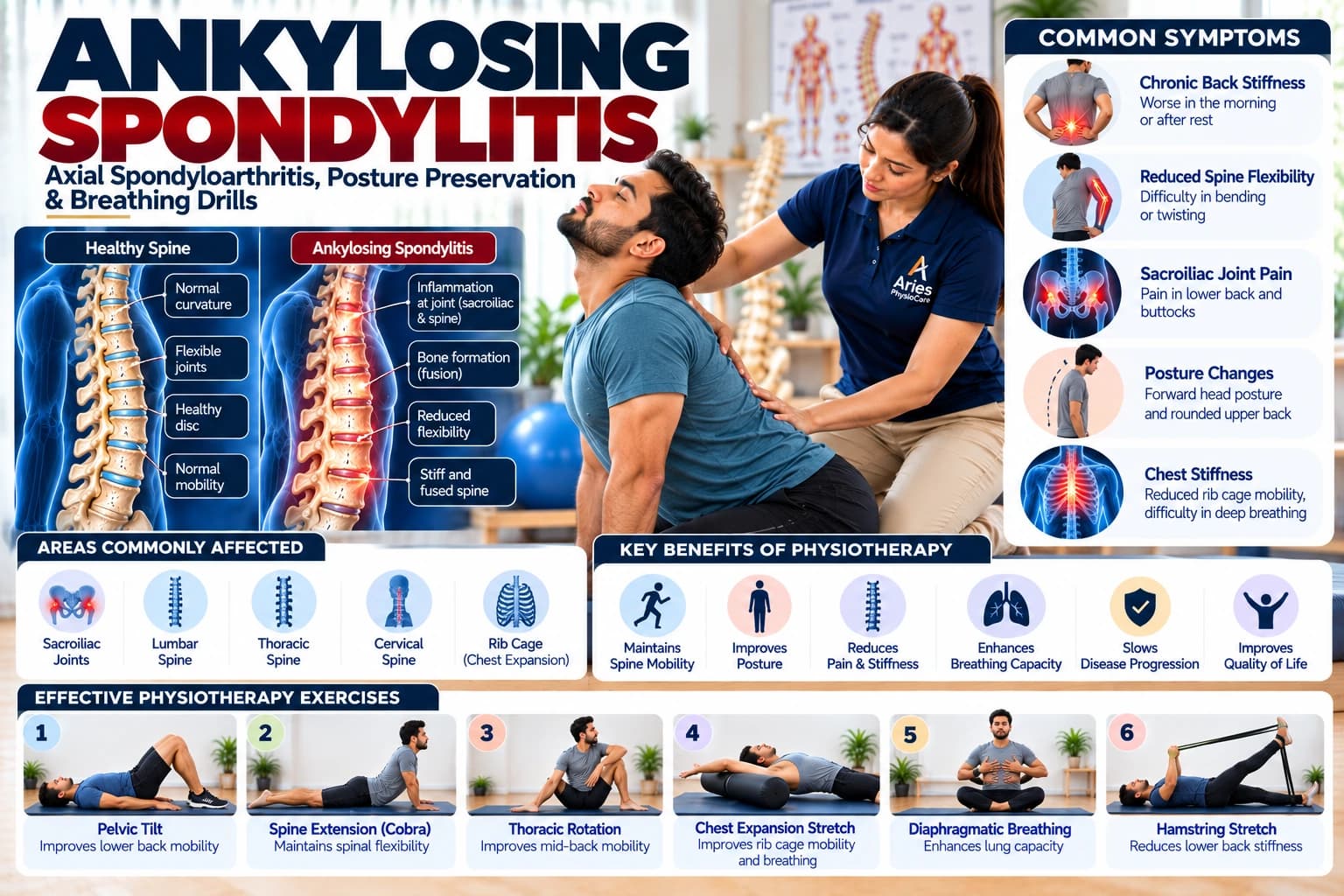

Introduction: Understanding Ankylosing Spondylitis
Ankylosing Spondylitis (AS) is a chronic inflammatory rheumatic disease primarily affecting the sacroiliac joints and axial skeleton. Over time, chronic entheseal inflammation can lead to progressive ossification and fusion of spinal ligaments—creating the classic "bamboo spine" appearance if left unmanaged. While biologic medications manage systemic inflammation, daily physical therapy is universally recognized as the single most critical intervention to prevent forward stooping posture, maintain spinal mobility, and preserve respiratory vital capacity.
Common Symptoms of Ankylosing Spondylitis
Hallmark inflammatory characteristics:
- Insidious onset of dull, deep lower back and buttock pain in young adults (under 45)
- Severe morning stiffness lasting over an hour that improves dramatically with exercise
- Nocturnal awakening during early morning hours requiring the patient to walk around
- Progressive loss of spinal flexibility in all three planes (flexion, extension, rotation)
- Chest wall tightness and reduced rib cage expansion during deep inhalation
- Enthesitis pain at the Achilles tendon, plantar fascia, or costosternal joints
- Gradual development of a forward-poking head and rounded thoracic kyphosis
Causes & Clinical Diagnosis
Pathological origins:
- Strong genetic association with the HLA-B27 antigen (>90% of affected patients)
- Autoimmune dysregulation driving persistent enthesitis
- Diagnosis is established through modified New York criteria, MRI revealing active sacroiliitis (bone marrow edema), and physical measurements (Schober's test, chest expansion).
Pathophysiology & Biomechanical Impact
Inflammatory granulation tissue forms at the junction of the annulus fibrosus and vertebral margins. This tissue undergoes cartilaginous metaplasia followed by endochondral ossification, forming syndesmophytes that bridge adjacent vertebrae and progressively extinguish spinal motion.
Evidence-Based Physiotherapy Protocols
- Daily active axial elongation and spinal extension routines (prone press-ups, wall angels)
- Deep diaphragmatic and intercostal breathing exercises to maintain thoracic cage compliance
- Hydrotherapy / aquatic physiotherapy to facilitate full-range movement in warm, buoyant water
- Postural alignment retraining and prone positioning to prevent hip flexion contractures
Home Care & Ergonomic Strategies
- Spend 15–20 minutes daily lying flat on your stomach (prone positioning) with no pillow
- Sleep on a firm mattress using a single low contour pillow to prevent neck flexion
- Measure and record your standing height and chest expansion monthly to track posture
- Avoid contact sports or heavy jarring impacts that could injure a rigid spine
When to Contact Us
Fight spinal stiffness and preserve your upright posture. Contact Aries PhysioCare for specialized home physiotherapy for Ankylosing Spondylitis and long-term axial mobility management.