
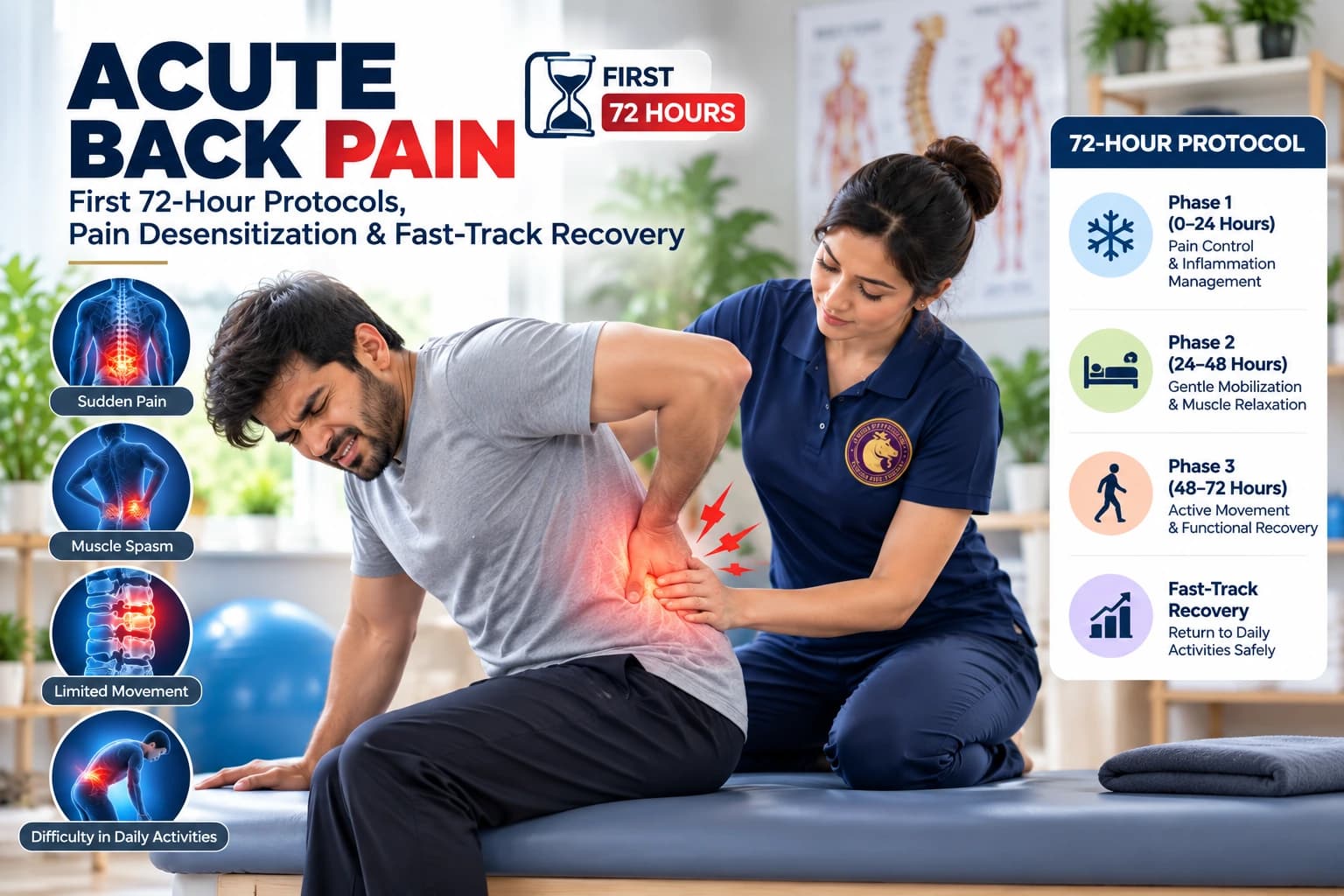

Introduction: Understanding Acute Back Episodes
Acute back pain strikes suddenly—often during simple everyday actions like tying shoes, lifting a grocery bag, or twisting awkwardly. The intensity of pain can feel alarming, but in the overwhelming majority of cases, it represents an acute mechanical sprain, disc derangement, or sudden protective paraspinal muscle lock. Immediate, guided physiotherapy within the first 72 hours shortens recovery duration and prevents transition into chronic disability.
Common Symptoms of Acute Back Pain
Sudden onset of severe functional limitation:
- Piercing, knife-like pain upon attempting to stand or walk
- Severe lateral shift (trunk visibly tilted to one side)
- Intense protective muscle spasms locking the lower back
- Inability to transition from lying down to sitting or standing
- Sharp localized tenderness over lumbar vertebrae or sacroiliac joint
- Breath-holding episodes due to intense movement-related discomfort
- Absence of systemic symptoms (fever, bowel/bladder dysfunction)
Causes & Clinical Diagnosis
Typical precipitators include:
- Sudden torsional strain with forward flexion
- Acute annular disc fissuring with micro-derangement
- Acute facet joint capsular impingement (facet joint lock)
- Senior physiotherapists perform gentle neurological triage to rule out red flag pathology (cauda equina) before initiating immediate conservative relief.
Pathophysiology & Biomechanical Impact
Acute trauma or excessive eccentric load triggers inflammatory mediator release (prostaglandins, substance P). The local spinal reflex loop responds with aggressive muscular splinting, temporarily immobilizing the segment to prevent further perceived injury.
Evidence-Based Physiotherapy Protocols
- Directional preference correction (McKenzie prone press-ups or lateral glides)
- Cryotherapy and calibrated TENS application to break the acute pain-spasm cycle
- Gentle manual myofascial unwinding and gentle positional traction
- Kinesiology taping to provide biofeedback and unload irritable posterior spinal elements
Home Care & Ergonomic Strategies
- Use the "log-roll" technique when getting in and out of bed to prevent spinal twisting
- Apply ice packs for 15–20 minutes every 2–3 hours during the first 48 hours
- Avoid prolonged bed confinement; walk gently around the room every 60 minutes
- Use a firm lumbar roll when seated in an upright chair
When to Contact Us
If acute back pain strikes, do not struggle in agony. Contact Aries PhysioCare for immediate emergency home physiotherapy visits and rapid pain desensitization.