Introduction: Understanding the Condition
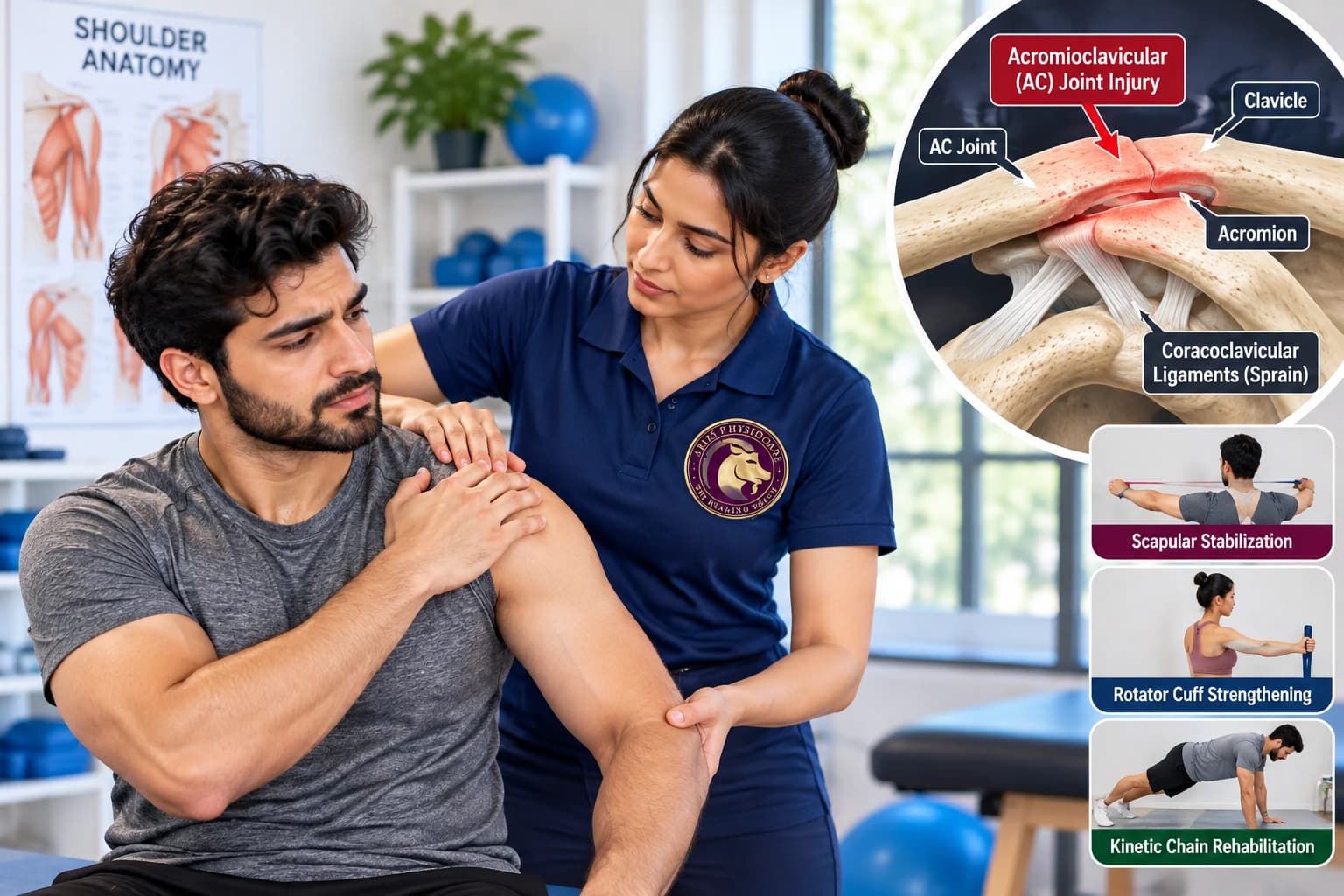
An acromioclavicular (AC) joint injury, commonly referred to as a shoulder separation, involves ligamentous damage to the diarthrodial joint connecting the lateral clavicle to the acromion process of the scapula. Classified using the Rockwood grading scale from Grade I (mild sprain of the AC ligament) to Grade VI (extreme displacement), the stability of this articulation depends on the intrinsic acromioclavicular ligaments (controlling horizontal translation) and the robust extrinsic coracoclavicular ligaments (trapezoid and conoid, controlling vertical translation). Grades I through III are predominantly managed through evidence-based conservative physical therapy, focusing on pain management, phased immobilization, and progressive dynamic scapular stabilization.
Common Symptoms
Key clinical indicators and functional presentations:
- Focal, exquisite tenderness and swelling localized precisely over the superior aspect of the shoulder at the AC joint line
- Sharp pain exacerbated by horizontal cross-body adduction (e.g., reaching across the chest to touch the opposite shoulder)
- Visible and palpable 'step deformity' or high-riding lateral clavicle in Rockwood Grade II and Grade III injuries
- Inability to lie on the affected shoulder due to direct compressive mechanical discomfort
- Pain and protective muscle guarding during active arm elevation past 90 degrees
- Positive cross-body adduction test and AC shear test with reproducible focal joint pain
Causes & Clinical Diagnosis
Etiological drivers and diagnostic assessment:
- Direct blow to the superior-lateral aspect of the shoulder with the arm adducted (classic cycling or rugby collision)
- Direct impact from falling forcefully onto an outstretched hand or elbow, transmitting vertical load up the humerus
- Secondary chronic micro-traumatic degenerative wear from years of heavy weightlifting (bench press, overhead press)
- Clinical diagnosis utilizes specialized orthopedic tests (Cross-Body Adduction test, AC Shear test, Active Compression test) correlated with bilateral weighted Zanca view radiographs to measure coracoclavicular distance widening.
Pathophysiology & Biomechanical Impact
The AC joint contains an intra-articular fibrocartilaginous disc that degenerates rapidly by the fourth decade of life. In a traumatic separation, downward displacement of the acromion tears the AC capsular ligaments first. If sufficient force continues, the conoid and trapezoid ligaments rupture, causing the clavicle to decouple from the scapula. This disruption alters the suspensory mechanism of the upper extremity. Without stable ligamentous tethering, the weight of the arm causes the scapula and arm to sag inferiorly and rotate anteriorly, transferring immense strain to the trapezius and deltoid attachments.
Evidence-Based Physiotherapy Protocols
At Aries PhysioCare, our physical therapists implement clinician-administered rehabilitation protocols:
- Phase I (Acute Protection): Short-term sling support to offload the suspensory downward pull of the upper extremity on the lateral clavicle
- Class-IV Laser Therapy and IFT focused over the superior AC joint capsule to reduce acute localized hematoma and soft tissue edema
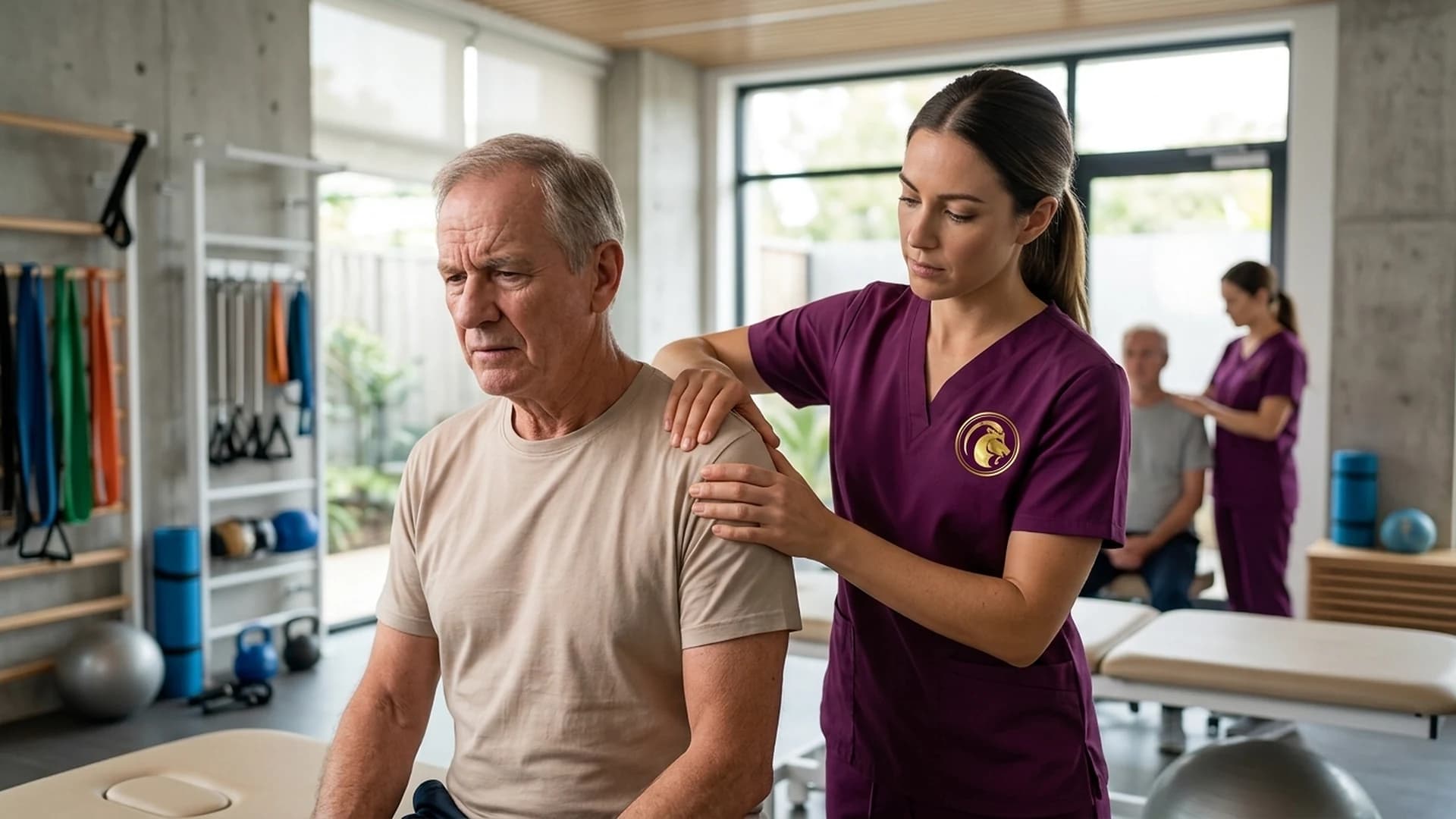
- Gentle manual therapy: Passive glenohumeral mobilizations and cervical spine release, carefully avoiding horizontal cross-body adduction
- Phase II (Scapular Retraction & Elevation Retraining): Neuromuscular activation of the upper/middle trapezius and levator scapulae to dynamically support the clavicular strut
- Deltoid and rotator cuff co-activation training performed strictly below 90 degrees of elevation during early healing phases
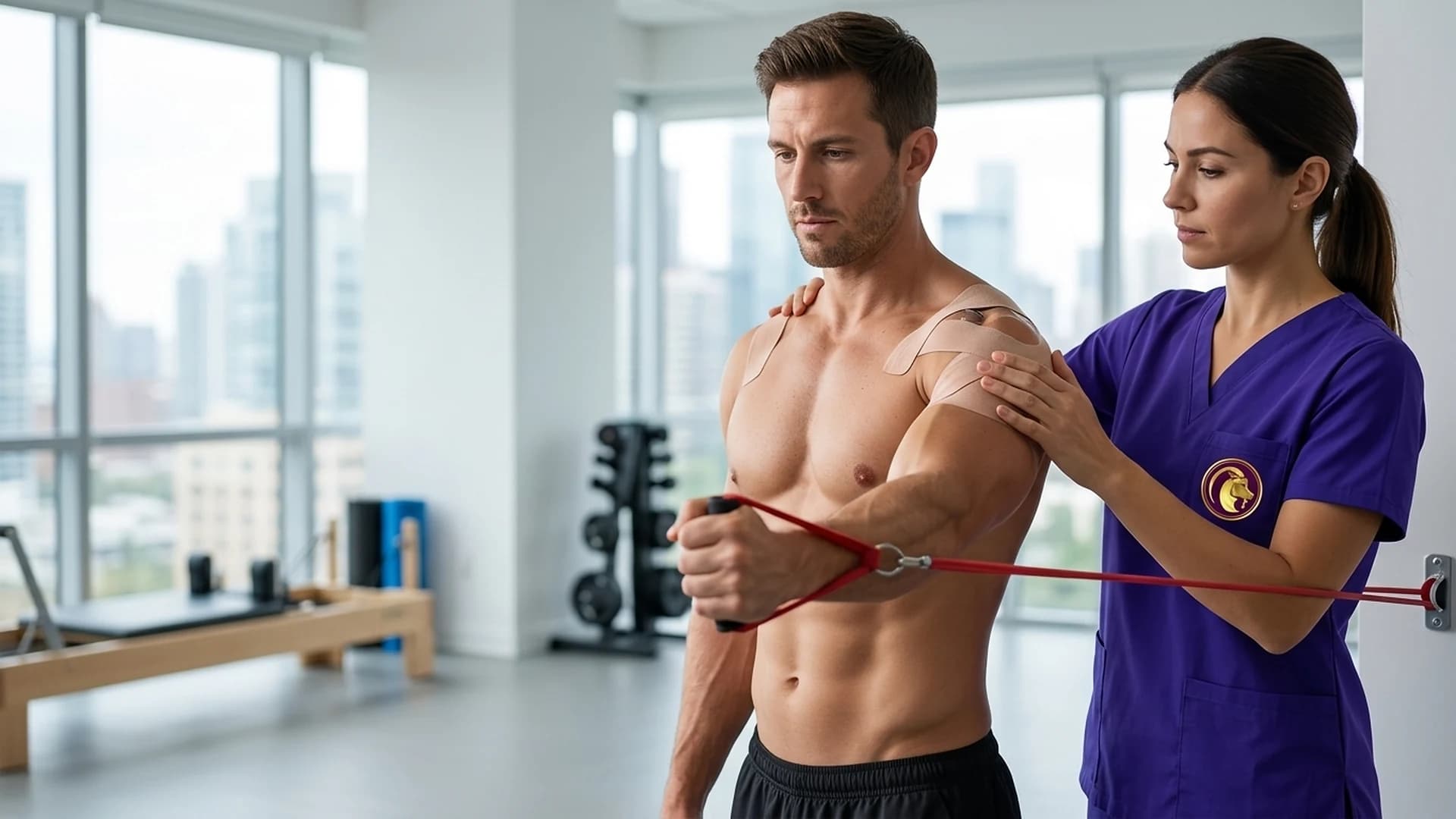
- Taping techniques (kinesiology and rigid therapeutic taping) applied to provide mechanical unloading of the superior AC joint line during early rehabilitation
Home Care & Ergonomic Strategies
Supporting recovery through evidence-based ergonomic habits and self-care:
- Wear the protective sling as prescribed during early recovery to prevent downward gravitational traction on the healing ligaments
- Strictly avoid reaching across the chest (horizontal adduction) to wash the opposite arm or put on a seatbelt during the acute phase
- Apply cryotherapy packs over the top of the shoulder for 15 minutes three times daily to minimize swelling and joint pain
- Sleep on your back with the affected arm supported on a pillow to prevent nocturnal shoulder compression
- Avoid carrying heavy groceries, backpacks, or weights with the injured arm until full ligamentous healing is confirmed
- Do not perform dips, push-ups, or bench presses without explicit physical therapy clearance and biomechanical modification
When to Contact Us
Suffered a fall or blow to the top of your shoulder? Contact Aries PhysioCare today for an expert acromioclavicular injury evaluation and personalized rehabilitation protocol.